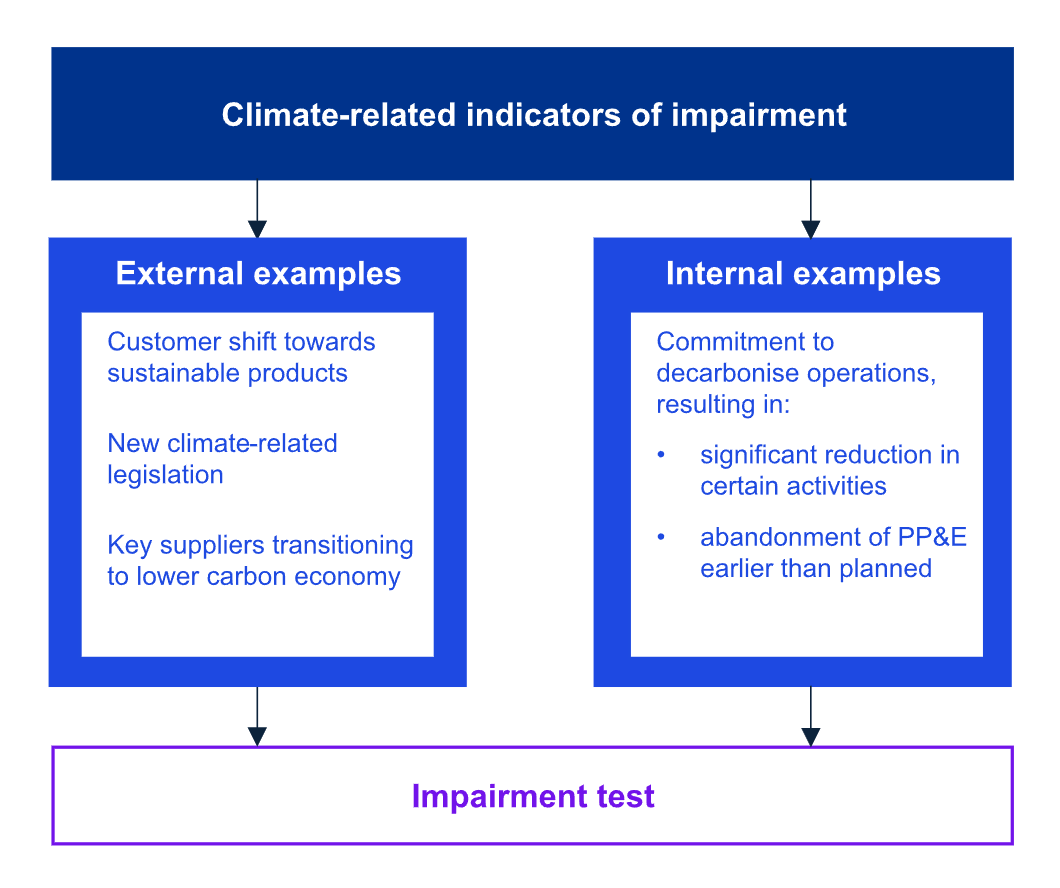
Yes. One example listed in IAS 36 is significant adverse effects in the technological, market, economic or legal environment in which the company operates. In the context of climate-related matters, this may include the following.
- A shift in customer preference towards sustainable products of the company’s competitors, which is expected to significantly decrease demand for the CGU's products.
- The introduction of emissions-reducing legislation that is expected to significantly increase manufacturing costs of a CGU, which will reduce the company’s operating profit margin.
- A transition to a lower carbon economy by some of the company’s key suppliers, which is expected to significantly increase the CGU’s costs of production and reduce its operating profit margin.
Another example listed in IAS 36 is an increase in market-required rates of return on investments that is likely to materially decrease the value in use of an asset or CGU – for example, investors may demand a higher rate of return to invest in a company or an industry that has become more exposed to climate-related risks. If this is likely to increase the discount rate used in the discounted cash flow (DCF) and materially decrease the recoverable amount of a CGU, then it is an indicator of impairment. [IAS 36.12(b)–(c)]