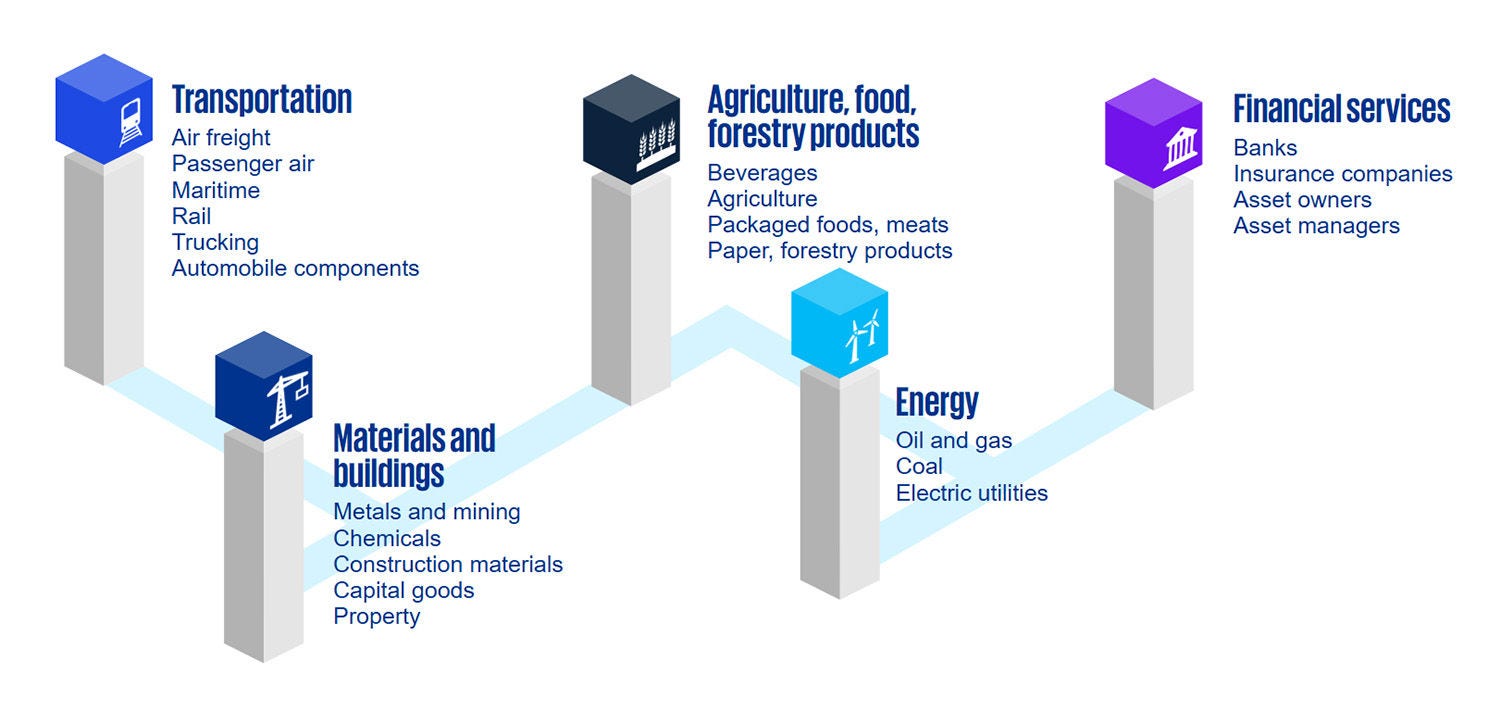
Climate-related opportunities refer to the positive financial and strategic effects that may arise from efforts to mitigate or adapt to climate change. These opportunities can emerge from both physical changes (e.g. warmer temperatures enabling new crops to grow) and transition changes (e.g. new technologies supporting decarbonisation).
Question 5: What are the impacts on financial reporting?
Climate-related risks and opportunities include both direct financial consequences and broader strategic implications, which companies need to consider as part of their accounting, disclosures and decision-making processes. Some impacts for financial reporting include the following.
- Impairment of assets: Physical risks (e.g. floods, wildfires) and transition risks (e.g. regulatory changes, carbon pricing) may lead to impairment indicators.
- Useful lives and residual values: Climate-related risks may shorten the useful lives of assets or reduce their residual values, requiring changes in depreciation or amortisation schedules.
- Fair value measurement: Climate-related assumptions (e.g. carbon costs, regulatory changes) need to be factored into fair value estimates.
- Provisions and contingent liabilities: Legal or regulatory risks (e.g. emissions penalties, litigation) may require a company to recognise provisions or disclose contingent liabilities.
- Carbon credits and emissions allowances: Emissions and green schemes are evolving and pose various accounting and reporting challenges.
- Connected story: Investors expect consistency between climate-related assumptions disclosed in the front part of the annual report (e.g. transition plans, net-zero targets) and those used in the financial statements (e.g. impairment tests, fair value estimates).
Question 6: What are the impacts on sustainability reporting?
Climate-related risks and opportunities are a key consideration in preparing a company’s sustainability-related disclosures. Both IFRS® Sustainability Disclosure Standards and existing European Sustainability Reporting Standards (ESRS) require companies to:
- identify and disclose material information about climate-related risks and opportunities across short-, medium- and long-term horizons;
- explain the impact on strategy, business model, financial planning and resilience – including current and anticipated financial effects;
- provide scenario analysis and disclose assumptions, methodologies and uncertainties; and
- ensure connectivity between sustainability disclosures, financial statements and other parts of the annual report, reconciling differences in assumptions used.
1. As highlighted in the recommendations issued by the Task Force on Climate-Related Financial Disclosures (TCFD) in June 2017.
© 2026 KPMG IFRG Limited, a UK company, limited by guarantee. All rights reserved.