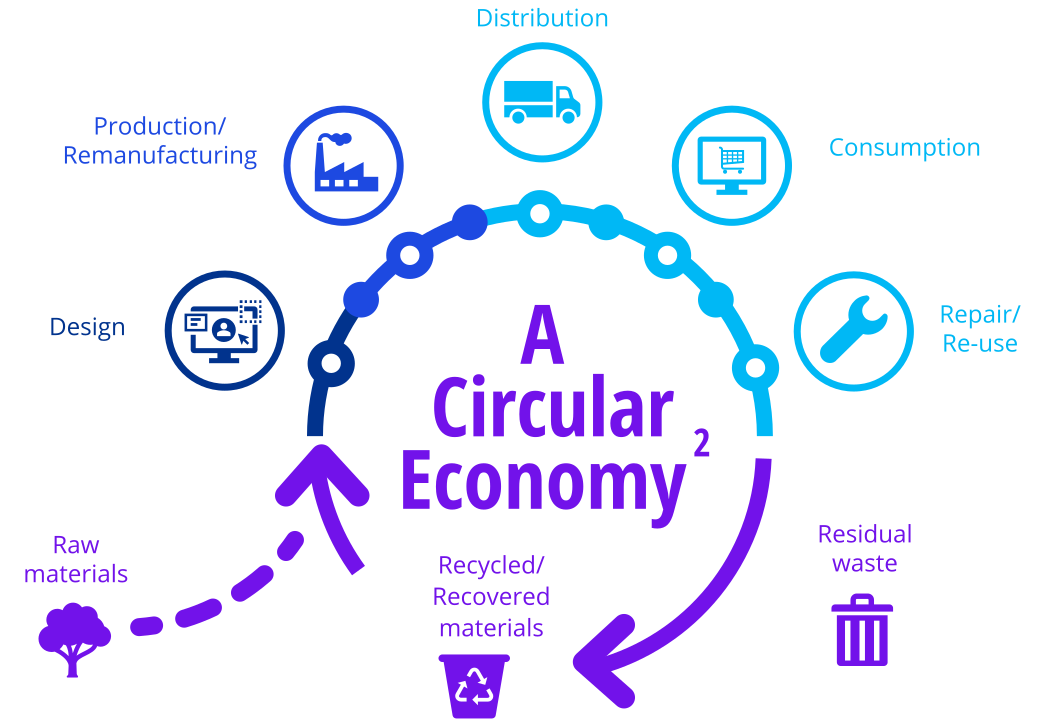
The circular economy aims to create a sustainable economic model by eliminating waste, circulating products and materials, and regenerating nature. Tax and non-tax measures play a crucial role in facilitating this transition across different phases of a product's lifecycle.
At the design and production phase, tax measures such as raw material resource taxes are implemented to discourage the use of virgin materials and promote the use of recycled materials. These taxes raise costs for businesses, encouraging innovation and research and increase the demand for second-hand goods. Non-tax measures include promoting eco-design principles that focus on creating products that are easier to repair, reuse, and recycle, thus extending their lifecycle. Businesses should not lose sight of the available (tax and non-tax) grants and incentives in this phase.
In the use phase, tax incentives like reduced VAT rates on repair services are used to encourage the repair and reuse of products. Belgium offers reduced VAT rates on repairs for items such as textiles and bicycles. Non-tax measures include the EU "Right to Repair" legislation to be introduced, which will mandate manufacturers to make products easier and more cost-effective to repair, thus reducing e-waste.
At the end-of-life stage, taxes are used to manage waste through a hierarchy that imposes higher taxes on landfill, lower taxes on recycling and no taxes on reuse. This encourages waste prevention, reuse, recycling, and energy recovery from waste. For example, environmental levies on landfill and incineration are designed to promote sustainable waste management practices. Non-tax measures include extended producer responsibility schemes to improve waste collection and recycling infrastructure, ensuring that materials are efficiently recovered and reintegrated into the production cycle.
Businesses must navigate this evolving and challenging landscape as part of their strategy to integrate circular economy principles, which involves rethinking supply chains, product designs, and overall business models in response to regulatory changes and market expectations. In this respect, qualitative data collection throughout the business is a challenging but essential step to provide the necessary insights and data for mandatory or voluntary ESG-reporting.