Governance principles
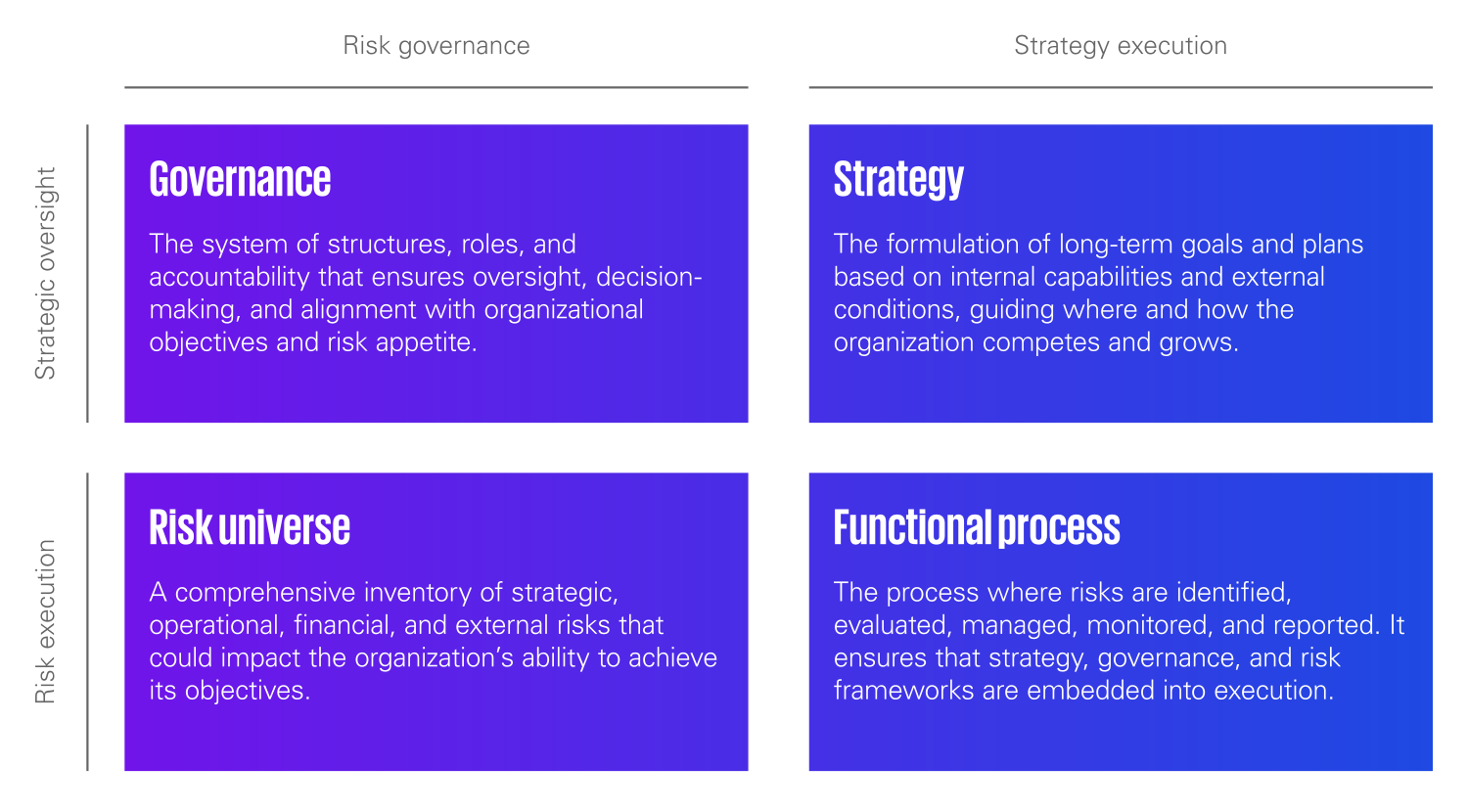
Effective governance is the backbone of SRM—it ensures that strategic risks are consistently identified, prioritized, and addressed across the organization. At its core, governance creates a structured system of roles, responsibilities, and oversight that fosters accountability, transparency, and timely decision-making. A well-designed governance structure connects all layers of the organization.
Beyond structure, governance mechanisms are essential. For example, regular risk reviews—typically quarterly or bi-annually—ensure risks remain relevant and visible. Escalation mechanisms are triggered by severity, urgency, or strategic importance, ensuring a responsive risk posture. Tooling, such as interactive risk dashboards and Key Risk Indicator (KRI) reporting, supports transparency and enables executive visibility. Together, these governance principles enable strategic risks to be managed proactively and coherently across the enterprise.
Strategic and environmental analysis
SRM starts with a solid understanding of the organization’s internal capabilities and the external environment in which it operates. Strategic and environmental analysis is essential because it ensures that risk considerations are not made in isolation but are embedded within the broader strategic planning process. This dual lens enables organizations to align their long-term objectives with both internal realities and external dynamics.
A variety of tools and techniques support the definition and refinement of strategy—each offering insights that can also inform the strategic risk management process when interpreted through a risk perspective. SWOT analysis, for example, connects internal strengths and weaknesses with external opportunities and threats. While not a risk tool per se, it highlights potential vulnerabilities or missed opportunities that, when left unaddressed, can evolve into strategic risks. Similarly, PESTEL analysis maps out macro-environmental factors—such as political, economic, technological, and legal trends. Although these are contextual observations, they can serve as a valuable foundation for identifying emerging risks. The OGSM framework (Objectives, Goals, Strategies, Measures) helps you set a clear strategy and connect it to concrete actions, which in turn creates touchpoints for identifying risks to strategic delivery. Scenario planning offers a way to explore plausible future states, enabling organizations to stress-test their strategies against a range of uncertainties. Finally, cross-functional workshops bring these tools to life—engaging stakeholders in discussions that help translate strategic analysis into concrete risk insights and mitigation planning. Ultimately, it is up to each organization to make the connection between these strategic inputs and the risks that could compromise them.
The outcome of these strategic exercises leads to a risk-informed strategy, one that is realistic, resilient, and adaptive to change—rooted in a clear awareness of both internal capabilities and the evolving external context.
Risk universe
A clearly defined risk universe is a cornerstone of effective SRM, enabling consistent identification, assessment, and prioritization of risks across the entire organization. It provides a structured inventory of potential threats—for example strategic, operational, financial, and external—that may impact the achievement of business objectives. A key enabler is the use of a risk taxonomy, a standard classification framework that ensures risks are categorized and communicated consistently across business units and functions. To assess the risks in the risk universe meaningfully, organizations apply a risk scaling matrix that standardizes the evaluation of likelihood and impact, forming the basis for response planning. Heatmaps then translate this data into intuitive visual formats, helping to quickly grasp where the greatest exposures lie. To keep the risk universe relevant and responsive, many organizations use risk workshops and interviews to validate current risks, uncover emerging ones, and ensure engagement from across the business.
The outcome is a prioritized, enterprise-wide view of risks that enhances strategic decision-making and ensures that mitigation efforts are focused where they matter most. However, it is important to recognize that this view represents a point-in-time snapshot. To remain effective, the risk universe must be regularly revisited and updated to reflect changes in the organization.
Functional process
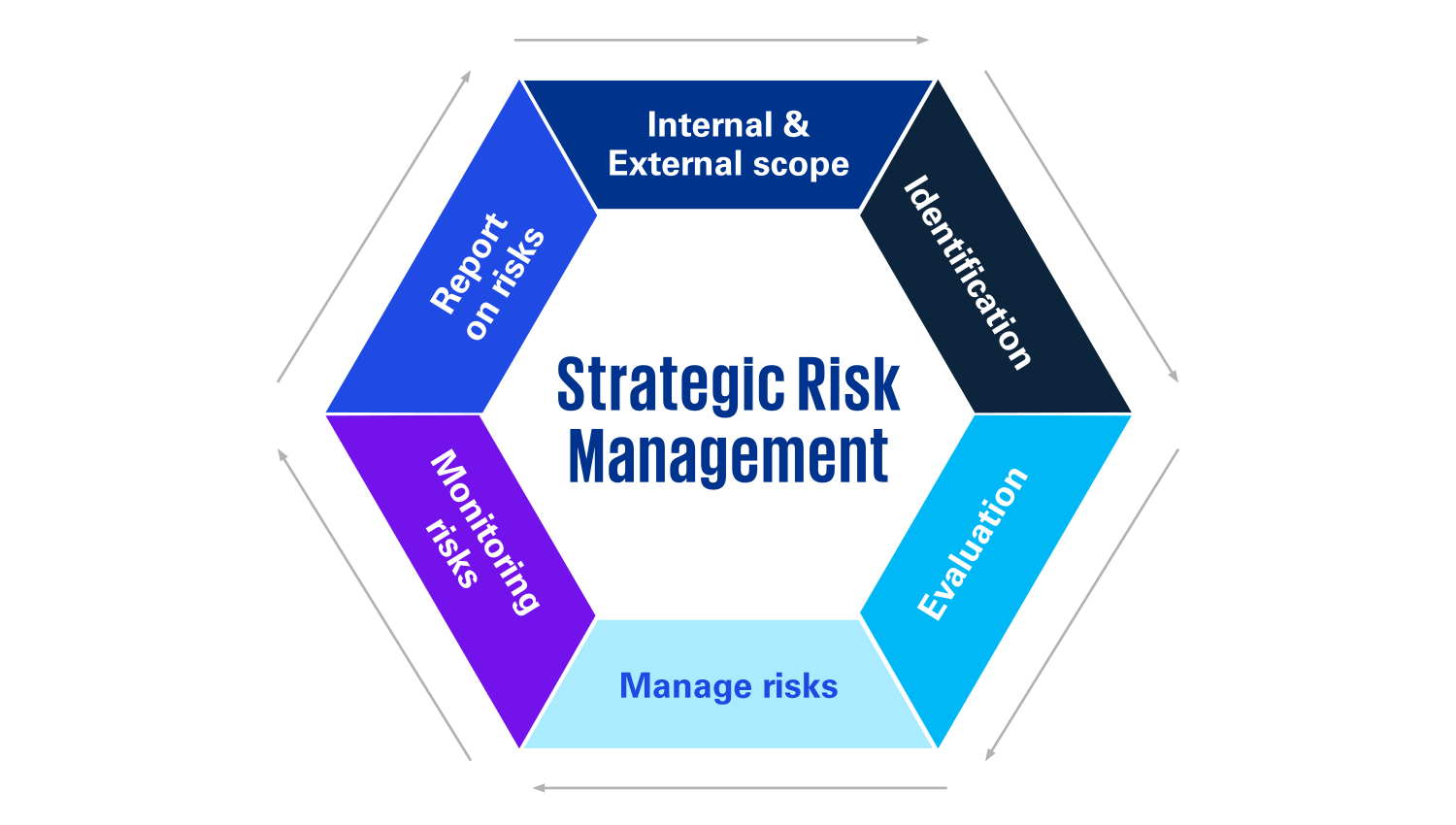
The functional process is where SRM becomes operational. It provides the structured cycle through which risks are consistently identified, evaluated, managed, monitored, and reported. It begins with defining the strategic scope, combining an understanding of internal capabilities with external environmental factors to frame the context in which risks should be considered. The identification phase draws on internal and external analyses and is often validated through workshops or interviews with key stakeholders to ensure relevance and completeness. Once risks are identified, they are evaluated for their likelihood and potential impact—typically by members of the management committee—so that the most pressing exposures can be prioritized. Risk response planning follows, ensuring that mitigation actions are not only proportional to the risk but also aligned with the organization’s strategic objectives and risk appetite. Ongoing monitoring through key indicators and periodic reviews ensures that risk exposure is continuously reassessed and that risk responses remain effective. Finally, clear and high-quality reporting is critical—structured in a way that allows executive and board-level stakeholders to make informed decisions quickly.
However, the design and execution of this process differs significantly across organizations. Factors such as organizational complexity, governance culture, regulatory pressure, and risk maturity influence how frequently risks are reviewed, how scope is defined, and which stakeholders are involved at each step. There is no one-size-fits-all model—each organization must tailor the functional process to reflect its strategic priorities, resource capacity, and risk culture.