The traditional notion of resilience as merely bouncing back from adversity - or as an IT-driven concern focused on system availability, data recovery, and cybersecurity - no longer suffices. Today, resilience has evolved into a far broader, enterprise-wide capability that extends well beyond technology.
Modern organizations must adopt a proactive stance that enables them not only to withstand disruptions but to thrive amid uncertainty and emerge stronger from challenges. Achieving this requires treating resilience as an enterprise-wide capability built on close collaboration between business and IT.
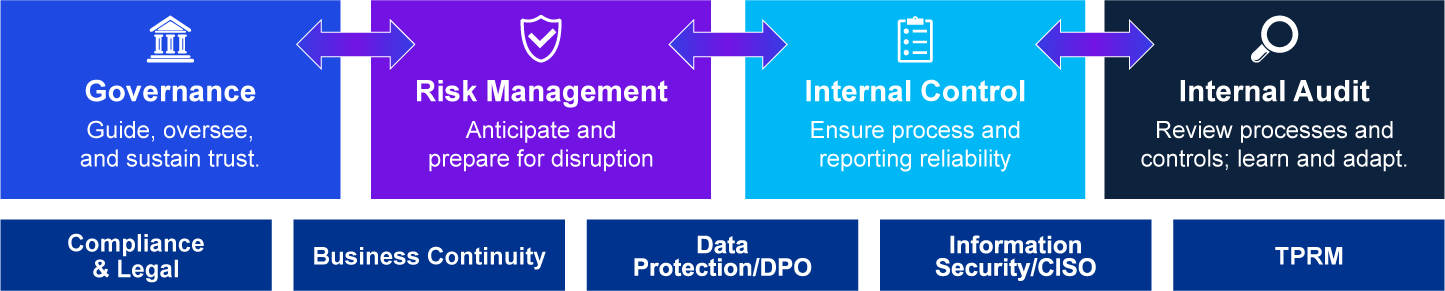
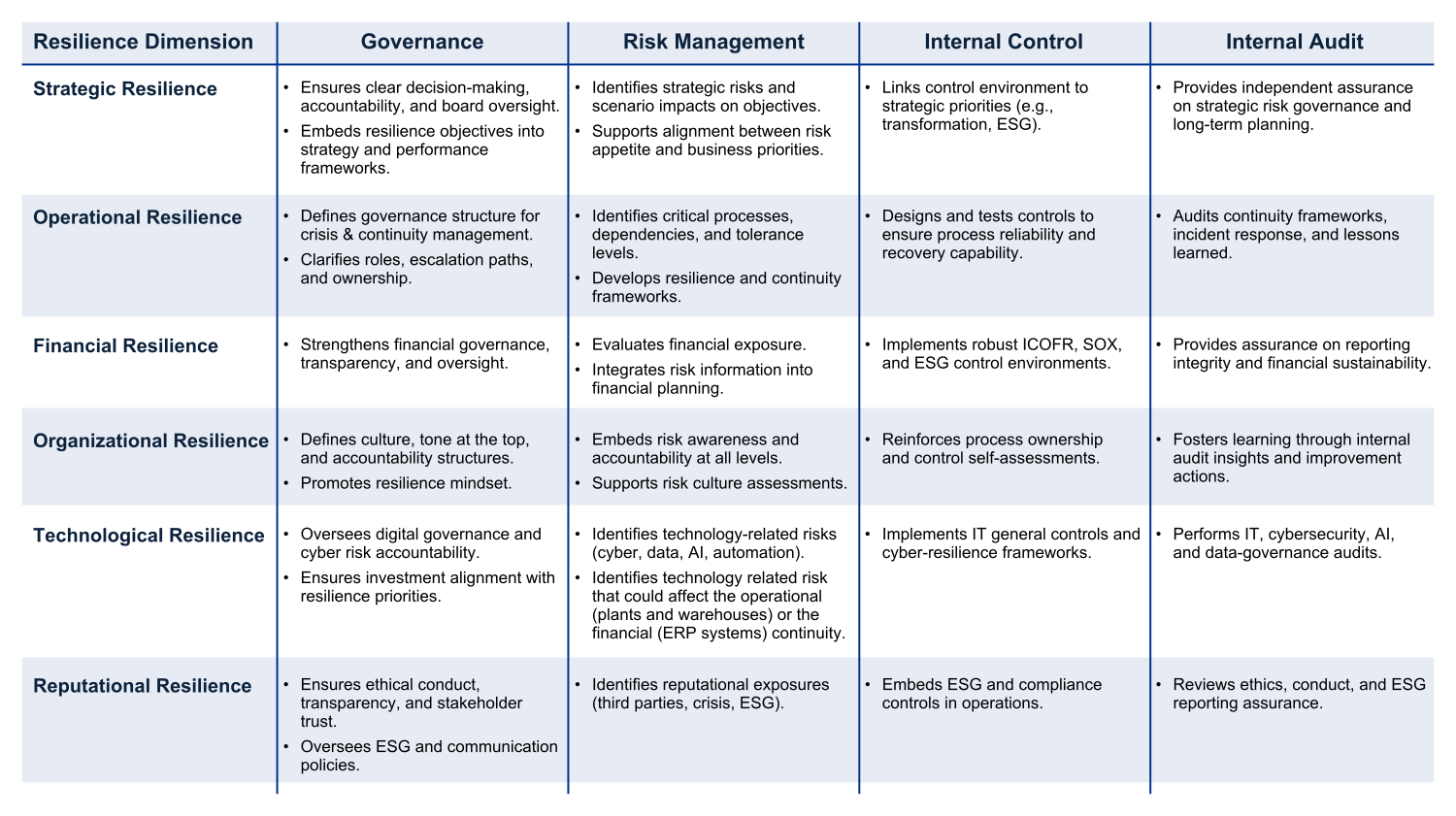
This article explores how coordinated efforts across the four pillars of governance, risk management, internal control, internal audit - whether addressed individually or in combination - can strengthen an organization’s ability to anticipate, absorb, and adapt to change.
We are entering a new era of volatility, one marked not by occasional crises but by constant, multidimensional disruption. Geopolitical tensions are reshaping global value chains, technological breakthroughs such as AI are creating both opportunities and vulnerabilities, while economic uncertainty and regulatory complexity have become the new normal.
In this context, resilience has moved beyond its roots in crisis management to become a defining characteristic of successful organizations - those capable of anticipating risks, adapting rapidly, and transforming challenges into sustainable competitive advantages.
Findings from the KPMG Risk and Resilience Survey 2025 highlight the urgency of this transformation:
- 52% of organizations have not yet integrated their risk and resilience activities or structures.
- Only 26% benefit from strong collaboration and a cross-functional view of risk.
- Nearly two-thirds face moderate to severe barriers to effective risk management.
Our message is clear: to turn uncertainty into opportunity, fragmented and reactive approaches are no longer sufficient. Organizations need a structured, proactive, and an integrated approach to risk and assurance activities.
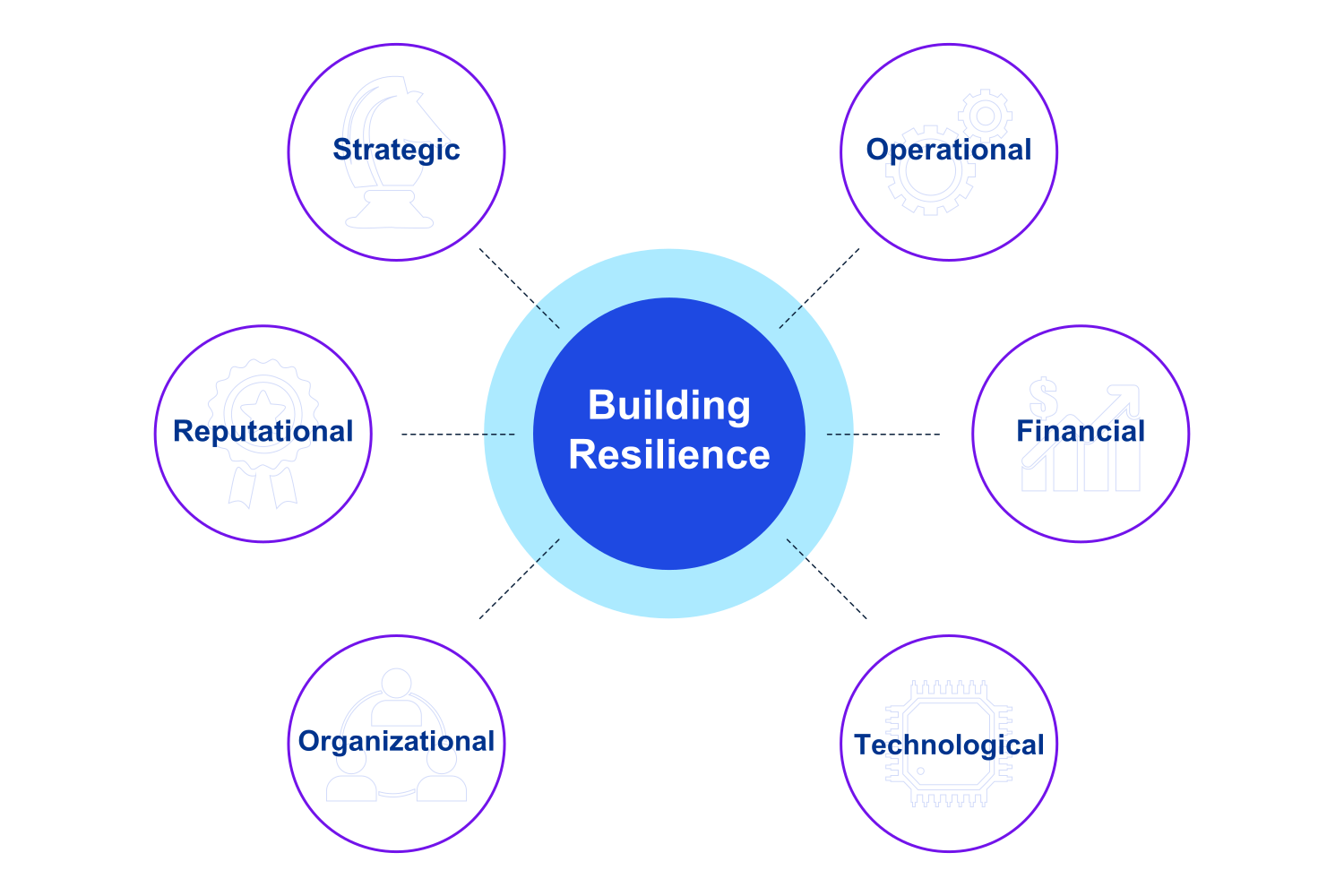
The six dimensions of enterprise resilience
Resilience should not be viewed solely through an operational lens. To achieve long-term value and sustainable performance, organizations need to develop resilience across multiple dimensions: strategic, operational, financial, technological, organizational, and reputational.
Each dimension represents a different angle of strength and adaptability; together they form a comprehensive view of what it truly means to be resilient.