Embedding a strong risk culture is vital for effective governance and decision-making. In this context of growing uncertainty, the ECB's 2024 Guide on Governance and Risk Culture highlights the importance of strong governance structures to strengthen risk culture within financial services and ensure decision-making is aligned with risk management practices. Effective risk management is not just about implementing controls or conducting periodic assessments, it requires a deeply embedded risk culture that aligns with the organization's mission and strategy. However, many companies struggle to integrate risk awareness into their decision-making processes and day-to-day operations.
These organizational challenges include:
- Insufficient C-level and C-level -1 engagement: Risk culture often remains disconnected from strategic objectives, resulting in limited attention at senior management levels.
- Limited organization-wide engagement: Company culture is often rigid. Adoption of a new risk culture requires buy-in across the entire organization to be effective.
- Difficulties in translating culture into action: Risk culture is often recognized as the reason “why we failed” when things go wrong, but rarely are actions taken to improve the risk culture.
This article explores these challenges in depth and provides actionable strategies for fostering an organization-wide risk culture. By addressing leadership engagement, practical implementation actions, and measuring the effectiveness of actions taken, companies can bridge the gap between recognizing the importance of risk and embedding it as a fundamental component of their corporate DNA.
The importance of an embedded risk culture in your organization
Risk culture can be defined as the blend of collective mindsets, shared norms, attitudes, and behaviors that guide how risks are identified, assessed, and managed across all levels of an organization. It influences decision-making at both the staff and leadership levels, determining how risks are approached and handled daily. When an organization’s risk culture is aligned with its strategic goals and core values, risk management becomes a proactive, integral part of decision-making, rather than a reactive process.
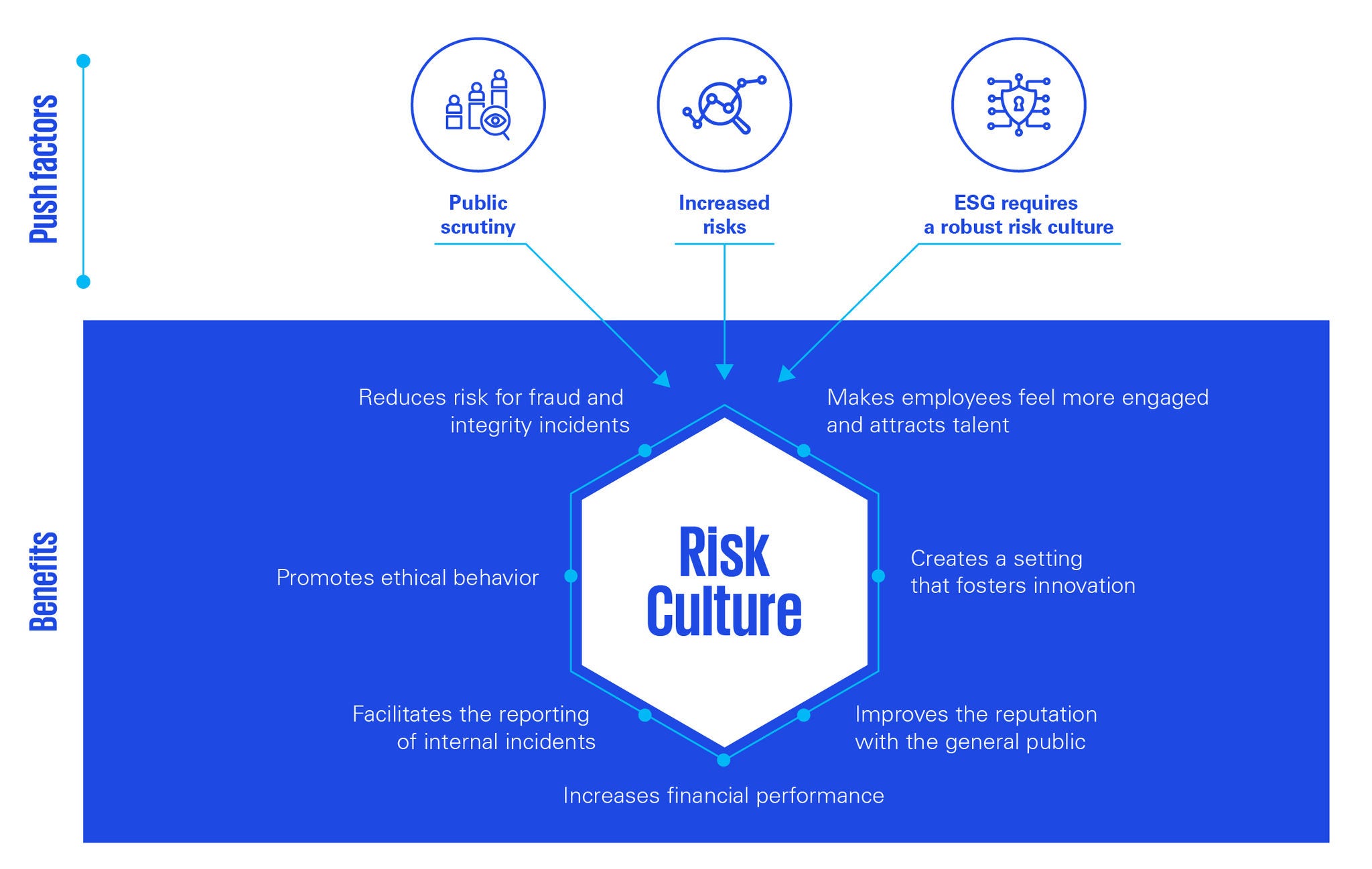
Moreover, organizations are facing numerous ‘push factors’ in today’s dynamic and fast-paced environment, such as growing pressures from governance, reporting, regulatory scrutiny, economic uncertainties, and the ongoing transformation driven by digitalization and automation. A robust risk culture helps organizations navigate these challenges, positioning them for long-term success. The benefits of a robust risk culture include:
- Reducing the risk of fraud and integrity incidents: A strong culture fosters vigilance and accountability.
- Promoting ethical behavior: Employees act in line with organizational values when risk culture is well-defined.
- Facilitating the reporting of internal incidents: Employees feel safe to report concerns, speeding up resolution.
- Boosting employee engagement and attracting talent: A supportive culture makes employees feel valued and improves recruitment.
- Fostering innovation: A secure environment encourages calculated risks that drive innovation.
- Improving public reputation: Strong risk management practices earn trust from customers and the public.
- Enhancing financial performance: Better risk mitigation leads to fewer disruptions and stronger financial results.