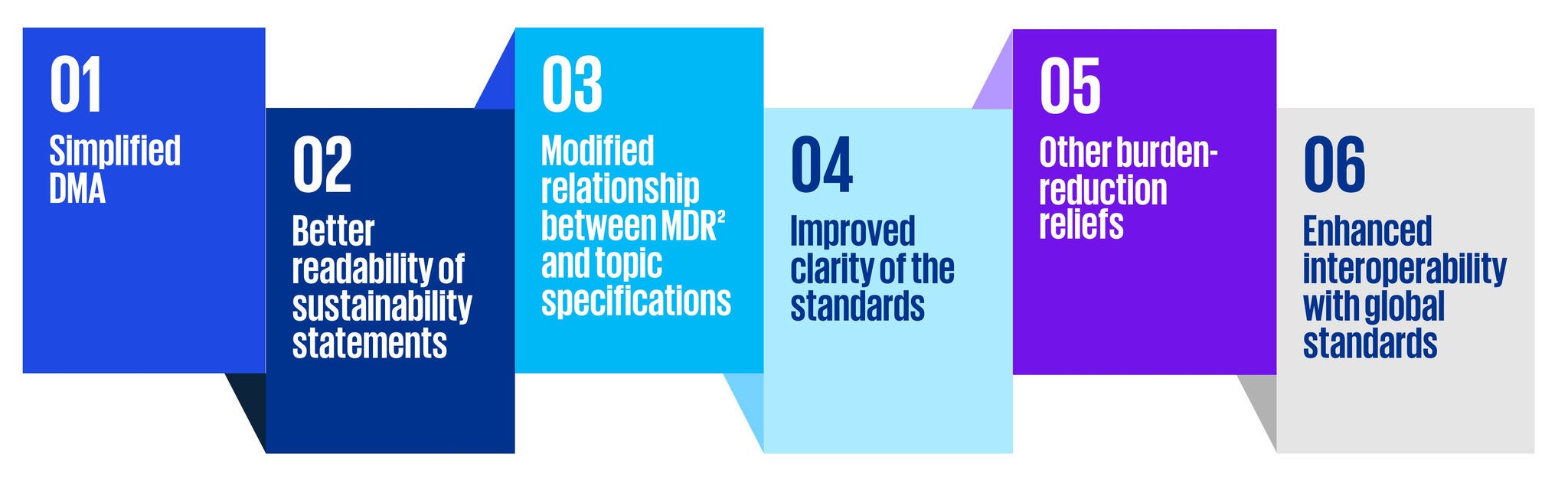
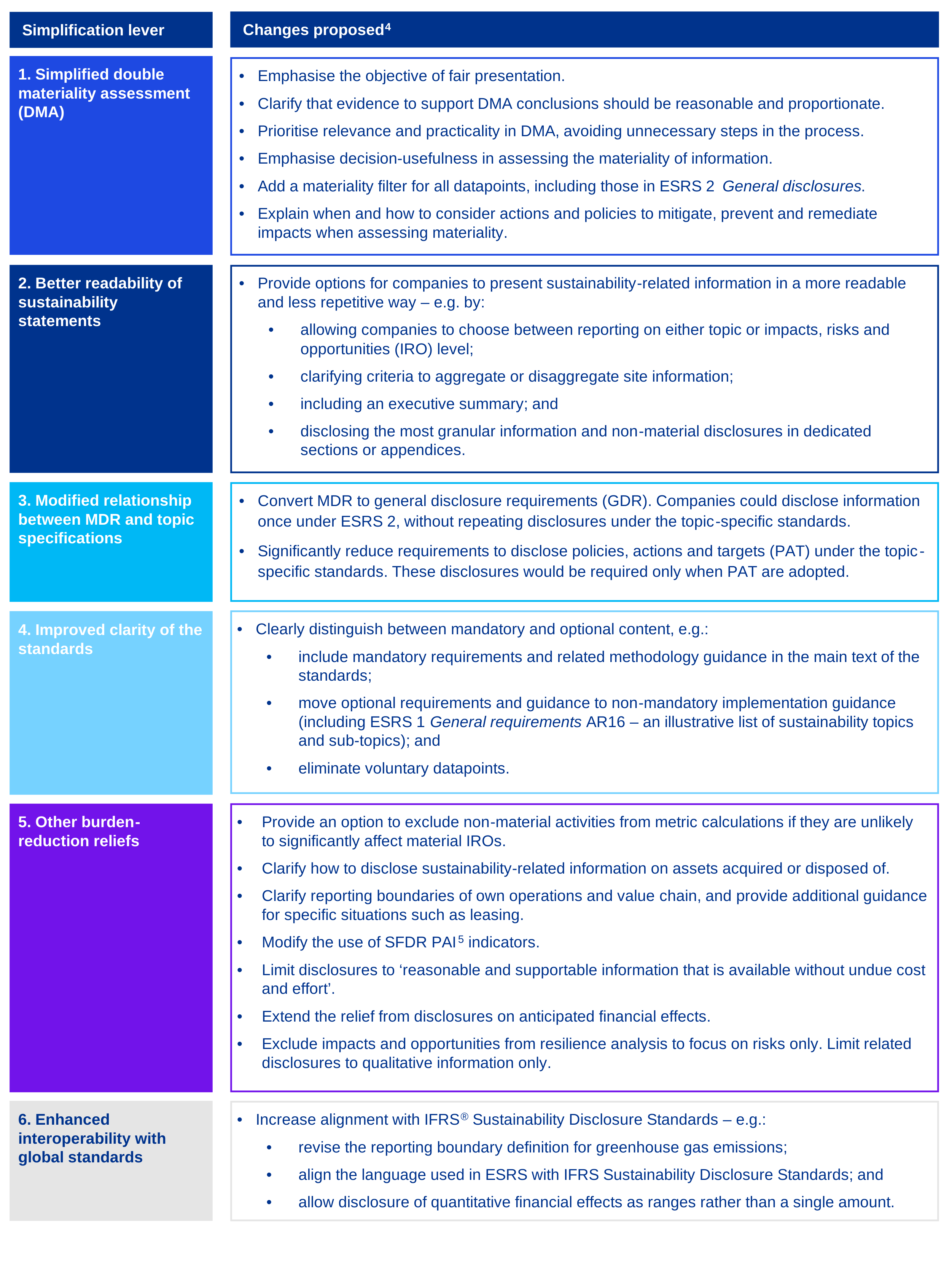
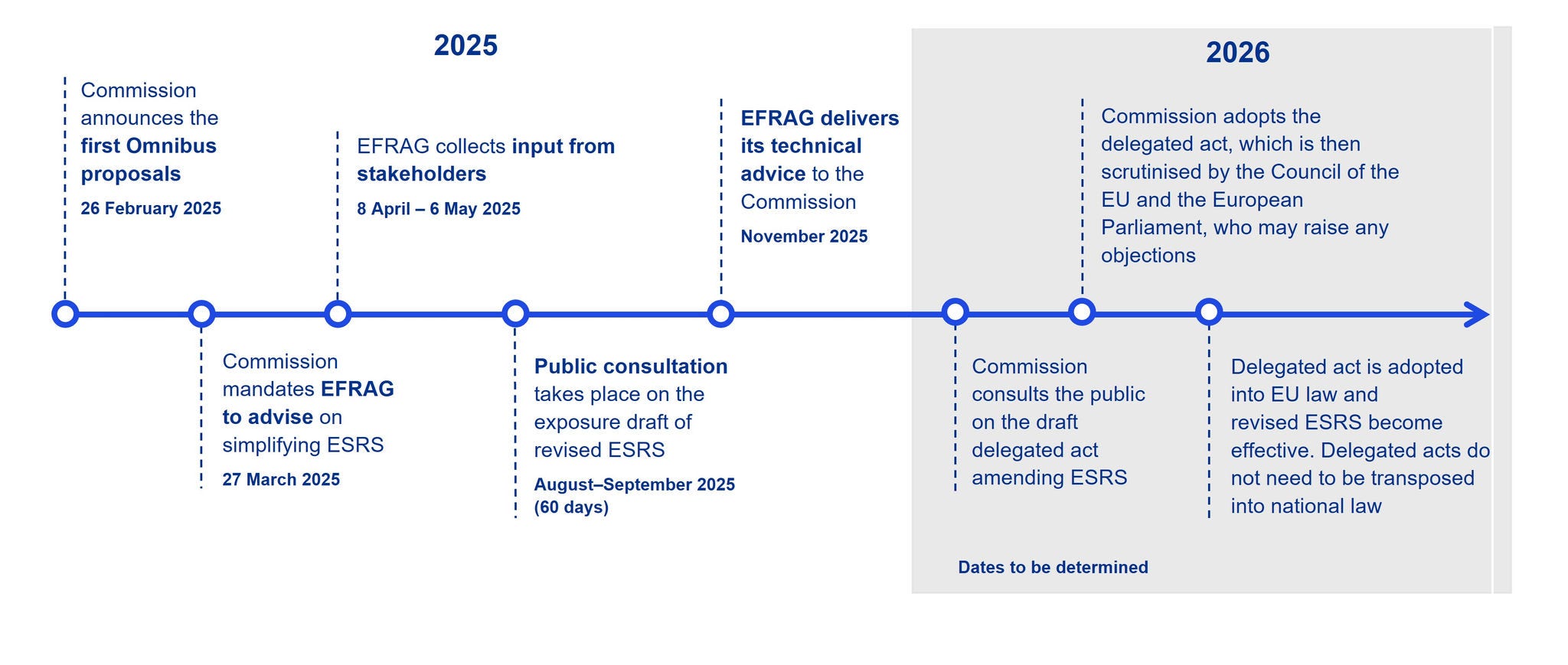
Over the summer, EFRAG issued a proposition for the amendments to the European Sustainability Reporting Standards (ESRS). Although the ESRS might still change under influence of an ongoing feedback and consultation process, the proposed changes already provide a clear picture of what future reports will look like and which actions companies should begin considering. Despite the simplification proposed, the workload should still not be underestimated.
We’re seeing that the reduction in mandatory data points does not correlate exactly to the anticipated reduction in workload. Simplification is targeted primarily at qualitative data points, while most quantitative data points remain unchanged. Several analyses - such as the climate scenario analysis or climate transition plan - still remain relevant under the amended ESRS. Preparing for reporting will thus still require time and resources. For wave 2 companies, the stop-the-clock initiative offers valuable time to ensure you’re fully prepared.
Moreover, while compliance pressure may have eased, ESG expectations from stakeholders remain high. ESG-related risks and opportunities persist, and double materiality remains the best lens through which to identify what truly matters.