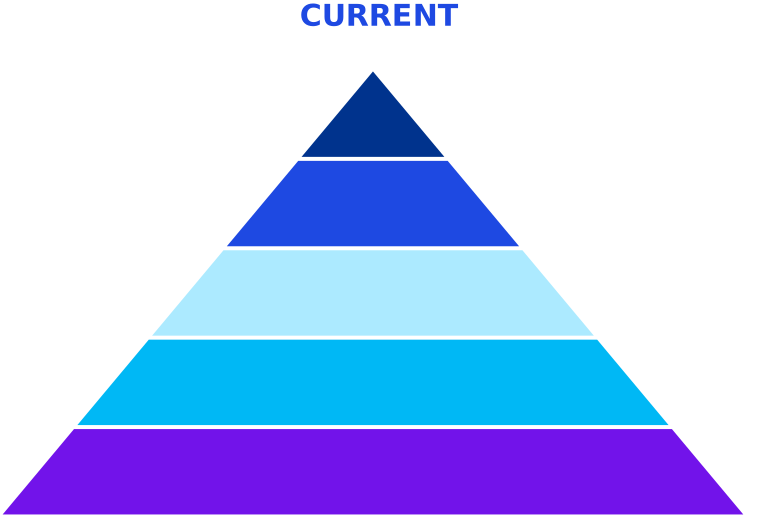
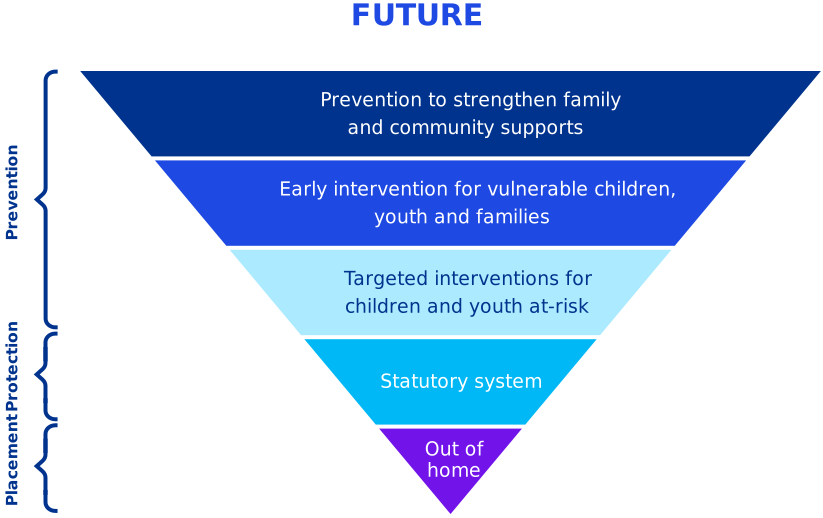
Answer: Transitioning to a prevention-focused model in child and family services can present several expected and unexpected challenges that organizations must navigate effectively. These challenges include resistance to change, the complexities of integrating new systems, and providing staff with adequate training and resources.
A significant challenge is addressing funding barriers. Child and family services have experienced mixed success in reallocating resources towards prevention and early intervention, often still focusing on reactive interventions. Many jurisdictions continue to concentrate funding and services on investigation and placement support, however, there is a growing desire to shift focus towards prevention.
Now more than ever, research indicates that preventative models are not only significantly less costly but also generate substantial positive systemic impacts for children, youth, and families, whole simultaneously enhancing the financial outcomes for public and private sector and reducing overall social costs.
Example: Georgia (US) implemented a State of Hope initiative in an effort to bring together non-profits, government, business, and community and build support systems that prevent conditions that threaten the safety and well-being of children and families.5 Floyd County in Georgia brought together community partners to develop a public and private partnership that could address the foster care crisis – Restoration Rome. Through trauma-informed care, children and families are provided activities and opportunities within the community to strengthen and preserve the family unit. Projected fiscal year savings through the reduction of the number of children in care, or children placed out of county are anticipated to be a $150,000 return on investment equaling $625,000 year 1, serving 30 families.6
5. Georgia Division of Family and Children Services. "State of Hope." Accessed March 2025. https://dfcs.georgia.gov/about-us/state-hope
6. Ibid