The fight against tax avoidance and profit base erosion has been high on the agenda of international bodies – including the Organisation for Economic Co-operation and Development (OECD) and the European Commission (the Commission), as well as local tax authorities for the last decade. Just looking at an EU-level, we have seen the adoption of several initiatives stemming from its 2016 Anti-Tax Avoidance Package, aimed at preventing aggressive tax planning and creating a level playing field across the EU, supported by the Commission’s efforts to monitor the accurate implementation of the rules and to ensure their enforcement.
The Court of Justice of the EU (CJEU) also plays an important role by interpreting and clarifying EU anti-abuse legislation. The Court’s decisions in the ground-breaking Danish cases[1] (see ETF Issue 396 for details), have shaped the European taxation landscape, both in terms of legislative changes impacting the use of conduit companies for tax purposes and the practice of local tax authorities and local courts. In short, through the Danish cases, the CJEU provided guidance on the interpretation of the concept of abuse under EU law and clarified that, where abuse exists, Member States are required to deny the benefits of an EU Directive even in the absence of domestic or other anti-abuse provisions. The cases also offered guidance on the interpretation of the beneficial owner concept, in particular under the Interest and Royalties Directive.
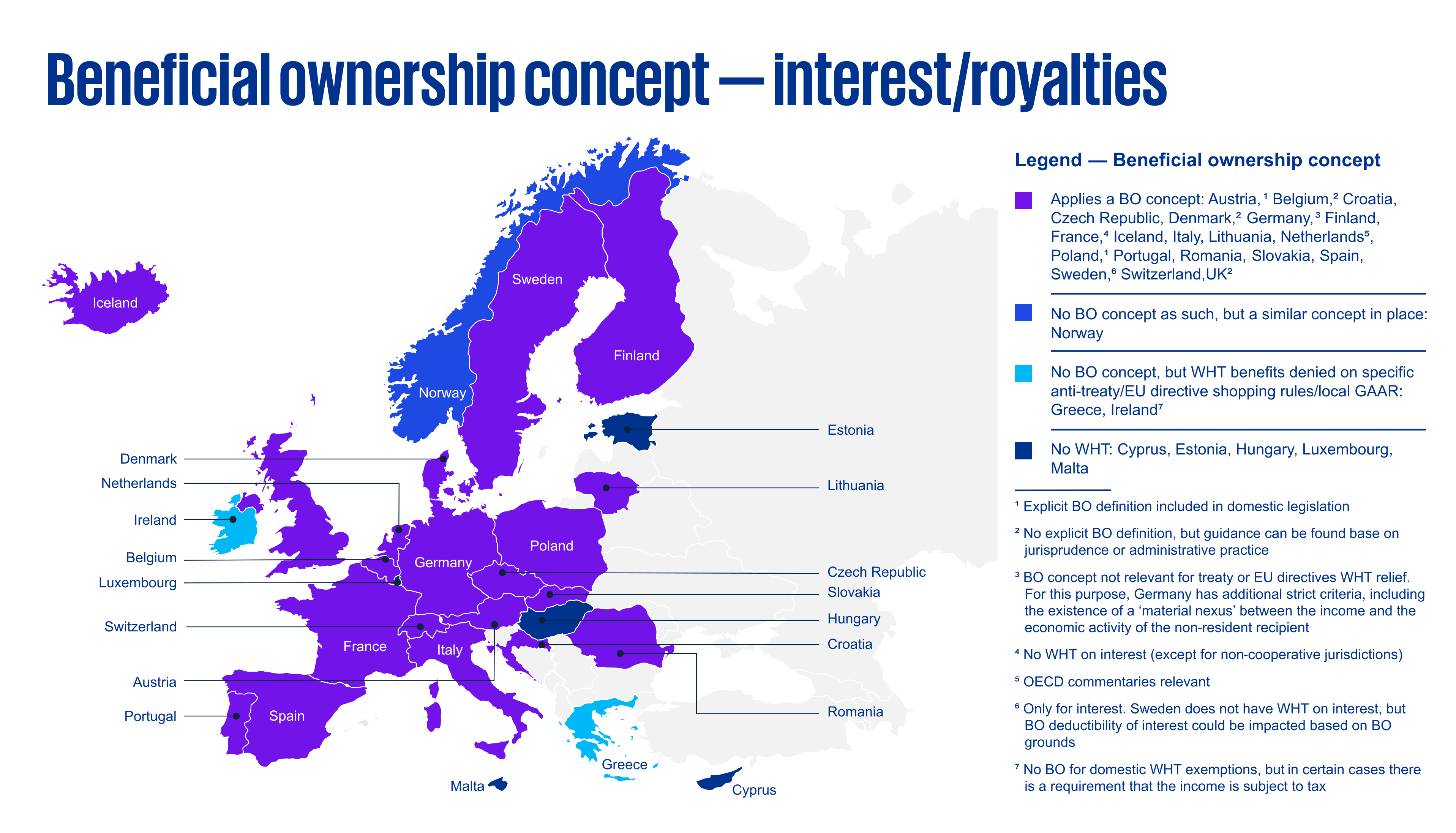
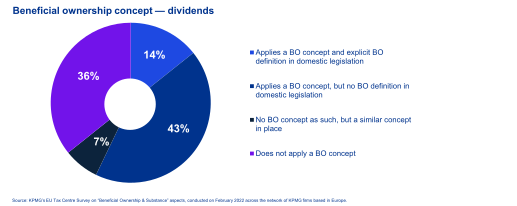
Against this background, KPMG’s EU Tax Centre launched earlier this year an internal survey across the network of KPMG firms based in Europe (a selection of EU[2] countries, Iceland, Norway, Switzerland and the UK). The aim of the exercise was to help us evaluate whether the Danish cases have had an impact in practice on how Member States approach the subject of abuse and the beneficial ownership concept when applying tax treaties and EU Directives. We were also interested in understanding the variety of wider anti-treaty shopping and anti-tax abuse frameworks applicable at a local level, with a particular focus on withholding tax-related measures.
In this article we aim to present a few trends that resulted from the responses received, as well as key takeaways for multinationals involved in cross-border activities in the European Union.