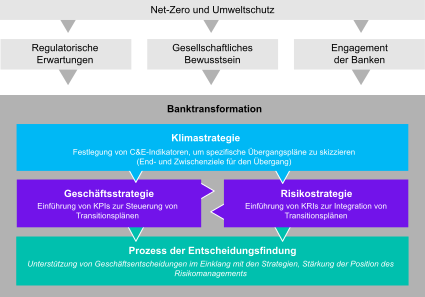
KPMG's project experience and the ECB's observations of best practice show that banks with advanced approaches implement different K&E KRIs and KPIs. For example, a KRI may represent the threshold for the degree of deviation from the climate-related transformation pathway, while a KPI may reflect the extent of financed emission reduction targets at portfolio level.
By integrating H&I risks, KPIs and KRIs into corporate strategy and Risk management, banks can better steer towards their H&I goals and strengthen their decision-making process, especially in lending. Banks that proactively set H&I targets in close cooperation with Risk management gain more concrete insights for managing H&I risks and can better assess the potential impact of climate and environmental events on their business.
In the article "The need to act: Climate & environmental indicators in banks' strategies", we discuss the challenges banks face when implementing H&I risks, KRIs and KPIs, how they can practically address these challenges and the benefits of taking appropriate action.