Targeted, data-driven, future-proof
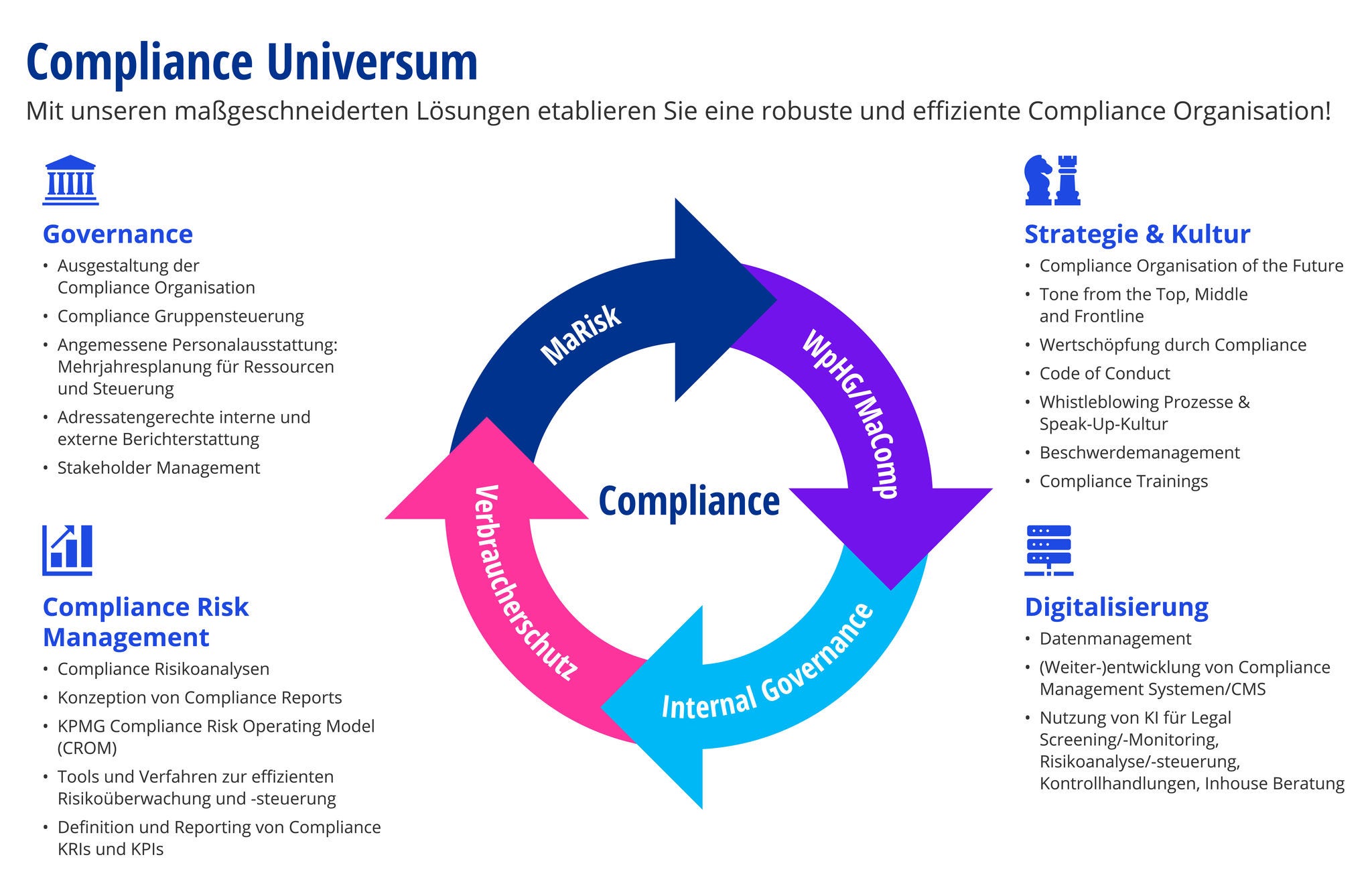
Increasing regulatory complexity, growing volumes of data and mounting pressure to improve efficiency make digitalisation a key component of a future-proof compliance organisation and effective compliance risk management. We advise financial institutions on how to make compliance more efficient, transparent and relevant to management through the targeted use of technology – always in line with regulatory expectations.
A digital compliance management system that scales and provides guidance
We support banks and insurance companies in the design, further development and implementation of a digital compliance management system (CMS) for compliance governance and meeting regulatory requirements – whether modular, integrable or built from scratch as a holistic solution.
Our services include, amongst other things:
- Analysis of the existing CMS and identification of specific opportunities for digitalisation and automation,
- Design of digital process, control and documentation architectures for compliance processes,
- Introduction of automated workflows and compliance automation for key compliance processes,
- Integration of RegTech solutions, monitoring modules and reporting platforms.
- Working closely with you, our experts will develop a CMS: a system that is scalable, technologically robust and capable of withstanding regulatory scrutiny – whilst simultaneously enhancing transparency and manageability.
AI in compliance – regulatory compliance assured, operationally viable
We advise financial institutions on the informed selection, evaluation and implementation of AI-based solutions in compliance-relevant areas – with a clear focus on traceability, governance and supervisory compliance.
Typical areas of application include:
- AI-supported processes for sanctions and PEP screening,
- machine learning approaches in fraud and transaction monitoring,
- automated classification and analysis of documents (e.g. contracts, policies),
- GenAI consultancy for policy management, control descriptions and reporting,
- design and implementation of AI governance models to meet regulatory requirements.
Our approach combines technological innovation with clear compliance, risk and governance standards – ensuring that AI delivers genuine added value whilst remaining compliant with regulatory requirements. Get in touch with us now.