

Whether due to regulation, social change or a new subsidy incentive system, the relevance of climate protection strategies in the public sector is increasing. But how can implementation and efficient controlling be achieved? In the white paper "No transformation without data", our experts explain the critical role of a key success factor: ESG data.
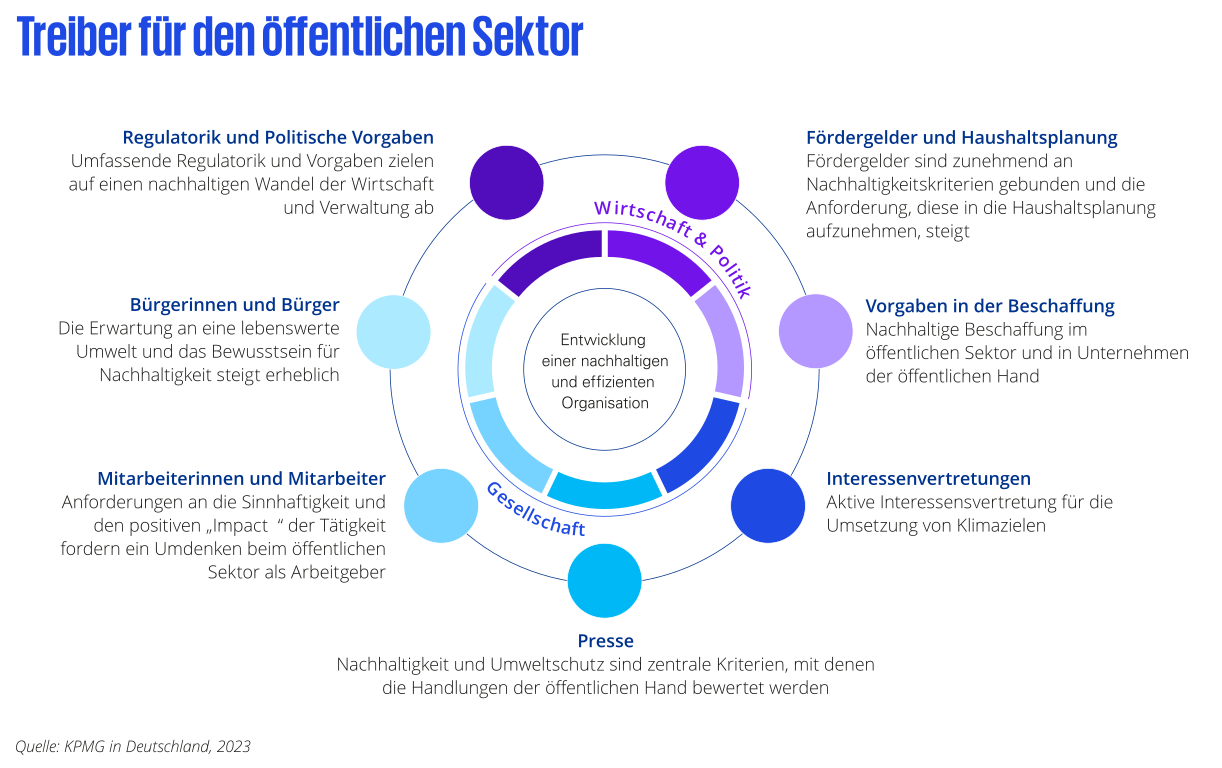
The public sector is an ESG pioneer - but digital foundations are often lacking
Not least because of the diverse stakeholders - from citizens and employees to industry - the public sector is in a prominent position as a role model for the ESG megatrend. Data-driven, comprehensible decisions are therefore essential. However, data is sometimes not digitised, incomplete, available in various formats or of poor quality.
Due to a lack of data, decisions are based on assumptions or short-term trends
The lack of key figures makes preliminary comparisons and analyses difficult. Scarce resources can hardly be used in a targeted manner. If administrations do not know who their ten largest emitters of greenhouse gas emissions are, for example, measures are based on subjective assumptions or observations of short-term trends.
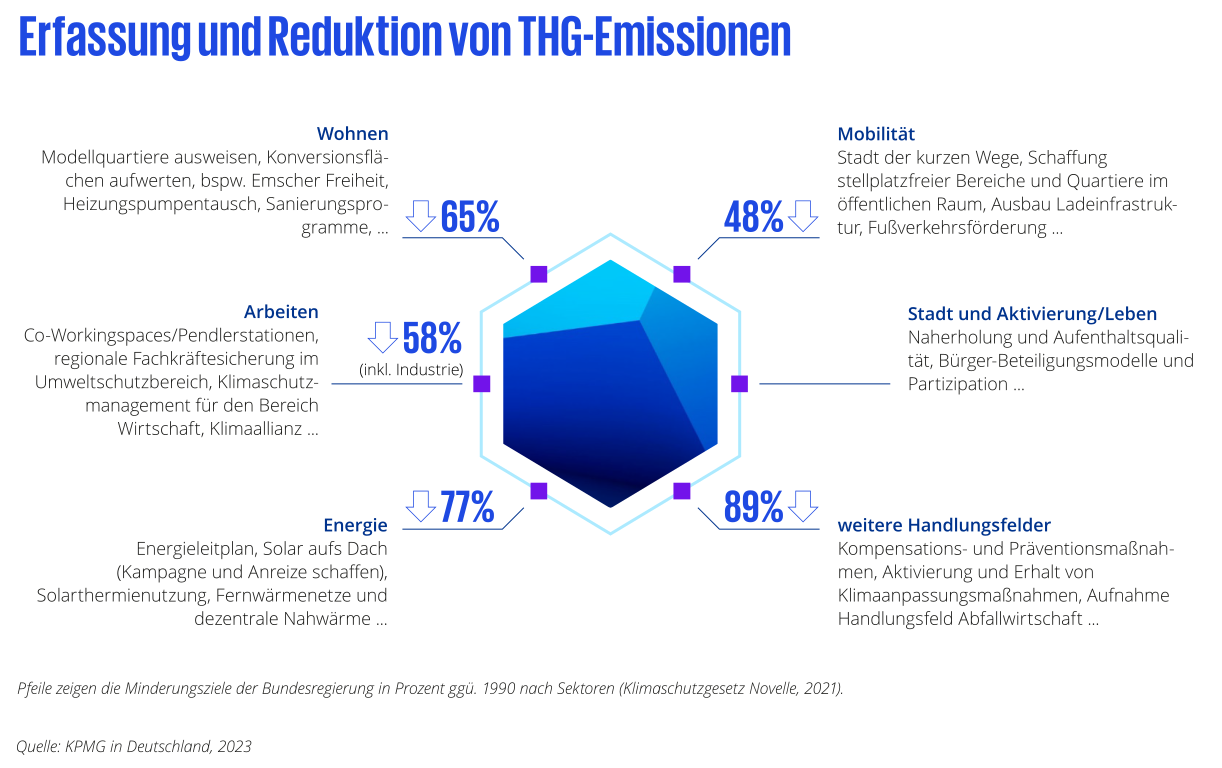
Flexible and scalable data platforms are necessary for ESG transformation
Flexible and scalable ESG data platforms are becoming all the more important for the public sector in view of the desired climate-neutral future, our authors explain in the white paper. They also describe what is important when implementing a strategy in three phases - from analysing the initial situation to implementation and rollout.

More KPMG insights


Your contact

Pier Stefano Sailer
Partner, Consulting, EMA Head of Government & Public Sector, Global Lead Partner EU Institutions
KPMG AG Wirtschaftsprüfungsgesellschaft