

Today, companies are faced with mandatory and regulatory frameworks for sustainability reporting. These are intended to ensure consistency and enable managers and stakeholders to scrutinise impact and results.
Sustainability also has an economic effect
In addition to the regulatory element, sustainability also has an economic effect. According to the latest KPMG Technology CEO Outlook, 55% of Chief Executive Officers (CEOs) of technology companies are convinced that environmental, social and governance (ESG) programmes improve the financial results of their companies. This is a significant increase compared to the previous year (38 per cent).
Sustainability initiatives and the associated reporting go hand in hand with long-term commitments, for which company managers should plan human and financial resources. The twelfth edition of the international KPMG Survey of Sustainability Reporting 2022 analyses global trends in sustainability reporting.
For this year's study, KPMG's experts analysed numerous reports and websites of the 100 largest companies from 58 countries on financial, sustainability and ESG topics. These 5,800 companies - also known as the "N100" - provide reliable results for the global economy. Companies from the technology, media and telecommunications (TMT) sectors make up ten per cent of the N100.
TMT is one of the leading sectors in reporting emissions targets
In 2015, the Financial Stability Board established the Task Force on Climate-related Financial Disclosures (TCFD) to improve corporate reporting on climate-related risks and enable financial stakeholders such as banks and investors to include such risks in their decision-making processes. Within two years, this has prompted around half of the N100 companies to publish their climate targets and targeted emissions reductions in one way or another. Today, more than 70 per cent of these companies already provide this information.
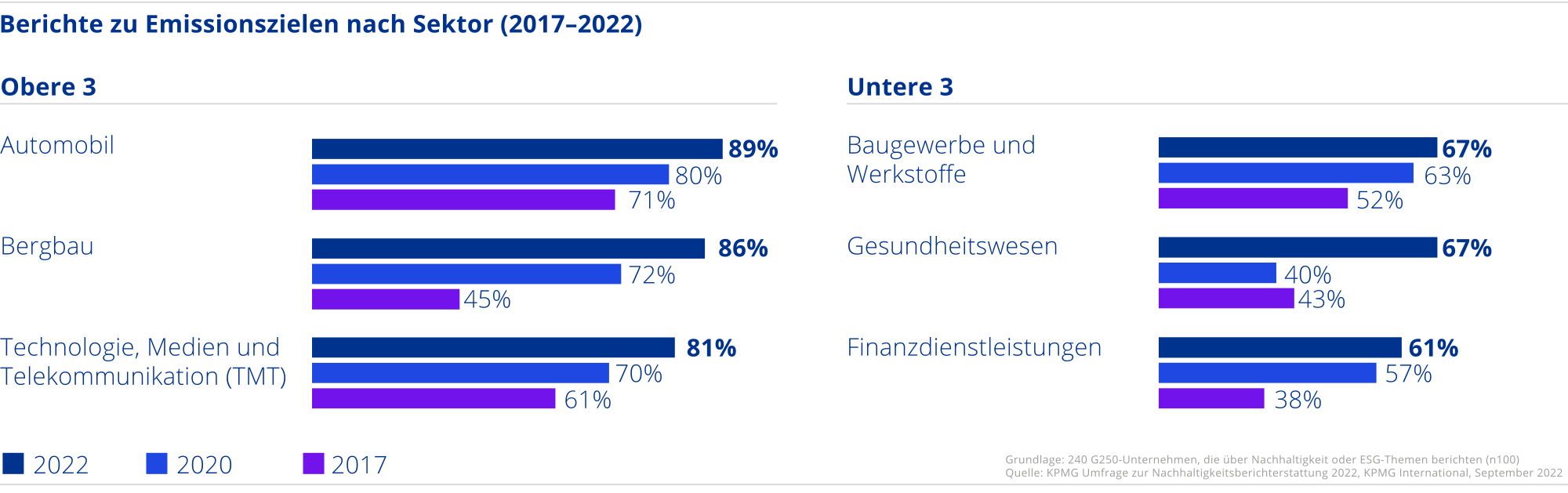
Resource-intensive sectors such as the automotive and mining industries are leading the way in reporting CO2 emissions targets. However, the noticeable growth in TMT is also very promising: in 2017, 61 per cent of large TMT companies published figures on this topic, rising to 81 per cent in 2022. Following this increase, the sector is now in third place.
As socially oriented pioneers, TMT companies have long been highly sensitised to their social and environmental responsibility and use resources and visibility to make a positive impression on regulators, investors and customers through extensive ESG activities.
TMT has more than doubled its adoption of TCFD recommendations
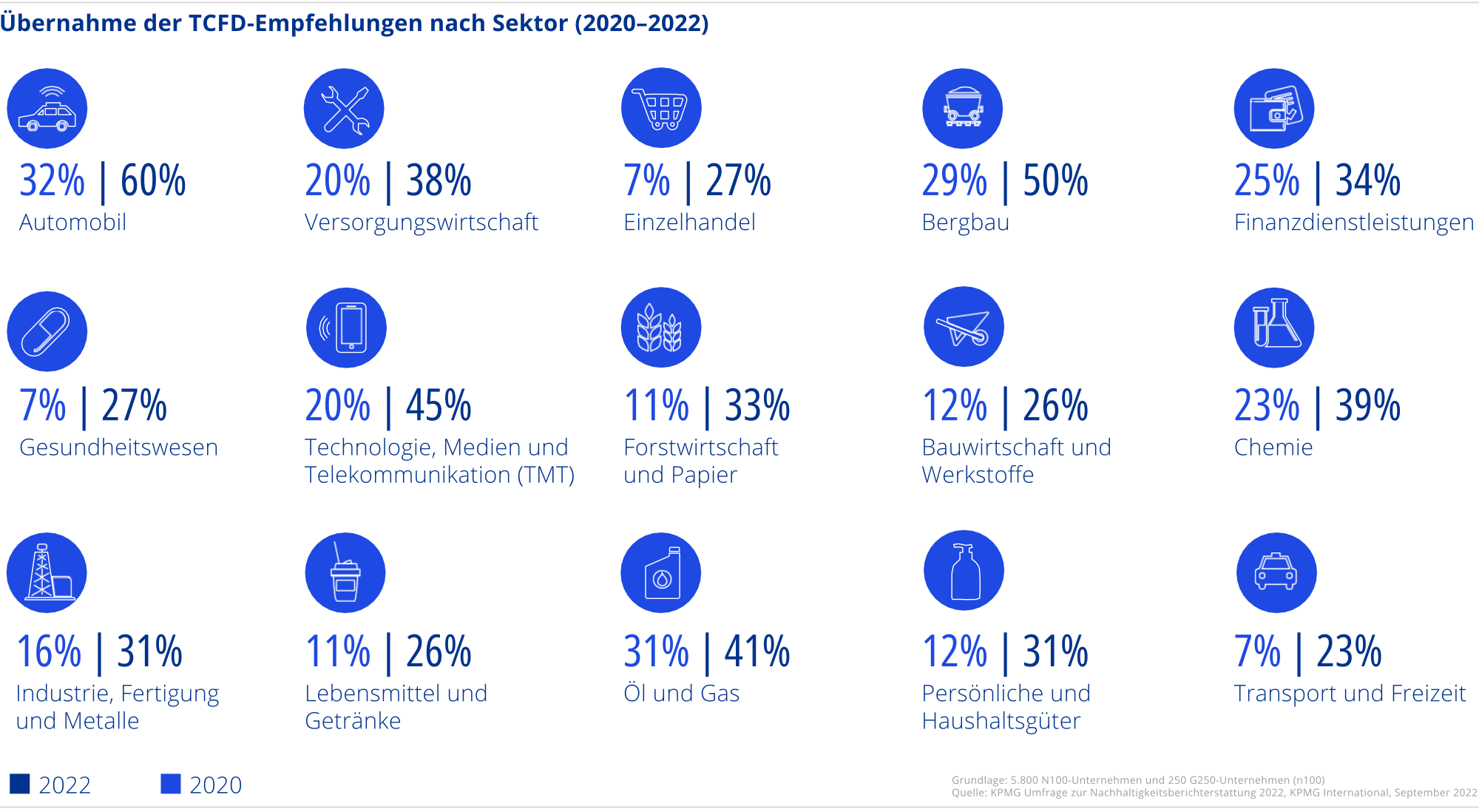
Our Sustainability Survey shows a significant increase in companies adopting the TCFD recommendations, especially since the G7 countries agreed on TCFD-aligned financial reporting in 2021, taking climate aspects into account. A third (34 per cent) of N100 companies now report in accordance with the TCFD recommendations. This is almost double the figure from 2020.
The leading sectors here are automotive (60 per cent), mining (50 per cent) and TMT (45 per cent). In the TMT sector, the introduction of corresponding reports has more than doubled since 2020, faster than in many other leading sectors. As ESG disclosures continue to grow in importance on the capital markets, clear and standardised climate reporting is essential for all companies. The upward trend is encouraging, but there is still clear room for improvement.
TMT lags behind in reports on biodiversity risks
In 2020, KPMG's sustainability study analysed for the first time how companies report on their risks resulting from the loss of nature and biodiversity, taking into account only sectors with a high or medium risk. In 2022, all sectors were considered. As the threats to nature and biodiversity also affect companies and their supply chains, the consideration of the corresponding risks has become more urgent and relevant.
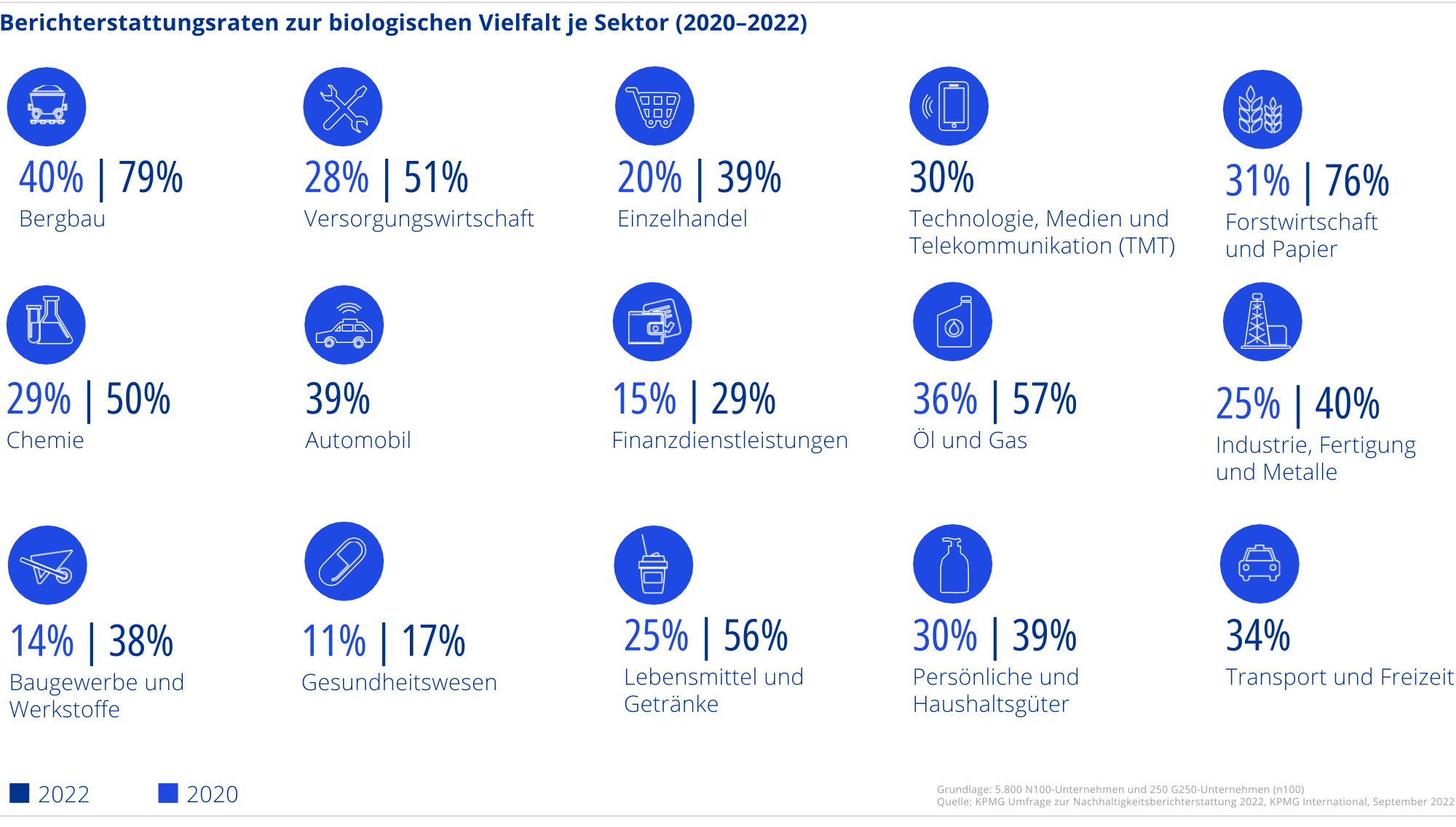
The review of all sectors revealed that, on average, 40 per cent of N100 companies currently publish reports on risks to their business from the loss of biodiversity and nature. TMT is not considered a high or medium risk sector. Nevertheless, this year's first reference value for TMT companies reporting biodiversity risks is comparatively low at 30 per cent and well below the average. This shows that many TMT companies need to take action with regard to reporting on these risks.
TMT companies should also rapidly develop their biodiversity-related risk reporting, as strengthening global biodiversity and natural systems can mitigate climate change. The introduction of new reporting standards, such as the Task Force on Nature-related Financial Disclosures standards, is critical to promoting improved and standardised disclosures.
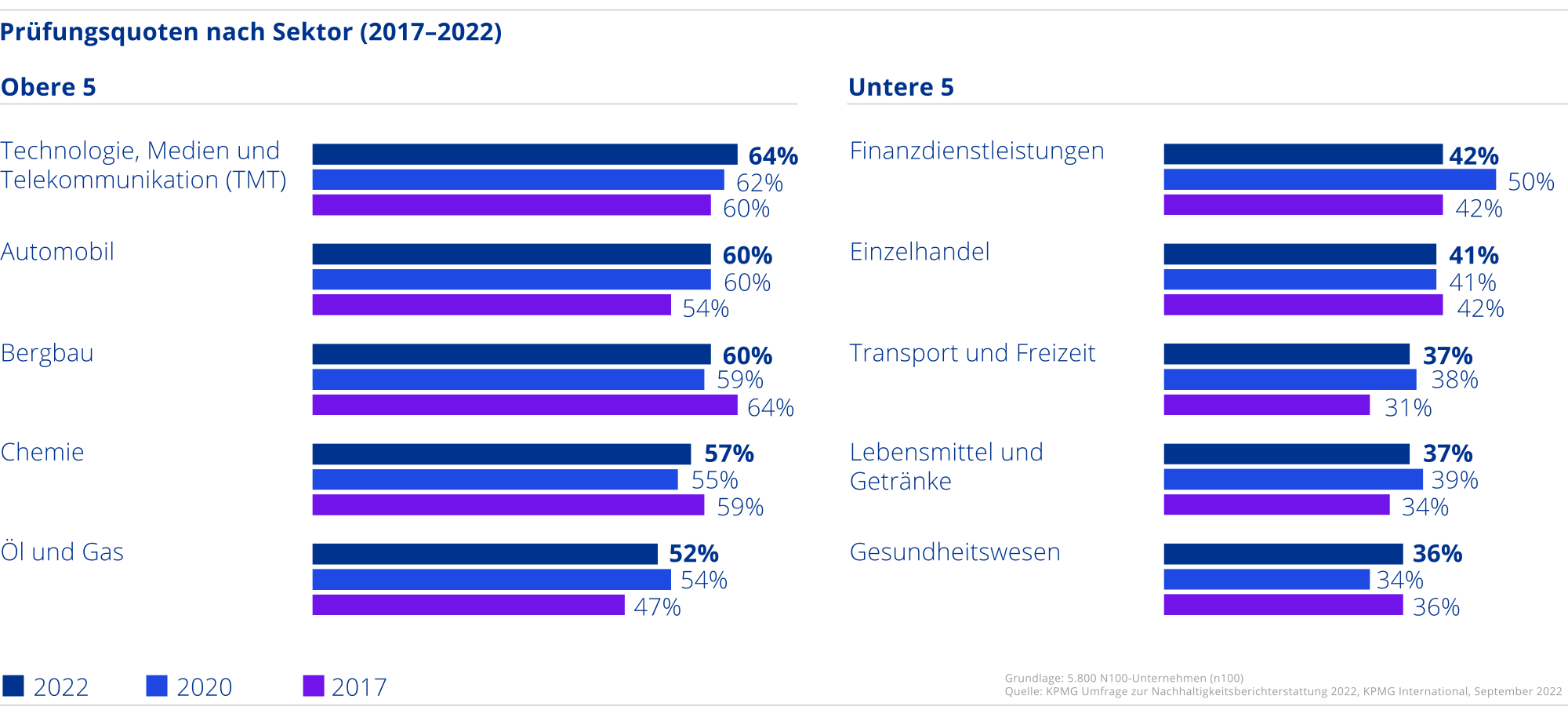
TMT once again leads the way in report review
The independent external verification of sustainability reports strengthens the credibility of the information and creates trust among stakeholders.
Almost half (49 per cent) of the N100 companies used external and independent assurance services in 2020. Surprisingly, the rate fell to 47 per cent in 2022. However, this figure should rise again in the coming years due to new regulatory requirements.
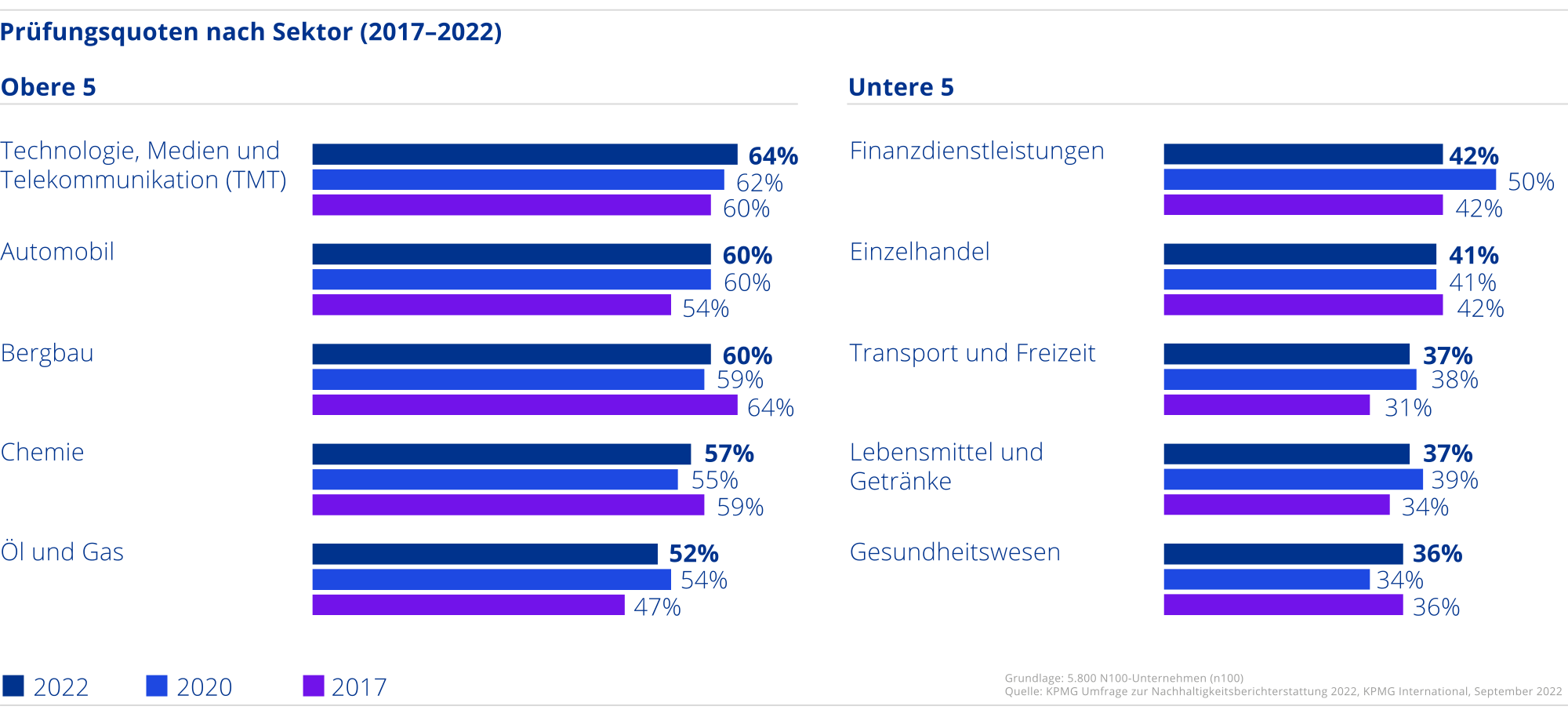
The sector is the leader in this indicator across all industries and has shown a continuous increase over the last three survey periods. The audit rate for companies in the sector is currently 64 per cent, well above the N100 average.
Considerations for sustainability reports of TMT companies
Sustainability reporting is evolving rapidly in the face of numerous frameworks, with some requirements overlapping and a lack of overarching consistency. The range of ESG metrics and disclosure requirements is very complex and comprehensive. It varies by sector, size and region. A company's ESG performance is measured against many different indices and benchmarks.
In addition, a growing number of investors attach as much weight to non-financial information as to financial data. In their view, companies that measure and report ESG risks are more likely to manage those risks better and deliver greater long-term value.
TMT companies have the following concrete opportunities to optimise their sustainability reporting:
- Develop an understanding of how climate change impacts financial reports,
- Align sustainability and ESG reports with key mandatory and voluntary reporting standards, such as the GRI Standards and the TCFD and Sustainability Accounting Standards Board requirements,
- identify stakeholder expectations of reporting,
- create effective ESG reporting based on materiality assessments and benchmarking
Our ESG experts can show TMT companies ways to build trust, mitigate risk and create value for a sustainable future. We provide training, perform materiality assessments, support the review of ESG reports for compliance with existing reporting requirements and benchmark against best practice.

Your contact

Katja Modder
Partner, Tax, Head of Technology, Media & Telecommunications (TMT)
KPMG AG Wirtschaftsprüfungsgesellschaft