
      With the changeover of the licence model to S/4HANA, companies are increasingly confronted with a surprising and costly realisation: Licence allocation is now also based on authorisations.

      In the price and conditions lists for the ERP Central Component (ECC) software, SAP already refers to the licensing obligation of a defined user to run the SAP software in accordance with their scope of authorisation. In practice, however, actual usage has been used as the basis for licensing to date. The licensing obligation of users for S/4HANA continues to apply according to the authorisation granted. The new feature is that with the introduction of S/4HANA Trusted Authorisation Review (STAR), an evaluation tool has been created for the migration that checks the licence allocation based on the authorisations granted.
      Avoid high additional costs

      This new evaluation tool makes it possible to determine the required licence type for users and roles on the basis of authorisation objects and characteristics. For SAP customers who do not yet have an optimised authorisation concept and licence management, this can lead to a significantly increased need for expensive professional licences. For many companies, this means a considerable financial risk as a result of significant additional costs. However, these can be avoided through an efficient authorisation concept using the agreed SAP licence/contract provisions.

      Optimise licensing

      Active SAP licence management is crucial, as each user must be assigned a specific licence - depending on the authorisations assigned in the various SAP systems. An analysis of the required licence assignments already contributes significantly to transparency and compliance. However, cost savings and efficient licence allocation are achieved in particular by regularly checking and optimising roles with regard to their licence usage. As many departmental profiles change over the years and new authorisations are assigned as a result, the assigned licences must be continuously reviewed. In order to minimise costs, the proven minimum principle of "as little as possible, as much as necessary" applies. In order to determine the current status, it is necessary to analyse the authorisation concept from a licence perspective. Usage analyses and a comparison between potential and actual usage (Can Do vs. Did Do) should be carried out at set intervals in order to identify optimisation potential. Even the most expensive licence type by far, "Developer Access", requires a critical examination and in-depth understanding of the technical and contractual framework conditions.

      Protect against financial risks

      With Authorisation & Identity Management, companies can automate the administration of their authorisation concept and design it cost-efficiently. This ensures that the role concept and licence usage are optimised and harmonised. High licence costs due to an overly generous authorisation concept can thus be avoided. In addition to licence optimisation, an efficient SAP authorisation concept also enables compliance requirements to be met and avoids access risks. This results in an enhanced security structure, optimised risk management and increased productivity.

      Our solution offers transparency across your SAP systems

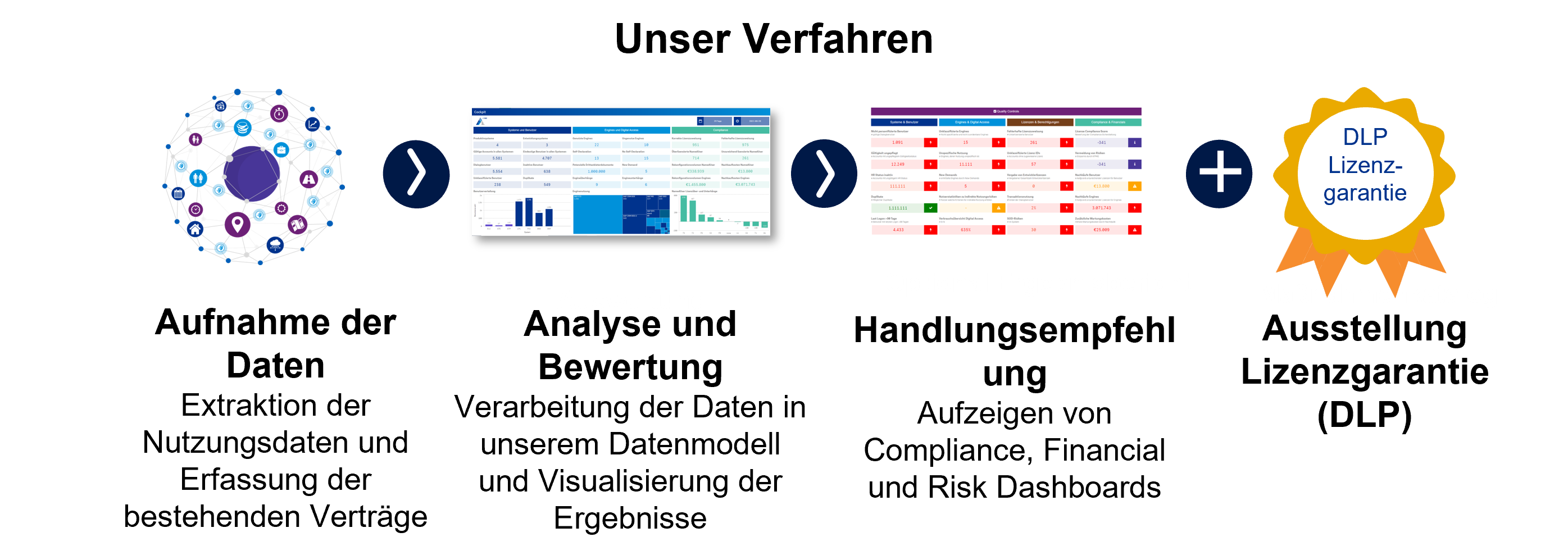
      The Authorisation & Identity Management solution (AIM) from KPMG contains data-driven analysis processes and enables complete transparency across the SAP systems. AIM's SAP licence management gives you an optimised licence situation. The technical and financial dashboards, with which you can continuously plan, monitor and control your licence compliance and finances, also contribute to this. In order to identify optimisation potential, the data-driven analyses can be based both on actual usage and on the authorisations granted. With the cost simulation based on the KPMG pricing benchmarks and the SAP product portfolio for ECC and S/4HANA, you can determine, plan and implement a suitable licence and contract model as part of your S/4HANA transformation.


      More KPMG insights for you

      Your contacts