
      Germany remains a primary investment location in Europe for Chinese companies with existing business in Germany. This is a key finding of our German-Chinese Business Confidence Survey 2025, which we conducted for the first time together with the Chinese Chamber of Commerce in Germany (CHKD). The survey analysed the business expectations of 104 Chinese companies based in Germany. The survey results paint a multi-layered picture of sentiment between the strategic importance of the location and structural hurdles - and they demonstrate new dynamics in times of geopolitical upheaval.


      German-Chinese Business Confidence Survey 2025

      US realignment and the German government's infrastructure package lead to an increased focus on Germany.

      Two people on the stairs

      Five remarkable facts at a glance

      • 21% of the companies surveyed are planning new investments in Germany. This puts it in first place in Europe - ahead of Hungary (18%) and Poland (12%).
      • 30% want to increase their investments in Germany, 19% even by a fifth more than before.
      • 43% expect sales growth for their company in Germany - more than one in five companies even expect an increase of more than 20%.
      • 41% are planning to increase their workforce, while 42% expect the number of employees to remain constant and only just under one in five companies (18%) expect to reduce their workforce.
      • 30% are increasing their focus on Germany and the EU, including as an alternative sales market to the USA.

      Digitalisation (51%) and the energy sector, including battery technologies (48%), are the fields that are considered particularly promising for future cooperation according to the respondents. For 55 per cent of respondents, proximity to their customers and business partners is the decisive factor for their presence in Germany. Strengthening the reputation and visibility of the corporate brand followed in second place (44 per cent).
      It is essential for Germany to act strategically in its cooperation with Chinese companies. Not isolationism, but an industrial policy guided by interests and targeted corporate cooperation will ensure competitiveness and strengthen the resilience of the location and the German economy.
      Andreas Glunz
      Andreas Glunz

      Managing Partner, Head of International Business

      KPMG AG Wirtschaftsprüfungsgesellschaft


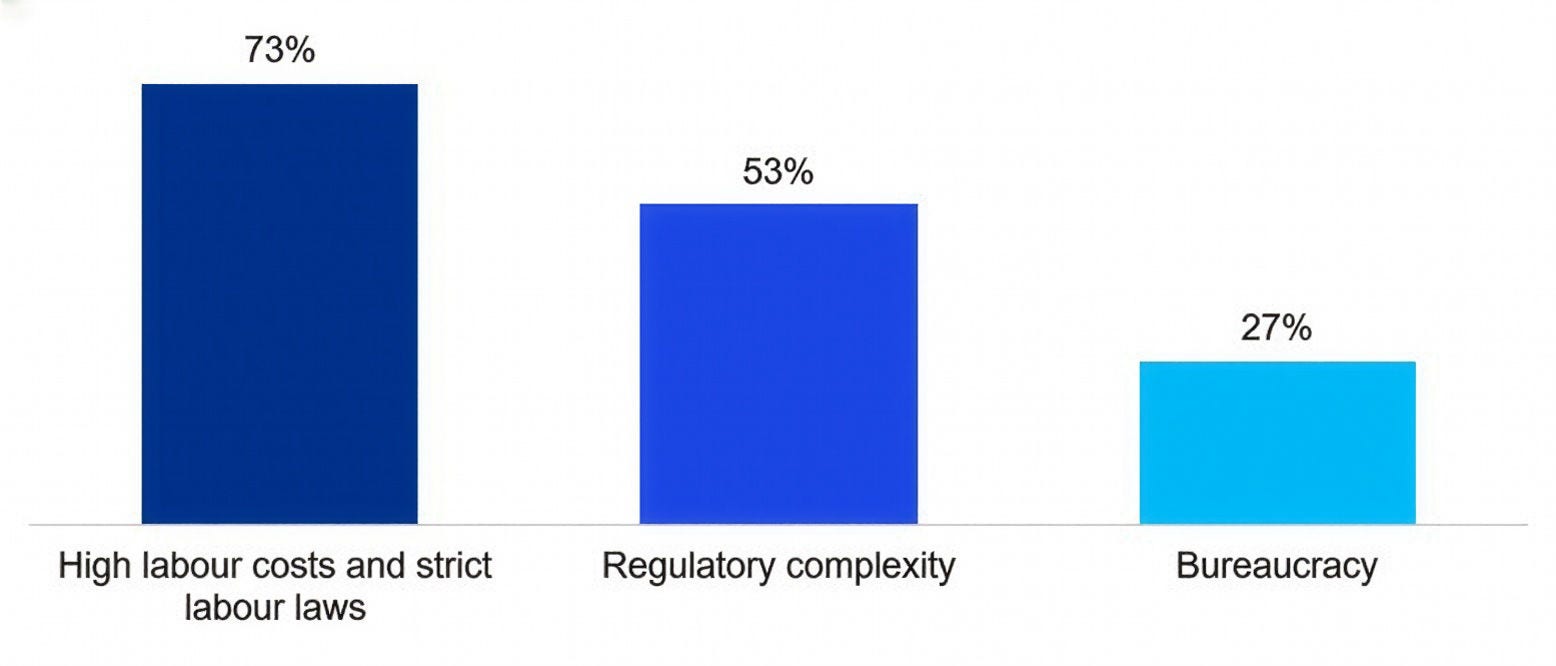
      What is slowing down the commitment of Chinese companies in Germany

      In addition, almost half of the respondents (46 per cent) complain that they are disadvantaged when it comes to accessing funding: Only 5 per cent feel that they are on an equal footing with EU companies. Simpler and faster administrative procedures, clearer and more reliable review processes for Chinese direct investments and improved visa and work permit procedures are also important for future investments.

      KPMG German-Chinese Business Confidence Survey 2025

      Your contact

      Andreas Glunz

      Managing Partner, Head of International Business

      KPMG AG Wirtschaftsprüfungsgesellschaft