

      A chance encounter on the golf course helped set Atte Saari on his career path. While he was studying business law, a lawyer in the same group advised him to specialize in VAT, on the grounds that “hardly anyone really understands it”.

      The advice stayed with him and ultimately led to his current role as a Senior Tax Manager at KPMG.

      Atte describes himself as an advisor who identifies the tax and legal questions arising from a client’s business and brings together the right specialists to address them. What he finds particularly rewarding is seeing the value of that work translate into something tangible for the client.

      “Large property development projects are a good example. You can actually see the client’s business taking shape as an entire new neighborhood begins to emerge. There is something very rewarding about passing by the area later and knowing that you played a part in helping make the project commercially viable,” Atte says.

      VAT is a demanding area of expertise, with legislation developing frequently and new case law continually shaping its interpretation. For Atte, however, that is part of the appeal.

      “That is exactly what makes it such a great field. When your expertise is specialized and you must keep developing it, you can build a strong, sustainable career that is genuinely your own.”
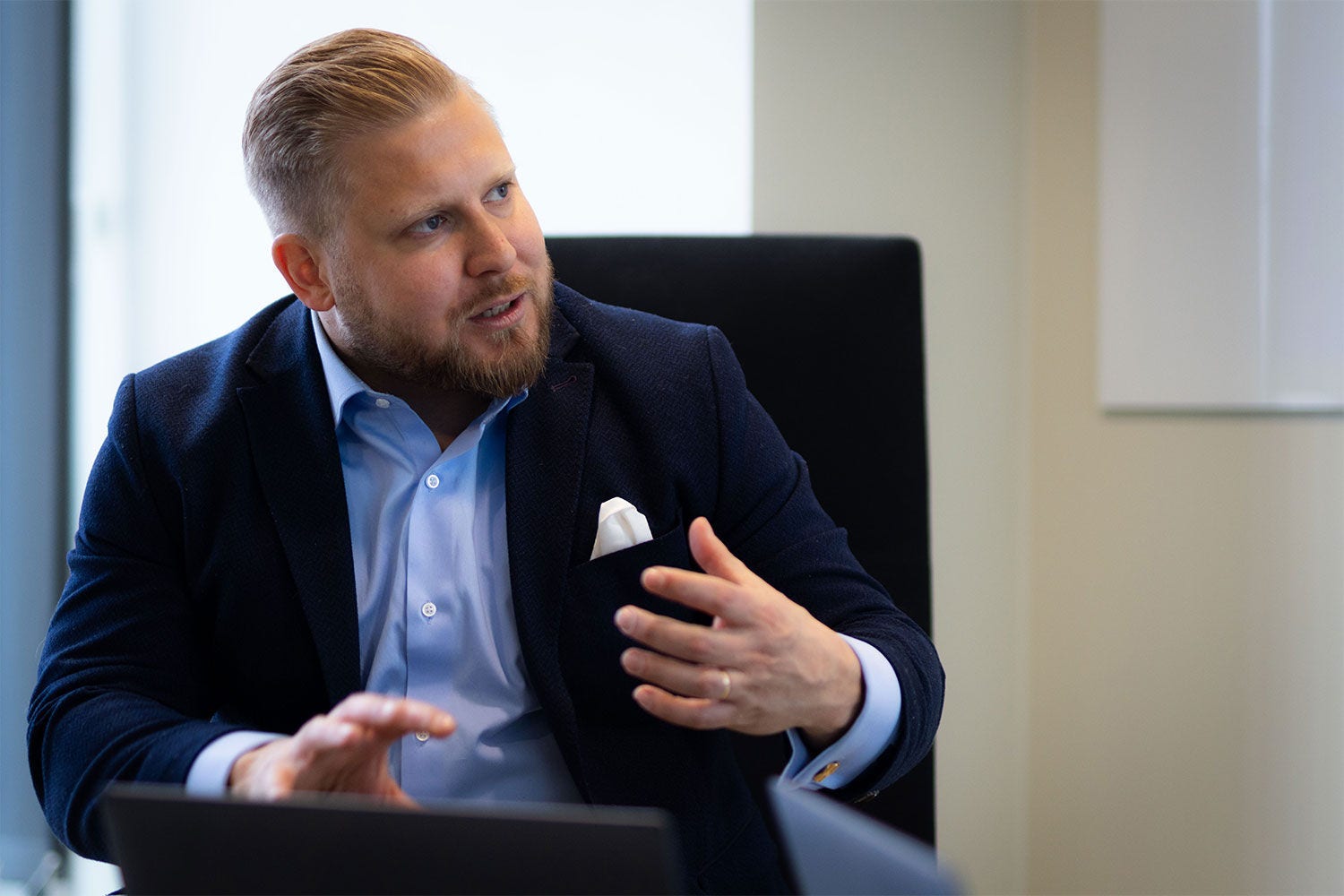
       

      Here are three lessons that have shaped his career:

      1. Try different roles – the right one for you may be something you have not considered yet 

      “When I moved from the Finnish Tax Administration to KPMG as a VAT specialist, my work initially focused on resolving individual tax issues. Then I was invited to join client meetings. I saw how naturally and openly my more experienced colleagues spoke with clients, and I wanted to learn how to do the same.

      Those meetings taught me what tax and legal advisory work looks like in practice. We work closely with our clients, listen to them, and make an effort to understand their business. That enables us to identify not only what they need today, but also the issues they are likely to face in the future.

      I have had a great deal of professional freedom in my work. I have been able to explore areas that interest me and shape my career in a direction that feels meaningful. Over the years, my role has expanded from client work to include people leadership as well.”

      Early in my career, I thought my role had to be narrowly defined and focused on a single area of expertise. It was an assumption I only began to challenge once I had the opportunity to try different types of work.

      Atte Saari
      2. Know where your own expertise ends – and bring in the right people

      “One of the most important skills is recognizing what you do not know. I do not need to have all the answers myself, because at KPMG I am surrounded by highly skilled specialists in their respective fields. I can bring together a multidisciplinary team that looks beyond the immediate VAT question and helps the client address the wider issues surrounding it.

      The expertise of the people here is a major reason why I have stayed at KPMG for almost 15 years. I know that whatever question a client brings to us, there is almost always someone in the organization with the right expertise to help. Working with my colleagues has also allowed me to broaden my own understanding far beyond my core specialty.”

      A client relationship that begins with a VAT question may develop into a much broader engagement covering areas such as international expansion or employment law. When that happens, Atte brings together the right specialists from across KPMG.

      Earlier in my career, I tended to look at assignments purely from a VAT perspective. With experience, I came to realize that the best solutions are rarely created by one person alone. Collaboration is critical.

      3. Don’t let the tail wag the dog – ask the right questions 

      “While working in our real estate and construction industry group, I came to appreciate a simple principle: you cannot let the tail wag the dog. If you ask the right questions at the right time, you are much more likely to get to the heart of the issue.

      Tax matters, for example, should never be considered in isolation. The most sensible approach is to start by identifying the best commercial solution and then make sure the tax treatment works effectively as part of that overall structure.

      The same applies to legal advice. If you look at a business decision solely through the lens of avoiding risk, the lowest-risk option would often be to do nothing at all. The aim should instead be to find solutions that are both commercially sound and legally robust.

      “This work is not just about analysis. Above all, it is about interaction and building trust. My aim is to be a trusted adviser whom both clients and colleagues feel comfortable turning to.”

      This article was produced in collaboration with Duunitori.

      Read more

      What kind of career offers a strong sense of teamwork and continuous opportunities to learn? Authorized Public Accountant (KHT) Anna Liedes shares three lessons that have shaped her career and kept her work at KPMG rewarding for more than a decade.

      Not every conflict is best avoided. Sometimes, the difficult conversations are the “good fights” that move both the work and the thinking forward. Sara Paananen, who leads technology transformation projects at KPMG, shares three lessons that have deepened her expertise and helped her progress in an international career.

      Join us in helping our clients operate in a financially and legally sustainable manner in an evolving business environment.