Tax transparency is here to stay. As anyone involved in the tax arena will be aware, there has been a paradigm shift in the global tax landscape which has resulted in public and political pressure for action to tackle perceived harmful tax practices, particularly by corporate entities.
Information reported under existing ‘non-public’ CbCR requirements is meant to help tax authorities gain a better understanding of the corporate tax profile of an MNE business and structure. However, one other key motivation of institutions such as the EU in their work around tax transparency, is to ensure public accountability and transparency, and promote a more informed public debate around the level of compliance of certain MNEs. Therefore, in parallel with ‘non-public’ CbCR, the EU is also introducing ‘public’ CbCR rules.
The EU CbC report will require information on all members of the group (i.e. including non-EU members) within seven key areas: brief description of activities, number of employees, net turnover (including related party turnover), profit or loss before tax, tax accrued and paid, and finally the amount of accumulated earnings. The information must be broken down for each EU Member State where the group is active and also for each jurisdiction deemed non-cooperative by the EU or that has been on the EU’s “grey” list for a minimum of two years. Information concerning all other jurisdictions may be reported on an aggregated level.
Whilst the EU requirements focus on quantitative disclosures, proposed reporting requirements in Australia lean towards the Global Reporting Initiative 2071 and require a description of the group’s approach to tax, in addition to quantitative tax information.
The entry into force of mandatory public country-by-country reporting in the EU, the ambitious plans in Australia and the FASB income tax disclosure proposal in the U.S. are creating momentum for companies to dedicate time and resources to collecting relevant data and consider going beyond the minimum standards and disclosures set by regulators2 .
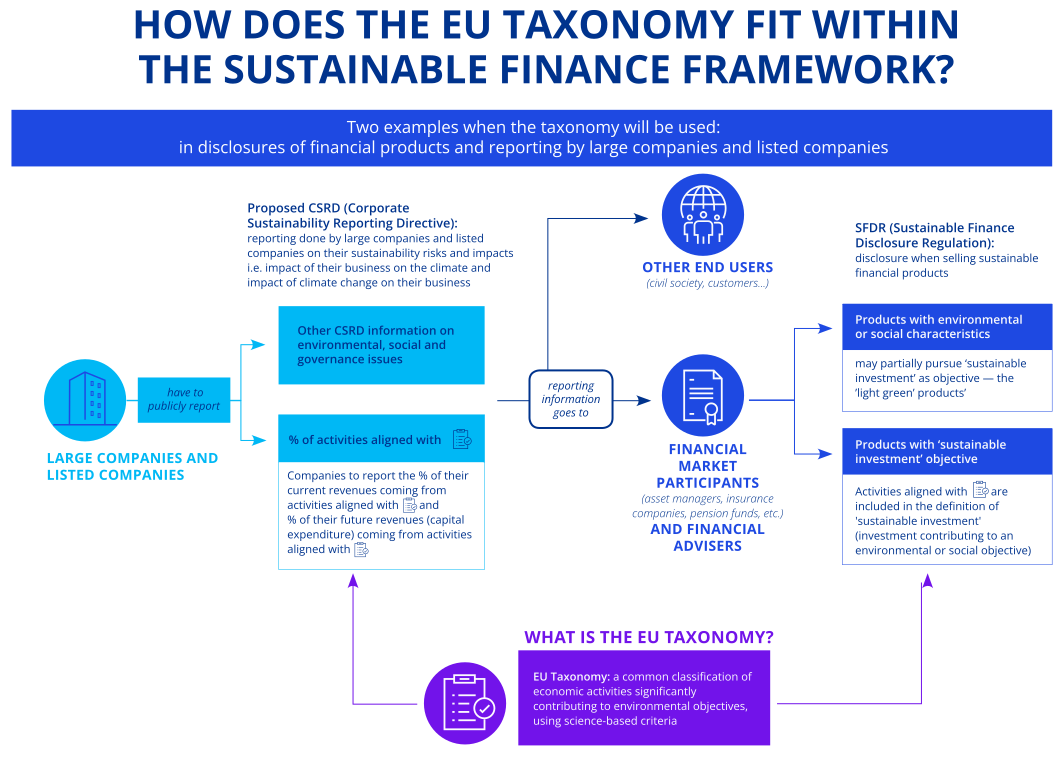
In addition to these targeted tax-related disclosures, information on a group’s tax position will also be relevant in the context of the EU Corporate Sustainability Reporting Directive (CSRD). Under CSRD, companies operating in the EU will need to prepare extensive sustainability reports as part of their management reports. The CSRD is intended to ensure that companies report reliable and comparable sustainability information necessary for stakeholders to evaluate companies’ non-financial performance, with the main goal of improving transparency for all stakeholders. For tax, this will likely represent a step beyond the quantitative data required under EU public CbCR and towards a focus on qualitative information.
With this in mind, this article aims to highlight where tax sits in the context of the new EU sustainability reporting requirements under the CSRD.