As organisations accelerate digital transformation, embrace cloud technologies and navigate evolving regulatory requirements, cyber risk and compliance have become critical business priorities. Managing technology risk today requires a holistic approach that balances innovation, security, governance and compliance while maintaining stakeholder trust.
KPMG in India's Cyber Risk and Compliance practice helps organisations identify, assess and manage cyber and technology risks across their digital ecosystem. Leveraging expertise in cyber strategy, governance, risk management, compliance, cloud assurance, privacy, resilience and technology assurance, we help clients strengthen security, address regulatory obligations and support business growth.
Bringing together capabilities across cyber strategy and governance, cyber maturity assessments, risk and compliance programmes, data privacy, third-party risk management, cloud assurance, IT internal audit, ERP security, responsible AI, technology controls and business resilience, we help organisations enhance risk visibility, strengthen governance and build confidence in their digital operations.
Whether responding to regulatory change, strengthening cyber governance, assessing technology risks, enhancing digital trust or modernising assurance functions, we help organisations improve resilience, transparency and long-term business value through practical and outcome-focused solutions.
DPDPA compliance is a transformation journey, not a last-minute fix.
With 13 May 2027 on the horizon, the clock is already ticking.
--
Creating a trusted digital world together
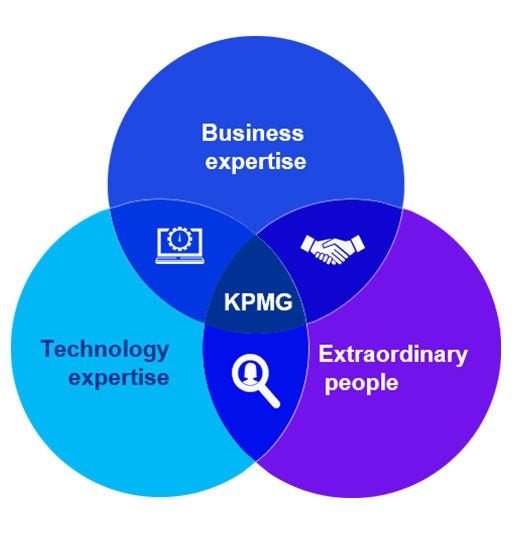
Whether you’re entering a new market, launching products and services, or interacting with customers in a new way, KPMG in India can help you anticipate tomorrow, move faster and get an edge with technology that is secure and trusted. That’s because we can bring an uncommon combination of technological expertise, deep business knowledge, and creative professionals who are passionate about helping you protect and build your business.
Our offerings


Stop playing defense optimise your Security Operations Center for real impact
SOC Efficacy and Maturity Assessment measures your SOC’s effectiveness across people, processes, technology, services, and strategy and governance. It benchmarks maturity against industry standards, identifies gaps, and delivers a phased roadmap with actionable recommendations for continuous improvement.

IRDAI Mandates Incident Response Retainership
As per the recent IRDAI (Insurance Regulatory and Development Authority of India) circular dated 24 March 2025, IRDAI has laid down some guidelines regarding cyber incident and crisis preparedness for all regulated entities.
Driving growth with Cyber and Compliance trends
- Global commodity conclave 2026
- AI, finance & trust: Securing India's next digital revolution
- ET Now Leaders of Tomorrow
- RBI Advisory on AI-ACT&RS
- Emerging risks in cybersecurity: IT and OT environment
- CIOPowerlist India 2026
- Data privacy and cybersecurity in an evolving AI landscape
- Agentforce World Tour 2026
- Digital trust in an always-on world

As India continues its manufacturing growth journey, domestic benchmarks can help reduce pricing uncertainty arising from foreign exchange volatility, freight costs, and global market disruptions. They can also enhance price transparency and enable more effective hedging and risk management for manufacturers and other industry participants.
Strengthening domestic commodity price benchmarks can contribute to a more resilient and efficient market ecosystem, empowering Indian businesses to manage commodity price risks with greater confidence and precision.
Vaibhav Pachori
Partner, Cyber Strategy & Governance
KPMG in India
As AI becomes embedded in credit decisions, fraud detection, payments, customer engagement, and financial inclusion, the conversation highlighted a few powerful themes:
- AI is rapidly becoming part of the financial system's critical infrastructure, making resilience and security a national priority.
- Cybersecurity must evolve beyond protecting data to protecting algorithms, models, and AI-driven decisions.
- Deepfakes, synthetic identities, and adversarial AI are redefining the threat landscape, requiring stronger digital identity and trust frameworks.
- Innovation and regulation must move together. Governance, transparency, and accountability can no longer be afterthoughts.
- Trust remains the ultimate currency. Citizens do not need to understand every algorithm, but they must have confidence that AI-driven decisions are fair, secure, and accountable.
India has a unique opportunity to demonstrate that innovation, cybersecurity, privacy, and public trust are not competing priorities, but mutually reinforcing foundations of a resilient digital economy.
As we build the AI economy, one message stood out above all: Trust should be our greatest asset, not our biggest vulnerability.
As smaller businesses accelerate their digital journey, trust concerns often stem from:
- gaps in access controls,
- oversharing of sensitive data, and
- misconfigured security systems.
The conversation should move beyond investing in security solutions. Lasting trust is built when organisations exercise sound judgement over their data and ensure security controls are configured and managed effectively
While, businesses are experiencing meaningful value from AI, most are concerned about data security, privacy and AI induced risks.
Recent RBI advisories rightly focuses on the two important aspects:
- Having strong governance for responsible and safe use of AI and
- Strengthening capabilities against AI accelerated cyberattacks.

Generative AI brings immense promise, but trust will depend on going back to the basics. It starts with solving the right problems, using the right data, and understanding the risks that extend beyond security. True confidence in AI comes from human validation, cross‑functional collaboration, and compliance with emerging regulations. Building trusted AI is not a choice for tomorrow, it is a responsibility for today.
- Kunal Pande
- Rohan Padhi
In an era where every click, nudge, and interface decision can influence customer behavior, transparency and fairness must be engineered into the user journey itself. India Dark Patterns Guidelines mark a pivotal shift requiring such capabilities to be embedded into the digital journeys ensuring that digital experiences empower users, not exploit them.

Given the proliferation of digital channels in driving modern day commerce, the Dark Pattern guidelines are important guardrails for protecting the consumer’s interest. With these guidelines in place, India joins a select group of nations which have enforced this.
- Sony Anthony
- Rupak Nagarajan

As the DPDP Act begins to take effect, organisations are starting to look beyond compliance and focus more deeply on accountability, governance, and trust in how data is managed.
The line between vulnerability discovery and weaponisation has collapsed exponentially. If the security posture still relies on manual triage and weekly patch cycles, you're treating an AI-speed problem with a human-speed solution.
The metric for success is no longer how fast we find exposure, it's how rapidly we translate that intelligence into actionable, risk-based resilience
Rupak Nagarajan
Partner, Cyber Strategy & Govn
KPMG in India
The DPDP Act marks a fundamental shift in how organisations think about handling personal data. The conversation is moving beyond compliance towards building trust, strengthening governance and responsible innovation.
For businesses navigating an increasingly digital ecosystem, privacy is becoming a strategic differentiator that provides competitive advantage.
As organisations accelerate adoption of AI, cloud, and emerging technologies, the conversation today is no longer just about transformation - it is about enabling trusted and responsible transformation at scale.
Organisations need to implement secure-by-design practices, continuous monitoring, automation for rapid response action as well as technology-enablement of governance for machine speed decisioning to confidently innovate with greater speed, resilience, and trust. In a cloud environment, one additionally requires a clear understanding of shared responsibility model, deploying right security controls and crucially maintaining unified view of the entire environment.
- In our 'always-on' world, digital trust is earned when a service is not just convenient, but consistently available and inherently secure. Beyond the code, trust is psychological - a user’s confidence that a system will act in their best interest without cause for harm. Building digital trust today requires a convergence of reliability, resilience, and an infrastructure agile enough to pivot with business needs while responding instantly to security events. Ultimately, this trust is solidified through robust communication, ensuring the user is not only protected but remains consciously aware and confident in the system’s integrity.
- Digital trust is the intersection of technical security and resilience, and psychological safety. It is built when 'fit-for-purpose' services are consistently secure and available, backed by an infrastructure that can adapt to user needs and security threats at lightning speed. To trust a system is to believe it will act in our interest, every single time.
Hear from the experts


India Insights
Our insights is your gateway to thought leadership and in-depth reports. Explore our curated collection of valuable content, where we delve into complex business challenges, share industry trends, and provide actionable insights.