• Europe faces another energy shock, but the impact is likely to be different to 2022: limited direct gas exposure caps shortage risks, while the impact on a broader basket of commodities and the more globalised nature of the impact means potentially more pervasive supply chain disruption than in 2022.
      • Economic growth momentum is also weaker, but a recession across most European economies remains unlikely.
      • Consumer spending is expected to remain the foundation of growth, despite households facing a real income hit, as the labour market resilience could cushion the blow in much of Europe.
      • In the event of a relatively quick reopening of the Strait of Hormuz later this summer, the weaker economic environment compared to 2022 could ensure fewer second round effects on inflation and therefore more muted response by European central banks this year.
      • However, a more prolonged crisis lasting until the end of this year could see more elevated inflationary pressures, while downside risks to the summer tourism season stemming from potential jet fuel supply constraints in some regions and higher prices could trigger a recession in the more exposed European economies should they materialise
      • Government finances are relatively constrained across most of the continent, and measures to support domestic economies have so far been very targeted and time limited in nature, in a shift away from broad-based support measures of previous eras as fiscal sustainability remains front of mind for Brussels.


      In our latest European Economic Outlook, we consider the potential implications of continued Iran conflict on growth, inflation and interest rates, and the exposure to a more prolonged conflict.

      Download the report for our full analysis. Or read on for a summary.


      Download

      European Economic Outlook - May 2026

      Download the report for our full analysis.


      Summary of KPMG’s latest forecasts for the Eurozone

      May 2026

      In our latest European Economic Outlook, we consider the potential implications of continued Iran conflict on growth, inflation and interest rates, and the exposure to a more prolonged conflict.

      See page 6 of our report for our latest country level forecasts

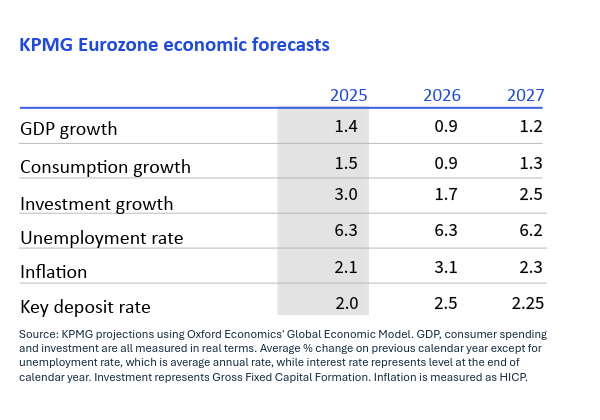
      KPMG projections for the Eurozone economy


      An energy shock different from 2022 experience for Europe

      Europe once again faces an energy shock following the disruption to the Strait of Hormuz, but the implications are materially different to the 2022 energy price shock triggered by the loss of Nord Stream gas flows. Europe’s direct exposure to Hormuz-linked gas imports is notably smaller than its former reliance on Russian pipeline supplies, limiting the risk of physical shortages, although supply exposure remains elevated in some economies owing to their reliance on Qatari gas. Instead, transmission to Europe is occurring primarily through higher global energy prices, reflecting increased competition for LNG cargos.

      Inflation on the rise

      Eurozone inflation could average 3.1% in 2026 as rising energy prices drive renewed inflationary pressure across Europe. Increased energy prices are feeding into higher transportation costs, with fuel prices having increased by 55%  since the conflict began, providing a key near-term driver of headline inflation.

      Our forecast reflects the continued pass-through of elevated oil and gas prices into broader price pressures over the coming months. While energy is expected to remain the primary driver of near-term inflation dynamics, indirect effects are likely to extend the impact of the shock beyond direct energy components, sustaining upward pressure across the wider price basket.

      Consumers are being squeezed by higher prices

      Consumption growth is expected to weaken in the coming months, as consumers face a renewed squeeze on their real incomes driven by higher inflation. Despite weaker demand, we expect consumption to remain the primary driver of economic growth within Europe supported by a relatively robust labour market.

      Higher energy costs are eroding purchasing power, while consumer sentiment has deteriorated sharply, pointing to a more cautious spending outlook. The ECB’s Consumer Expectations Survey indicates that households anticipate a marked decline in real income over the next 12 months.

      While these expectations may overstate the severity of the real income shock, weaker perceptions are nonetheless likely to weigh on behaviour, with households adjusting spending patterns and reducing discretionary expenditure, as evident by declines in consumer plans for large purchases in the latest consumer surveys.

      An energy shock different from 2022 experience for Europe

      Europe once again faces an energy shock following the disruption to the Strait of Hormuz, but the implications are materially different to the 2022 energy price shock triggered by the loss of Nord Stream gas flows. Europe’s direct exposure to Hormuz-linked gas imports is notably smaller than its former reliance on Russian pipeline supplies, limiting the risk of physical shortages, although supply exposure remains elevated in some economies owing to their reliance on Qatari gas. Instead, transmission to Europe is occurring primarily through higher global energy prices, reflecting increased competition for LNG cargos.

      Inflation on the rise

      Eurozone inflation could average 3.1% in 2026 as rising energy prices drive renewed inflationary pressure across Europe. Increased energy prices are feeding into higher transportation costs, with fuel prices having increased by 55%  since the conflict began, providing a key near-term driver of headline inflation.

      Our forecast reflects the continued pass-through of elevated oil and gas prices into broader price pressures over the coming months. While energy is expected to remain the primary driver of near-term inflation dynamics, indirect effects are likely to extend the impact of the shock beyond direct energy components, sustaining upward pressure across the wider price basket.

      Consumers are being squeezed by higher prices

      Consumption growth is expected to weaken in the coming months, as consumers face a renewed squeeze on their real incomes driven by higher inflation. Despite weaker demand, we expect consumption to remain the primary driver of economic growth within Europe supported by a relatively robust labour market.

      Higher energy costs are eroding purchasing power, while consumer sentiment has deteriorated sharply, pointing to a more cautious spending outlook. The ECB’s Consumer Expectations Survey indicates that households anticipate a marked decline in real income over the next 12 months.

      While these expectations may overstate the severity of the real income shock, weaker perceptions are nonetheless likely to weigh on behaviour, with households adjusting spending patterns and reducing discretionary expenditure, as evident by declines in consumer plans for large purchases in the latest consumer surveys.


      Contact us

      Stanislas Chambourdon

      Partner, Growth and Strategy

      KPMG in Luxembourg