Organizations are making strides in sustainability, moving the needle in today’s business landscape. As sustainability increasingly becomes part of “business as usual,” it is crucial for reporting efforts to go beyond compliance, demonstrating a genuine commitment to driving long-lasting value creation for businesses.
While sustainability reporting has been mandatory for listed companies by Bursa Malaysia, its expansion to include Scope 3 emissions—those produced indirectly through an organization’s supply chain—under the National Sustainability Reporting Framework (NSRF) is a new development. Starting in 2027, Scope 3 reporting will be mandatory, and by 2025, companies must also comply with the International Financial Reporting Standards (IFRS) S1 and S2. This shift highlights the growing complexity of addressing environmental impact, not just at the organizational level, but also in support of the nation’s push for sustainable growth.
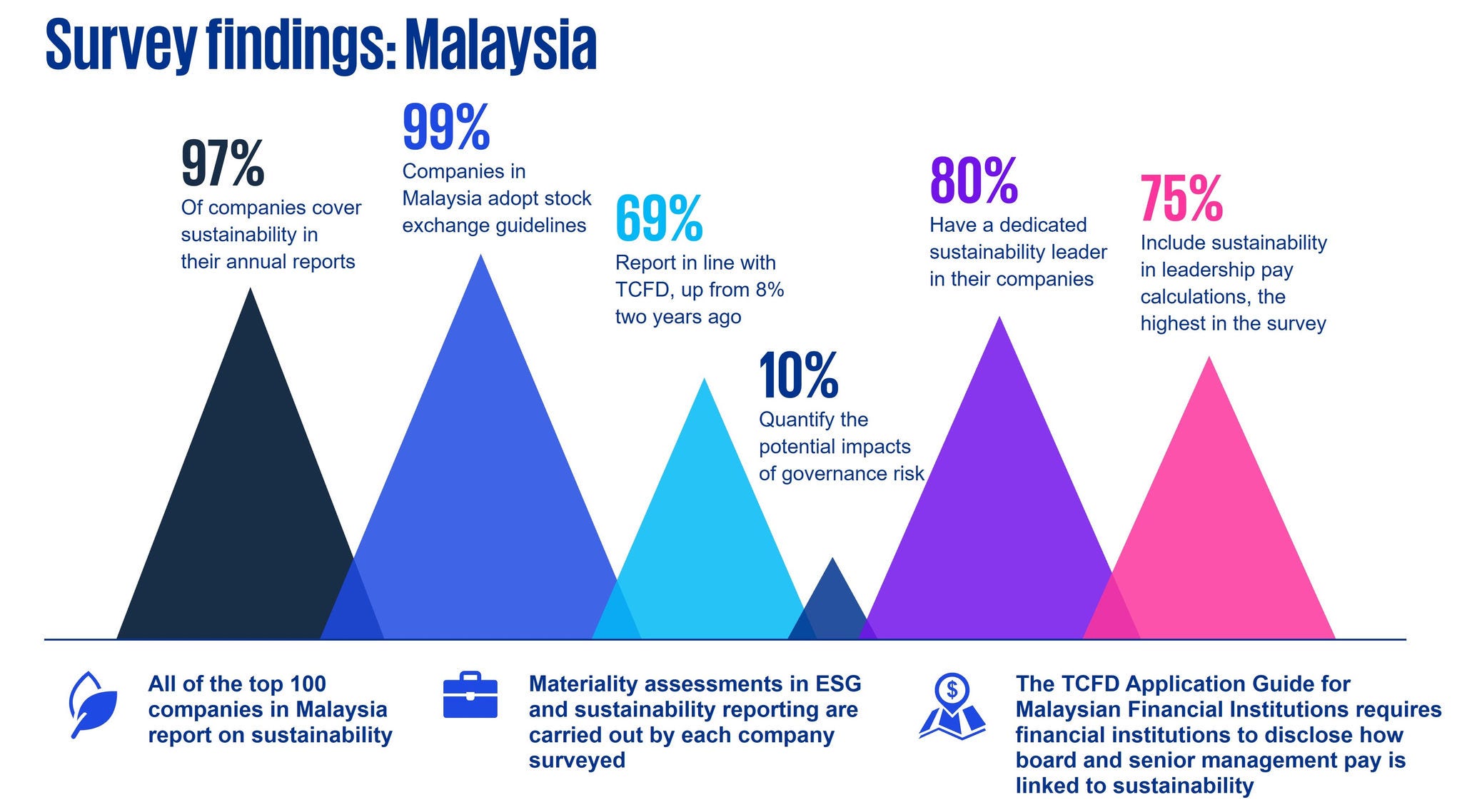
Our survey, conducted since 1993, explores key trends shaping the sustainability landscape. This year’s Survey of Sustainability Reporting 2024 gathers insights from 5,800 companies, including the top 100 companies across 58 countries, territories and jurisdictions, including Malaysia. The findings show that all of Malaysia’s top 100 companies now report on sustainability, signaling a shared commitment across leading businesses, especially amid rapid growth in reporting practices across the Asia-Pacific region.
As companies seek to differentiate themselves and remain future-focused, a commitment to sustainability is proving to be a valuable asset. By embracing sustainable practices, organizations are not only meeting regulatory expectations and investor demands but also building the foundation for long-term value and success.