As the global economy grows more complex, few nations can afford to chart their path alone. For Singapore, prosperity will hinge on forging and sustaining strategic connections across markets, technologies and talent ecosystems to stay competitive and resilient.

      KPMG in Singapore, in collaboration with the Singapore Institute of Directors (SID), presents the Singapore Budget 2026 proposal – focused on three strategic priorities reshaping the global business landscape:

      • A New Global Order: Resilience as a pivotal growth strategy
      • The Intelligent Age: Smart solutions for an innovative era
      • Next-Gen Talent: Empowering tomorrow’s leaders today

      Download full proposal

      KPMG x SID Singapore Budget Proposal 2026

      Prospering in a new global landscape


      Strategic Priorites

      A new global order: Resilience as a pivotal growth strategy

      Singapore continues to attract business and investors with its connectivity, credibility and global leadership. However, with the global economy becoming more complex and differentiated – with supply chains, standards and markets increasingly shaped by geopolitics and technology - Singapore must embrace resilience as a pivotal growth strategy, rather than simply viewing resilience as a response to emerging challenges. This will be crucial for reinforcing Singapore’s hub status in the new global order.

      Budget 2026 brings opportunities to further promote this strategy in the face of challenges such as supply chain shocks and geopolitical uncertainty.


      The new global order is compelling businesses to transform and elevate their role in regional and global trade networks. To this end, a government-backed, enhanced trade platform will further strengthen trust in Singapore’s supply chains, especially in critical industries such as semiconductors.

      The platform would be an extension of the Singapore Trade Data Exchange, the country’s digital infrastructure which facilitates the secure sharing of data between supply chain ecosystem partners. By leveraging advanced technologies such as blockchain and AI, it would allow for more seamless validation of transactions while offering smart recommendations aimed at increasing efficiency.

      Trade agreements help Singapore businesses gain a foothold in new markets, enhancing the country’s regional and global competitiveness. However, these agreements will only be effective if businesses are able to navigate them well.

      A unified digital platform paired with stronger grant support would help businesses unlock the full benefits of FTAs. Although there are FTA management software solutions in the market, a platform that is seamlessly integrated with government systems will further drive cost-effectiveness and compliant FTA adoption.

      Businesses face challenges in transforming themselves for the future while keeping up with new rules and regulations. Increased access to working capital and industry-specific governance frameworks would alleviate compliance burdens for local enterprises.

      Such funding can be complemented by industry-specific governance playbooks to equip boards with essential tools to strengthen agility and resilience. This dual approach would aid in strengthening governance agility and resilience.

      To drive meaningful climate action, Singapore’s carbon tax system must evolve post-2030 with progressive tax rates and conditional rebates that reflect business realities and incentivise decarbonisation.

      In parallel, the Budget should introduce permanent conditional tax rebates for energy-intensive, trade-exposed sectors. This would reward decarbonisation efforts and establish  transparent, performance-based pathways for large emitters.

      Regional collaborations will be increasingly important for Singapore to advance the green transition and be a hub for environmental data harmonisation.

      Singapore could establish an ASEAN Environmental Data Exchange to facilitate the sharing of standardised and interoperable environmental data with its regional trade partners, improving the flows of green trade and green capital as a regional hub for environmental data.

      A $100 million fund would strengthen social impact reporting by training professionals, certifying social auditors, and supporting ESG education.

      A national registry of certified sustainability committee members could be established to match members to boards and committees across sectors. This would expand board-level expertise and enhance governance across sectors.

      Intelligent Age: Smart solutions for an innovative era

      The world is entering a new epoch – the Intelligent Age – characterised by the convergence of advanced technologies, ubiquitous data and human ingenuity. Beyond digital transformation, this era marks an exponential shift in how businesses operate, compete and create value.

      Singapore is uniquely positioned to lead this transformation. However, realising this potential requires moving from experimentation to enterprise-wide innovation.


      Many local enterprises may face challenges in adopting AI due to cost and the need for capabilities relating to strategic guidance. Shared data pools, paired with targeted support, may overcome this.

      The Budget could incentivise co-funding by Government and trade associations to establish shared, anonymised data pools tailored to specific sectors such as logistics and retail. Shared data initiatives could be paired with guided AI adoption support, helping businesses understand which parts of their value chain can benefit from AI to improve efficiency and competitiveness.

      An enhanced PPP framework would link Government AI initiatives with business growth. The Government can facilitate public data sharing and provide infrastructure access, lowering barriers for AI experimentation and deployment. This also promotes cross-sector collaboration.

      Singapore can bolster digital trust by establishing a regional “Trusted AI” mark to drive harmonisation and innovation.

      The mark would serve as a recognised assurance label for companies that have implemented controls consistent with Singapore’s AI governance standards. Firms would be able to deploy AI solutions across ASEAN without duplicative compliance, accelerating cross-border innovation and trade. 

      Supporting hands-on AI governance training for directors and executives closes the expertise gap and fosters organisational collaboration and innovation.

      This fund would complement existing SkillsFuture programmes with an AI awareness to address strategic and operational gaps at the leadership level, covering ethical deployment, change management and cross-domain applications.

      Next-Gen Talent: Empowering tomorrow's leaders today

      With the world entering the Intelligent Age, Singapore is redefining the competencies its workforce must possess to position itself as a global leader and drive sustainable growth.

      Budget 2026 presents a strategic opportunity to meet these goals and accelerate the skills shift by embedding next-gen capabilities across the workforce and cultivating leaders equipped to navigate volatility, drive transformation and meet evolving national, regional and global demands.


      A dedicated work-pass category would attract global experts to lead structured upskilling and leadership programmes, accelerating skills transfer and exposing workers to international best practices.

      Tying incentives for such efforts to measurable outcomes in organisations’ skills development initiatives can further boost resilience.

      Peer-sharing platforms for C-suite leaders would further foster collective learning on sustainability and empower proactive role redesign.

      Targeted subsidies for worker training and career conversion can give focus to sustainability-related responsibilities, while leaders can be given expanded access to programmes to drive strategic transformation.

      Structured leadership development programmes could include expanded support for executive upskilling, such as peer-sharing platforms for C-suite leaders which would further foster collective learning on sustainability and empower proactive role redesign.

      Sector-specific job transformation roadmaps, paired with co-funded training and industry-recognised certifications, would help employees acquire future-ready skills for evolving roles.

      These initiatives ensure alignment with technological shifts and enable employees to demonstrate capabilities beyond traditional qualifications.


      KPMG-SID Survey

      To better understand the challenges and opportunities shaping Singapore’s business landscape, KPMG in Singapore and the Singapore Institute of Directors (SID) conducted a joint survey of 1,000 local business leaders and professionals in 2025.

      The findings reinforce the three forces identified in our Budget 2026 proposal – a New Global Order, the Intelligent Age, and Next-Gen Talent – that underpin our recommendations for the year ahead.


      New Global Order

      Clear demand for measures to facilitate trade and mitigate costs of expansion

      Skills, cost and strategy among top challenges for new technology adoption in an AI-driven (agentic) era

      Government-backed data and AI adoption support in demand

      Bridging skills gaps and removing mobility barriers could help companies build globally relevant talent

      Skills development and upskilling courses as preferred support for talent

      Download full proposal

      KPMG x SID Singapore Budget Proposal 2026

      Prospering in a new global landscape


      Event: KPMG Singapore Budget 2026 Seminar

      Gardens by the bay

      Coming soon!

      Join us at our Budget Seminar as we share insights and perspectives on how this year’s Budget will affect businesses like yours.


      Media room

      KPMG and SID unveil Budget 2026 strategies

      Bolstering Singapore’s role as a hub for global flows

      Read more
      KPMG x SID SG Budget 2026

      Our people

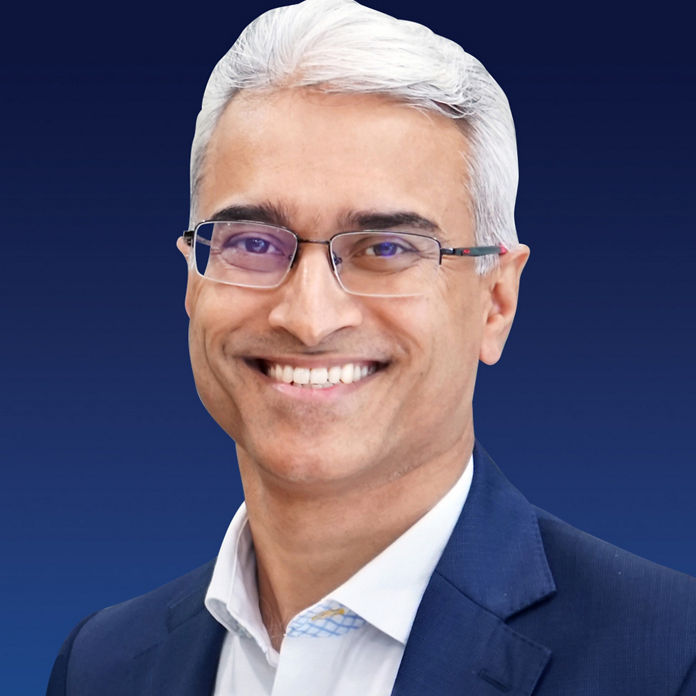
      Ajay Kumar Sanganeria

      Partner, Head of Tax

      KPMG in Singapore