

Testing methods like dry runs are already standard supervisory practice in resolution planning. With its April 2026 report, “EBA Recovery Planning – Report on Recovery Plans Dry Runs,” the EBA now brings recovery plan testing into focus. The aim is to test the practical viability of recovery plans, improve their execution and, in turn, strengthen institutions’ crisis resilience.
Regulatory context
Recovery planning is a core element of crisis management under the BRRD (Bank Recovery and Resolution Directive). Institutions are expected to maintain a sound, reliable overall concept to restore their financial position in recovery and avoid resolution. Plans should be comprehensive and based on realistic assumptions that cover robust to adverse stress scenarios. The EBA notes that institutions now have several years of experience in preparing recovery plans and that the regulatory framework has been consolidated. At the same time, regular simulation exercises are established in resolution planning. With this in mind, the EBA now also attaches particular importance to dry runs in recovery planning.
The EBA report is designed as a benchmarking analysis that looks at how banks conduct recovery dry runs. It is not intended to set binding requirements. Rather, it aims to support institutions in further developing their respective dry run programme. The EBA analysed submissions from 16 cross‑border EU banking groups across 10 countries (H2/2024) to show the status quo, highlight good practices and provide useful reference points for the further development of dry runs. Unlike in resolution, recovery dry runs are not explicitly anchored in the regulatory framework.
Approach and findings
The EBA examined and assessed the practice of recovery dry runs at the 16 institutions along four focus areas:
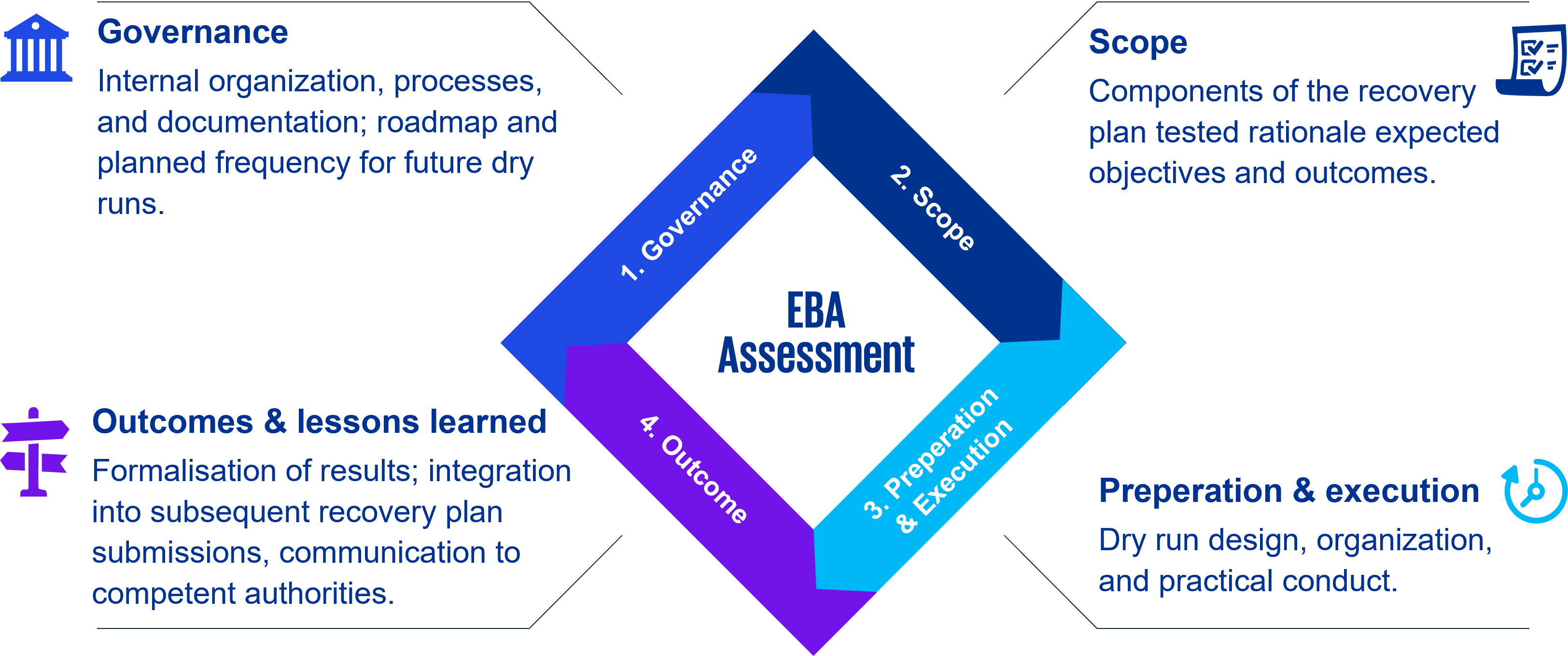
The EBA’s key findings include:
- Most institutions see clear value in dry runs and in the lessons learned they generate.
- Dry runs are effective in improving the operationalisation of recovery plans and strengthening crisis preparedness.
- Approaches and maturity levels vary widely. Some institutions have not yet conducted tests.
- The greatest benefits arise where dry runs are embedded in the overall risk framework, used as a management tool and used to inform subsequent recovery‑planning cycles.
- Limited value is seen where exercises are run mainly to meet supervisory expectations, without clear objectives or senior management involvement.
- Even institutions with high quality recovery planning continue to benefit from regular, well-structured dry runs.
- Synergies and linking of testing activities (recovery and resolution) increase efficiency and consistency.
What makes dry runs effective – and what institutions should take away
Based on the analysis, the EBA summarises the elements that characterise a successful dry run:
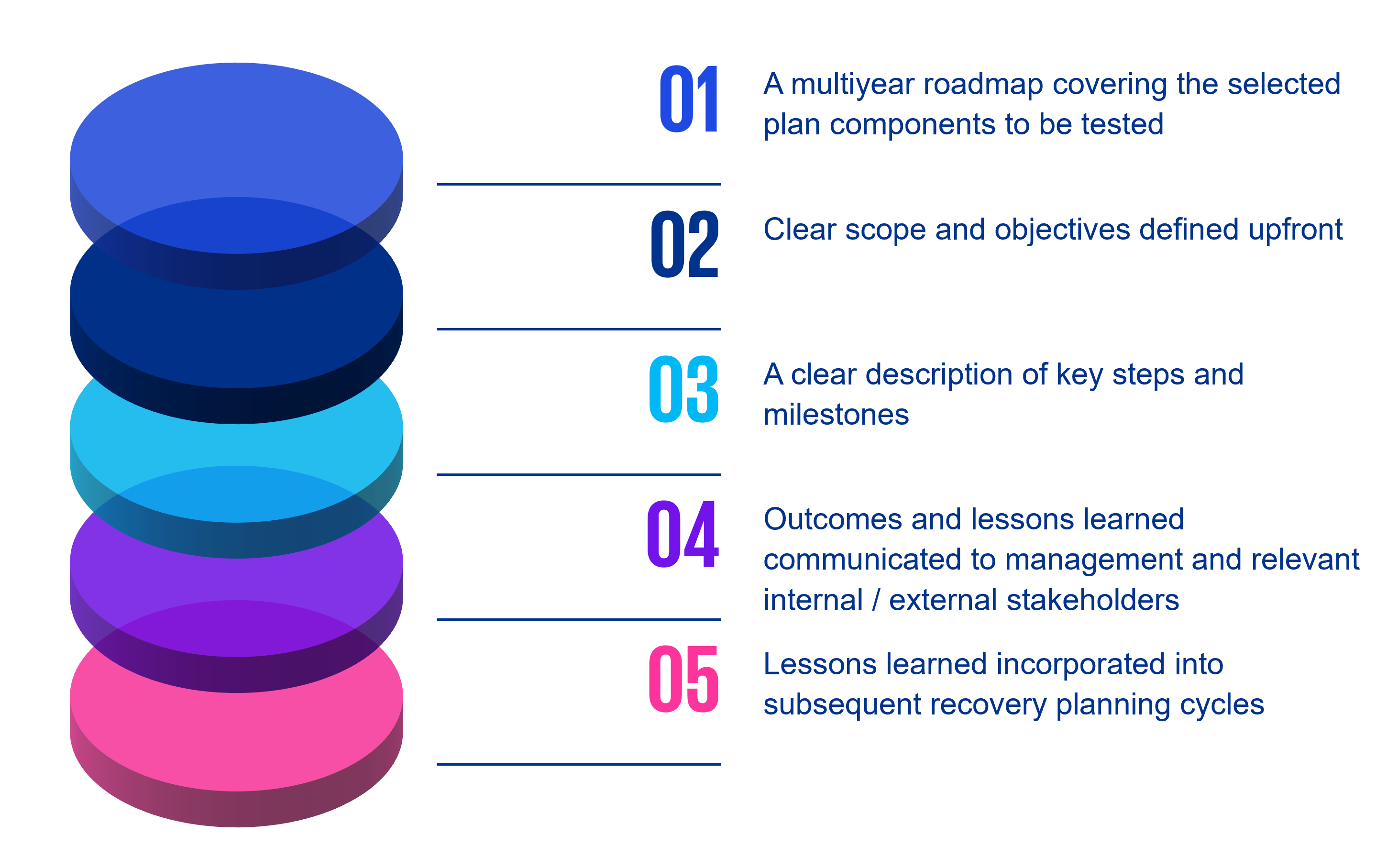
According to the EBA report, institutions should set up dry run programmes with clear governance, a committed multi‑year roadmap and a clear learning focus. Regular, well‑structured testing, ideally linked with resolution exercises, improves the reliability of results and strengthens execution capability in a crisis. Success of an exercise depends on precise objectives, active involvement of key roles (including management), clear and meaningful documentation, and a follow‑up on lessons learned.
For the full report, please refer to the EBA publication.
Discover more about dry runs in resolution and recovery planning
Our experts know that well‑designed exercises with active participation from experts and (senior) management deliver measurable value for institutions, beyond the fulfilment of supervisory expectations. They look foward to share how build cross‑functional understanding of crisis management, streamline required documentation and embed clear escalation and decision‑making paths in day‑to‑day operations.


