Crypto mining refers to the process used in a proof-of-work blockchain (e.g. Bitcoin) to validate transactions and secure the blockchain.
In a proof-of-work blockchain, crypto miners compete to solve complex puzzles. The first miner to solve the puzzle earns the right to validate and add the next block to the blockchain.
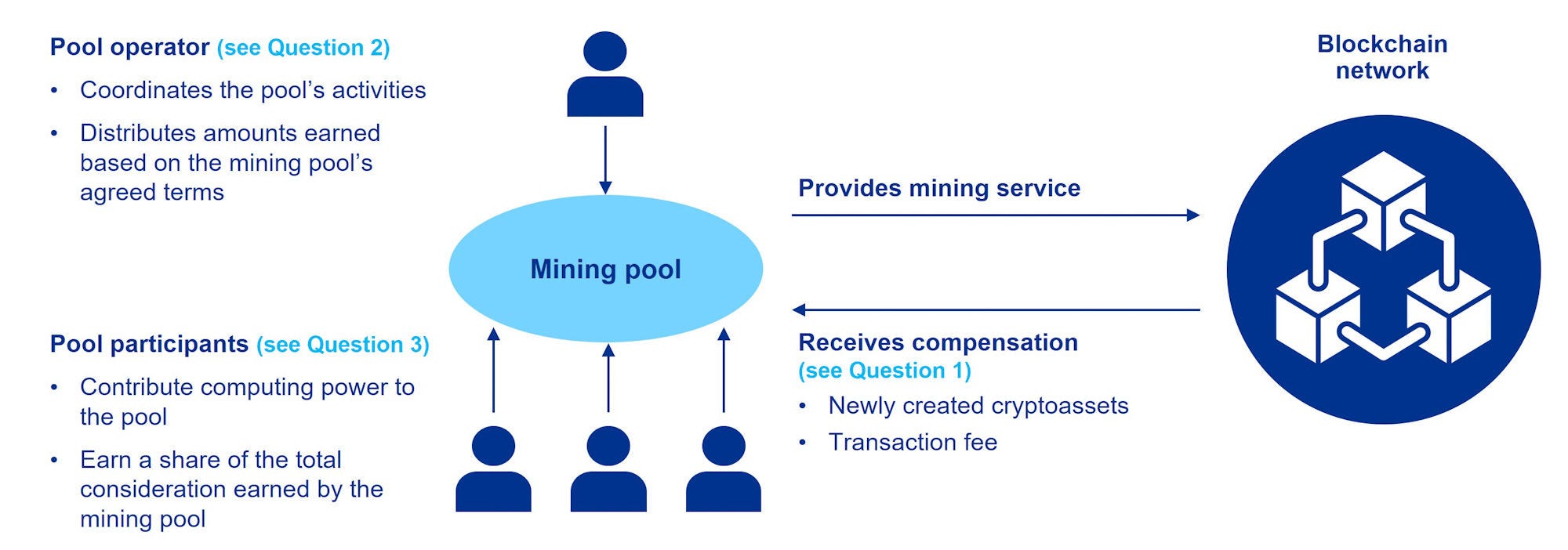
Crypto miners can work together (i.e. in a mining pool) to increase their chances of earning the right to validate the next block and ensure more consistent earnings. In a mining pool, there are two main parties – i.e. the pool operator and pool participants.
For validating and adding the next block to the blockchain, the winning crypto miner receives non-cash consideration in the form of newly created cryptoassets and a transaction fee. The question then arises about how a crypto miner accounts for that non-cash consideration; in particular, whether part or all of the arrangement is in the scope of IFRS 15 Revenue from Contracts with Customers.
To determine the appropriate accounting for a mining pool arrangement, a pool participant needs to evaluate its relationship with both the pool operator and the blockchain network.