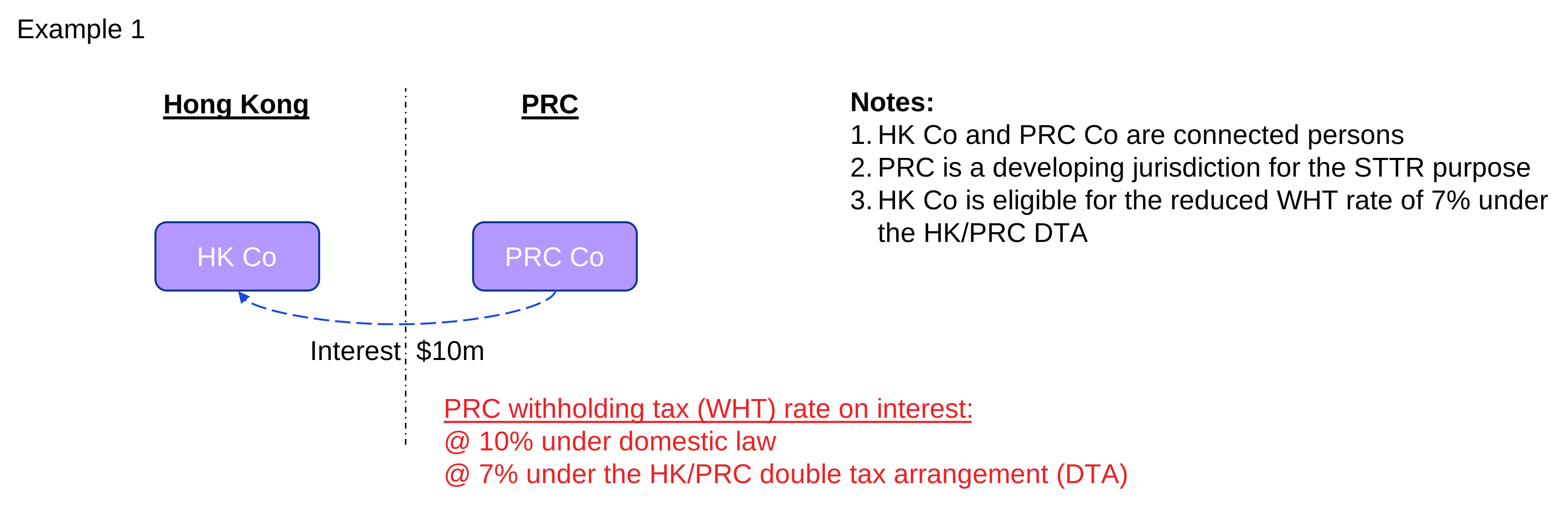
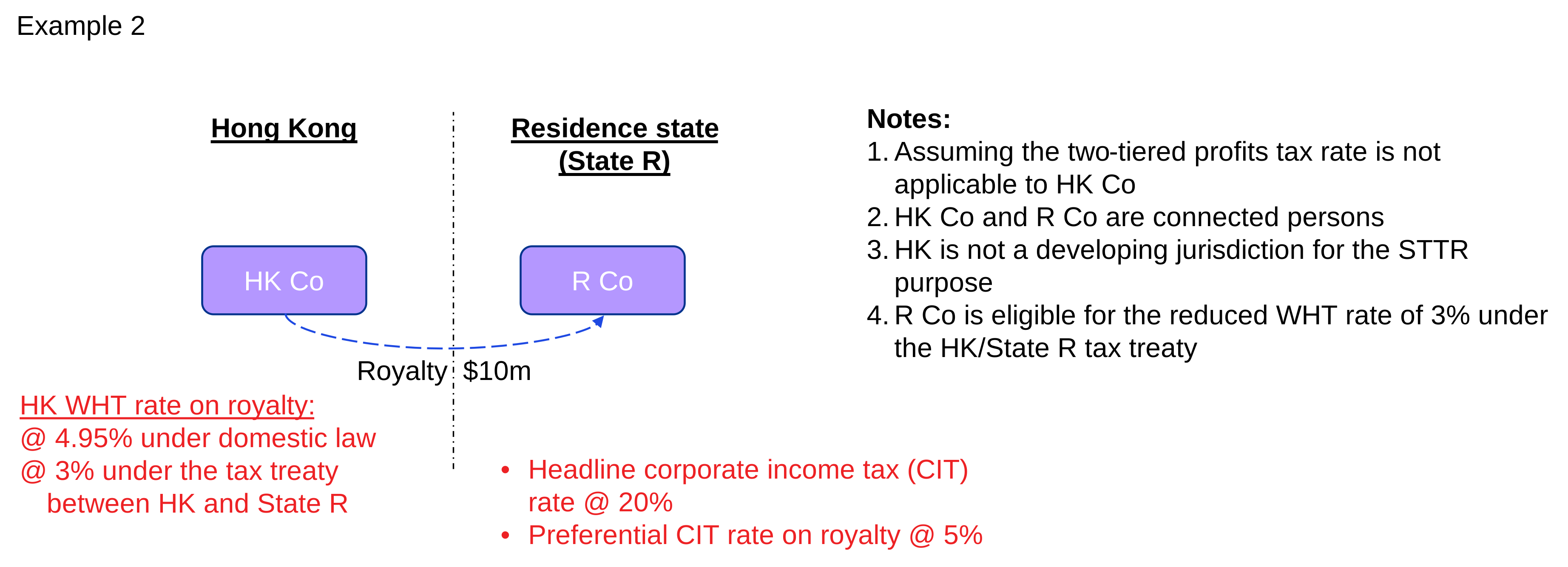
The STTR only covers payments between “connected persons”. Two persons are regarded as connected if one has control of the other or both are under the control of the same person(s). The control test is met when there is a direct or indirect ownership of more than 50% or a de facto control based in all relevant facts and circumstances.
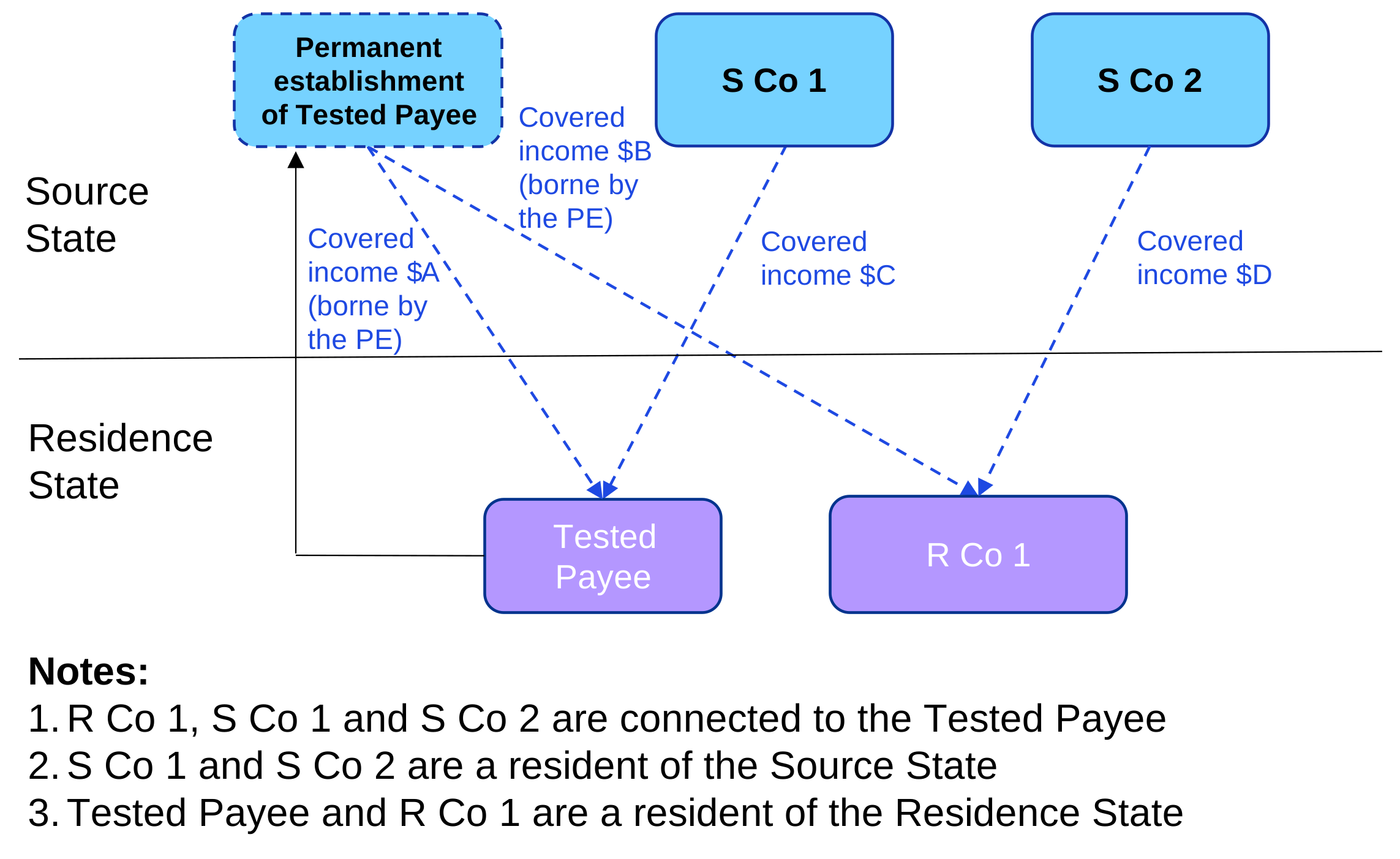
There is targeted anti-avoidance rule to deal with two types of abuse, namely (1) the interposition of an unconnected person between two connected persons and (2) the routing of a payment of covered income through a high-tax connected person onto a low-tax connected person. Annex A of the STTR document contains examples to illustrate this rule.
The STTR does not apply where the recipient is: (1) a recognised pension fund, (2) a non-profit organisation, (3) certain investment funds, (4) an insurance company, (5) certain widely held entities or arrangements that achieve a single level of taxation (at either the entity or interest holder level) and (6) certain holding vehicles owned by an excluded recipient, etc.
The investment fund exclusion is subject to conditions, including the fund must be professionally managed and designed to invest funds obtained from unconnected persons, and the fund or its managers must be regulated.
The exclusion for regulated insurance companies applies to the extent the covered income is derived from assets held for the purpose of meeting policyholder liabilities.
For the exclusion for widely held entities or arrangements to apply, the entity or arrangement must either hold predominantly immovable property (e.g. a widely held REIT) or be subject (at either the entity or interest holder level) to tax of at least 9% in its residence state.