
      Whether buying shoes or booking a holiday: consumers have long been used to doing these things digitally, via their laptop, tablet or smartphone. Now the digital transformation is taking the next big step: the Metaverse opens up a new virtual space for customers to experience retail and consumption digitally.

      The metaverse is a three-dimensional, multimedia world in which users can move and interact with the help of avatars. This offers retailers and manufacturers great opportunities to reach consumers in new ways and provide them with completely new immersive experiences. Some retailers and consumer goods manufacturers are already making their first forays into the metaverse. Corinna Dahlhaus from Deiters describes what this can look like in practice and what tips she has in a short interview. In addition, metaverse expert Collin Croome tells us why now is the right time to enter the metaverse.  
      Reach the right customer groups

      The challenge lies in identifying and addressing target groups with a high affinity for the metaverse. Retailers and manufacturers need to take a close look at the topic of the metaverse and develop a deep understanding of the attitudes and needs of metaverse-savvy consumers.

      We would like to contribute to this with our new metaverse study in cooperation with the SINUS Institute. In it, we shed light on which target groups are interested in the metaverse, which motives and expectations motivate consumers to shop there, and which product categories could be considered for purchases in the metaverse. Recommendations for a successful, customer-centred entry into the metaverse can be derived from this.


      For the study, more than 2,000 people aged between 14 and 39 were surveyed online across Germany, representative of the German population in this age group. The sample was chosen to be relatively young in order to survey as many customers interested in Metaverse as possible.

      Every third person is looking forward to trying out the virtual "3D world"

      • 52 per cent of respondents are already familiar with the term "metaverse". Of these, 22 per cent have already used a metaverse platform and 8 per cent have already bought something there.
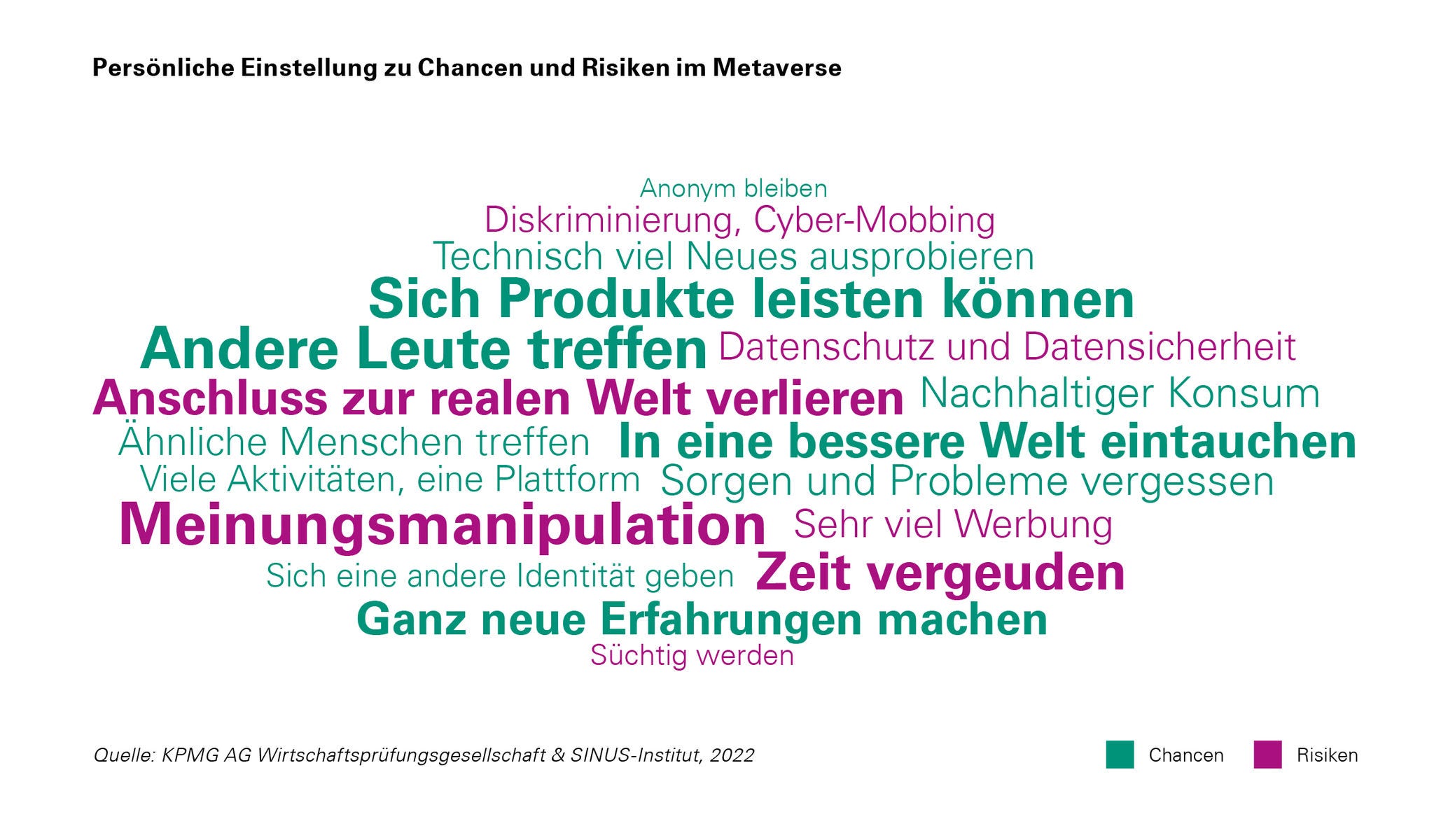
      • Around half of those surveyed have not yet formed a judgement on the metaverse. Around a third are looking forward to trying it out. 43 per cent think that they can make their consumption in the Metaverse largely sustainable. However, more than two thirds of respondents see the danger of wasting their time in the virtual world, becoming addicted or losing touch with reality.
      Begriffssammlung Chancen und Risiken im Metaverse

      Metaverse offers retailers and service providers sales potential

      Just under half of respondents (46 per cent) can currently imagine consuming or shopping in the Metaverse. However, around 80 per cent of respondents have spent money on online shopping in the past year. This large difference indicates enormous future sales potential for retailers in the metaverse.

      The highest willingness to buy is for physical products that are purchased in the metaverse and then delivered to the customer's home, but many respondents can also imagine buying services in the metaverse (e.g. cookery courses, further education). Interest in purely digital products - such as virtual clothing for one's own avatar - still seems a little subdued in comparison. However, it is surprisingly high considering that this type of consumption has only been around for a short time. Nevertheless, it can be assumed that increased use of the metaverse for consumption and shopping will increase demand for all three product groups.

      Emphasise opportunities in a targeted manner

      The results also show that it is not the perceived risks but the opportunities of using the metaverse that are decisive for the willingness to buy. With an increase in the perceived benefits, more metaverse users are likely to decide to buy products in the metaverse in future. It is therefore crucial for retailers and manufacturers to specifically emphasise the benefits of their metaverse engagement for their customers.

      A detailed analysis of the survey results, a presentation of the metaverse target group based on the Sinus-Milieus and conclusions for a successful entry into the metaverse can be found in the study "Metaverse: (Un)known world?" in cooperation with the SINUS Institute.


      auto_stories

      Was würden Kunden im Metaverse kaufen? Was sind ihre Beweggründe? Wie erreicht man die richtigen Kundengruppen? Implikationen für einen erfolgreichen Einstieg in das Metaverse für Konsumgüter und Handel.

      Das Metaverse nachhaltig gestalten

      Der Zusammenhang zwischen Metaverse und ESG

      Abstrakte Strukturen

      Your contacts