Digitalisation is changing companies: Processes and structures are being called into question, new technologies are opening up opportunities, the flood of data is increasing and is often no longer manageable with conventional solutions. All of this is also affecting tax departments, which also have to fulfil increasingly stringent compliance requirements. Another factor is a changing self-image: whereas the tax department was previously often a purely reactive staff department, today there is an opportunity to create added value as a business partner through new technological possibilities.
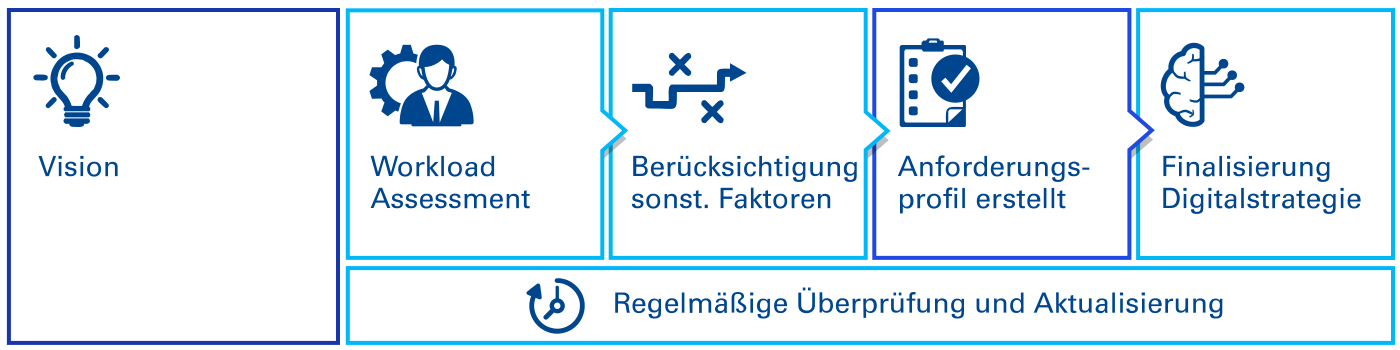
However, this requires an expansion of the previous focus on analysing, correcting and reporting to include correct tax determination directly at the transaction (source) - regardless of where this takes place in the company. This is exactly what digitalisation makes possible. However, this should not be an end in itself, but should be precisely tailored to the company. A tailor-made digitalisation strategy based on cost-benefit considerations and clear implementation planning are essential.