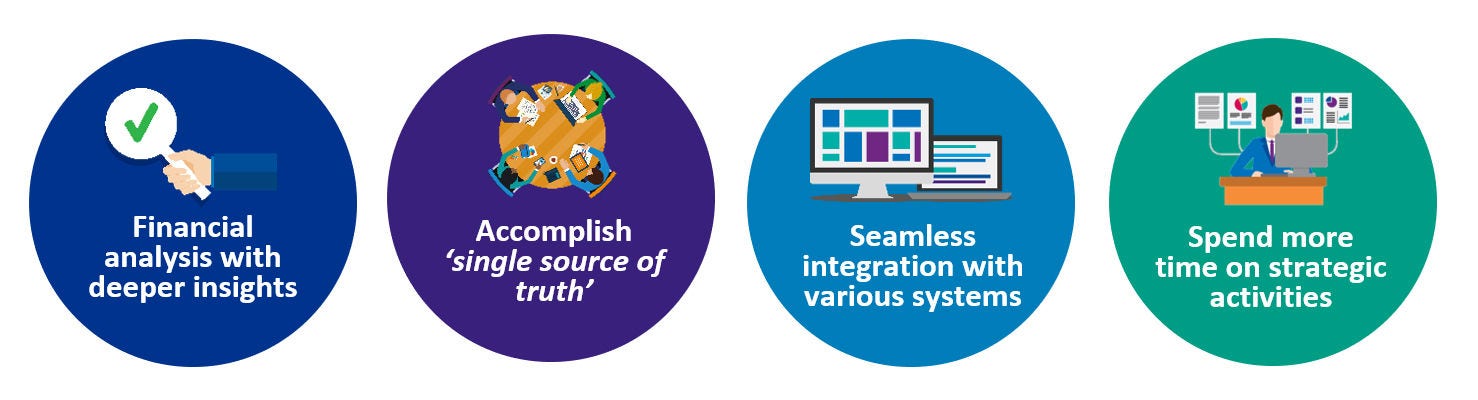
Forecast and budgeting, financial planning, performance management, and financial modeling are some of the core activities of the Financial Planning and Analysis (FP&A) function of an organisation. The role of any financial analyst in an FP&A function is to furnish key management with the information they need to estimate the organisation’s future financial performance, evaluate economic and business trends, review past performance, predict business challenges and ultimately recommend actions to overcome them.
Digitalisation has disrupted how FP&A processes have been carried out in the past. At the same time, the advancement of data technology has introduced many new opportunities to help businesses generate more insights through the application of data and analytics (D&A). Data from various sources can be ingested and analysed far better and faster than ever before. So, the question arises as to how should FP&A analysts adapt to the latest challenges to thrive in their roles in this modern era?
Today, complex analytics underpin many important decisions that affect businesses and how decisions are formulated. As a result of this, many companies are investing in emerging D&A technologies such as Business Intelligence (BI) solutions and artificial intelligence (AI). The use of these advanced data platforms, ridding on AI and machine learning– will transform the way that future FP&A team’s work.