

      The financial sector’s key role in a more sustainable economy

      Banks, insurance companies, private equity and pension funds are the main source of external finance for the European economy. As a result, they can play an important role in closing the investment gap for the transition to a more sustainable economy and the mitigation of climate risks. However, these financial institutions may also be exposed to risks related to unsustainable economic development, commonly known as environmental, social and governance (ESG) risks, including climate change-related risks.

      Therefore, ESG issues are becoming increasingly important to the sector and respective stakeholders. The industry itself, clients, regulators and others are becoming more and more aware of the impact and contributions of investments to society.

      ESG is everything you do

      Watch our 2-minute video delving into the stakeholders, issues and solutions that comprise the ESG landscape.

      Responsible investing

      Regulators and customers are demanding greater ESG responsibilities and impact from asset managers. The industry can create a better future for all while improving financial performance. Seize the opportunity today.

      Key areas

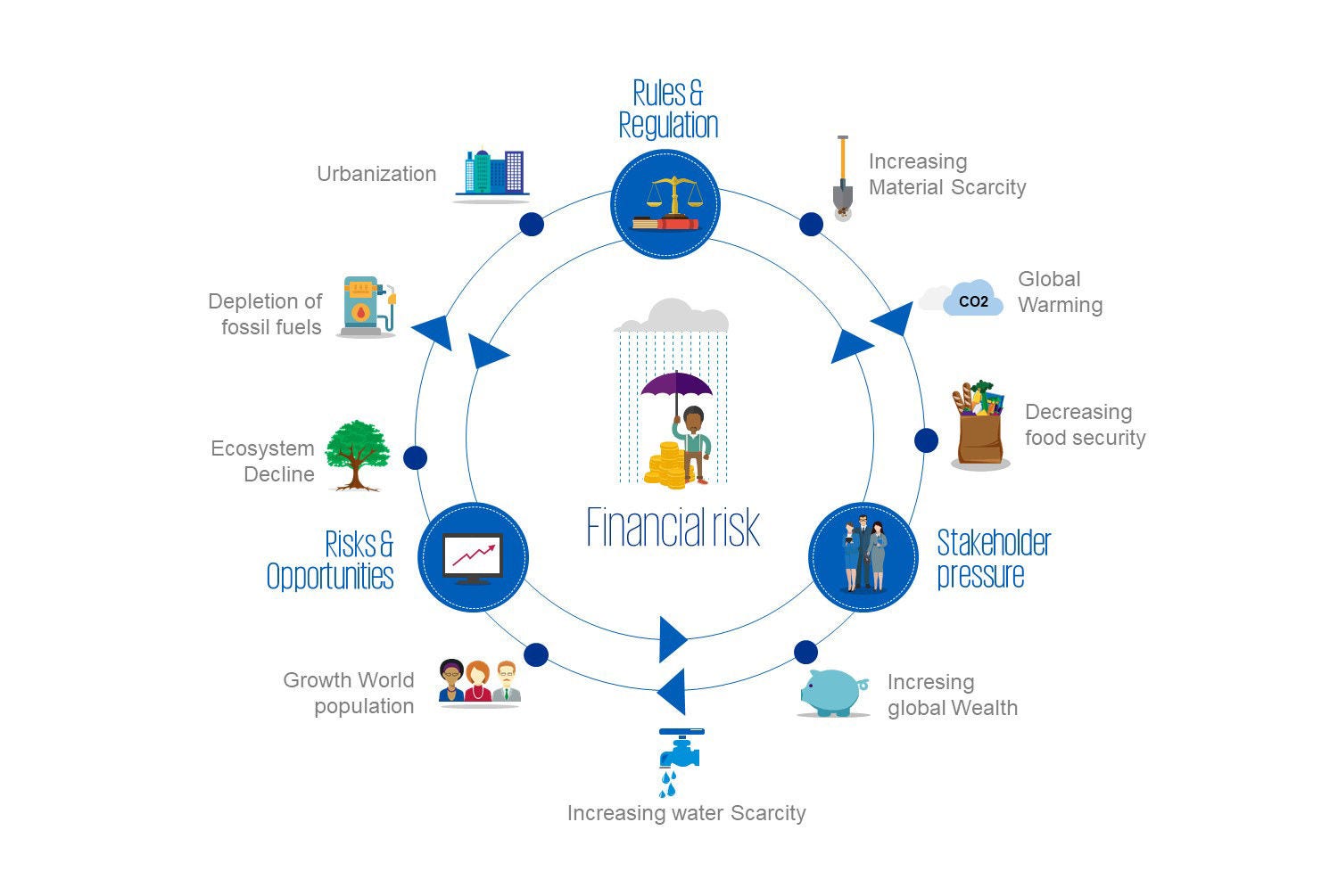
      We identify three key areas that drive the further integration of ESG issues:

      1. Risks & Opportunities: Physical risks and opportunities due to non-financial factors have a direct impact on the daily operations of different business models. This leads to better or worse financial performance that directly influences the return to the investor/financer. 
      2. Rules & regulation: ESG risks and societal demands are increasingly being translated into rules and regulation. Examples of recently effectuated or upcoming regulations (including) ESG integration and reporting requirements for asset managers / owners are IORP II, Responsible Business Conduct Agreements (on responsible investments), the EU classification system of sustainable economic activities ('taxonomy') and the NGFS report.
      3. Stakeholder pressure: As clients and other stakeholders become more aware of ESG issues, they start to demand that the financial sector conduct additional efforts to contribute to sustainable development.

      How can we support

      KPMG Sustainability supports financial institutions in creating sustainable long-term value for their clients, through managing sustainability risks and profiting from opportunities arising from the transition towards a more sustainable economy. 

      The services of KPMG cover all aspects of ESG integration: governance, development of strategy and policy, implementation of frameworks and processes, reporting and evaluation. We also provide assurance on the sustainability of information in investment reports and annual reports. Furthermore, we help your organization to become and  comply with ESG regulation.

      Our network of professionals helps your organization enhance its approach to ESG, whatever your current level of maturityFrom responsible investment and ESG due diligence to impact investing and impact measurement.

      Please contact Leonie Jesse, associate director Sustainable Finance.

      Our latest insights

        No content available

        No results match your current settings

        Server error

        A server error prevented us from completing your search. Please try again later.

        Contact us

        Marco Frikkee

        Partner Sustainability Reporting

        NETHERLANDS

        Are you contributing to a sustainable world?

        Woman on train on video call