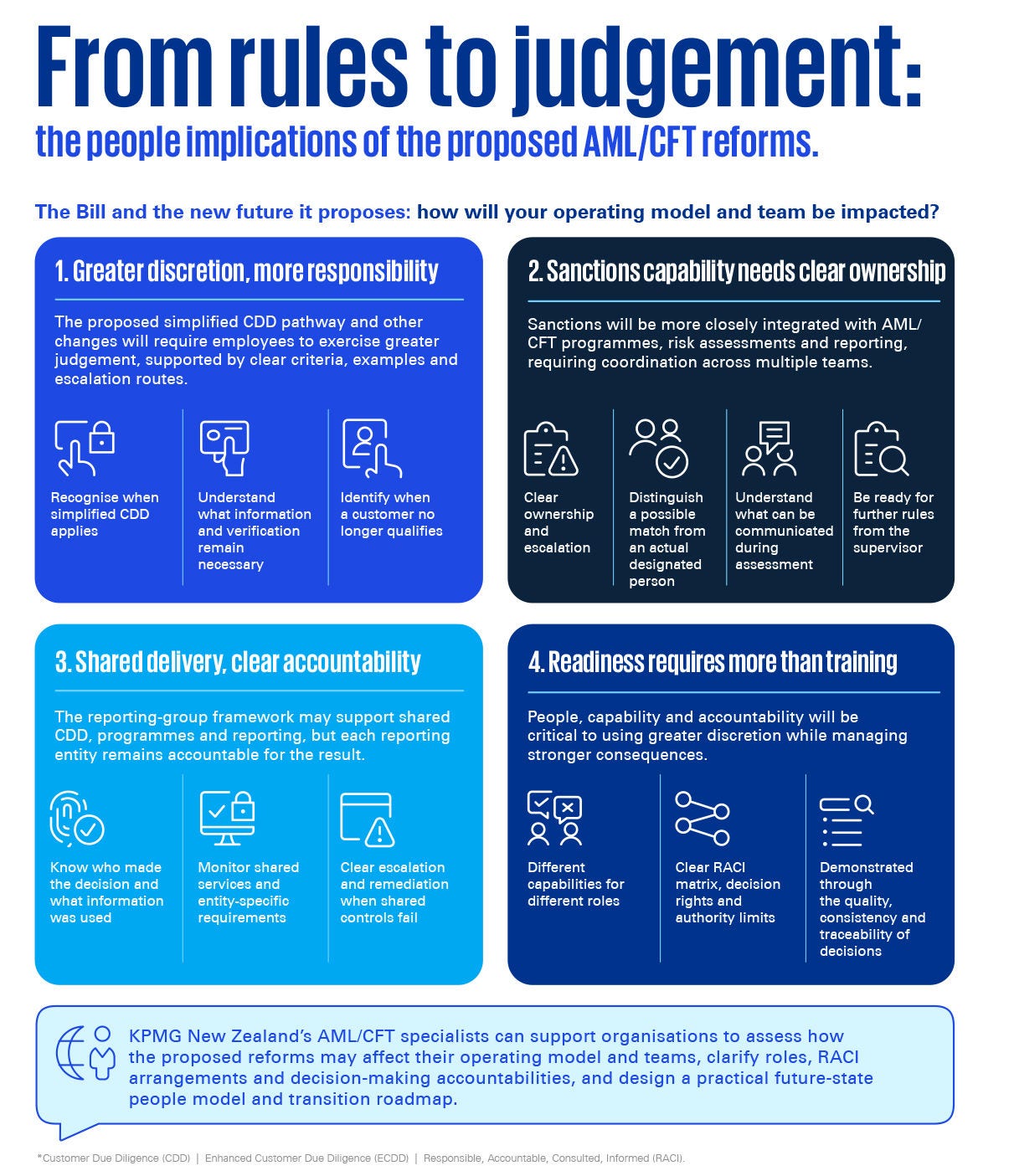
When regulatory reform arrives, attention often turns first to legislation, policies and implementation plans. Yet some of the most important effects of the Omnibus Bill may ultimately be felt by the people expected to interpret risk, make decisions and explain why those decisions were reasonable.
Our analysis of the Bill’s 96 clauses identified 421 proposed amendments and related legislative effects, of which approximately 304 were assessed by KPMG as effect-bearing proposed changes. Some will change obligations or responsibilities directly. Others introduce new powers, permissions, safeguards or procedures that could alter the way employees perform their roles.
This is the second article in our series asking: Is your organisation ready for the future the Bill proposes?
Here, the focus is not simply on training. It is on whether your organisation has the capability, authority structures and accountability needed to use greater discretion while managing stronger consequences.
Another requirement is for cultural change – reporting entities can no longer rely on a box-ticking approach to compliance. Instead, they will need to demonstrate how judgement has been applied to decision-making.