
Distributed ledger technology (DLT) and digital assets have evolved from a niche innovation to an integral part of the financial world. Once reviled as the basis for cryptocurrencies with limited uses, DLT and its best-known form, blockchain, are now part of every forward-looking CEO's agenda.


Regulation as a success factor for DLT
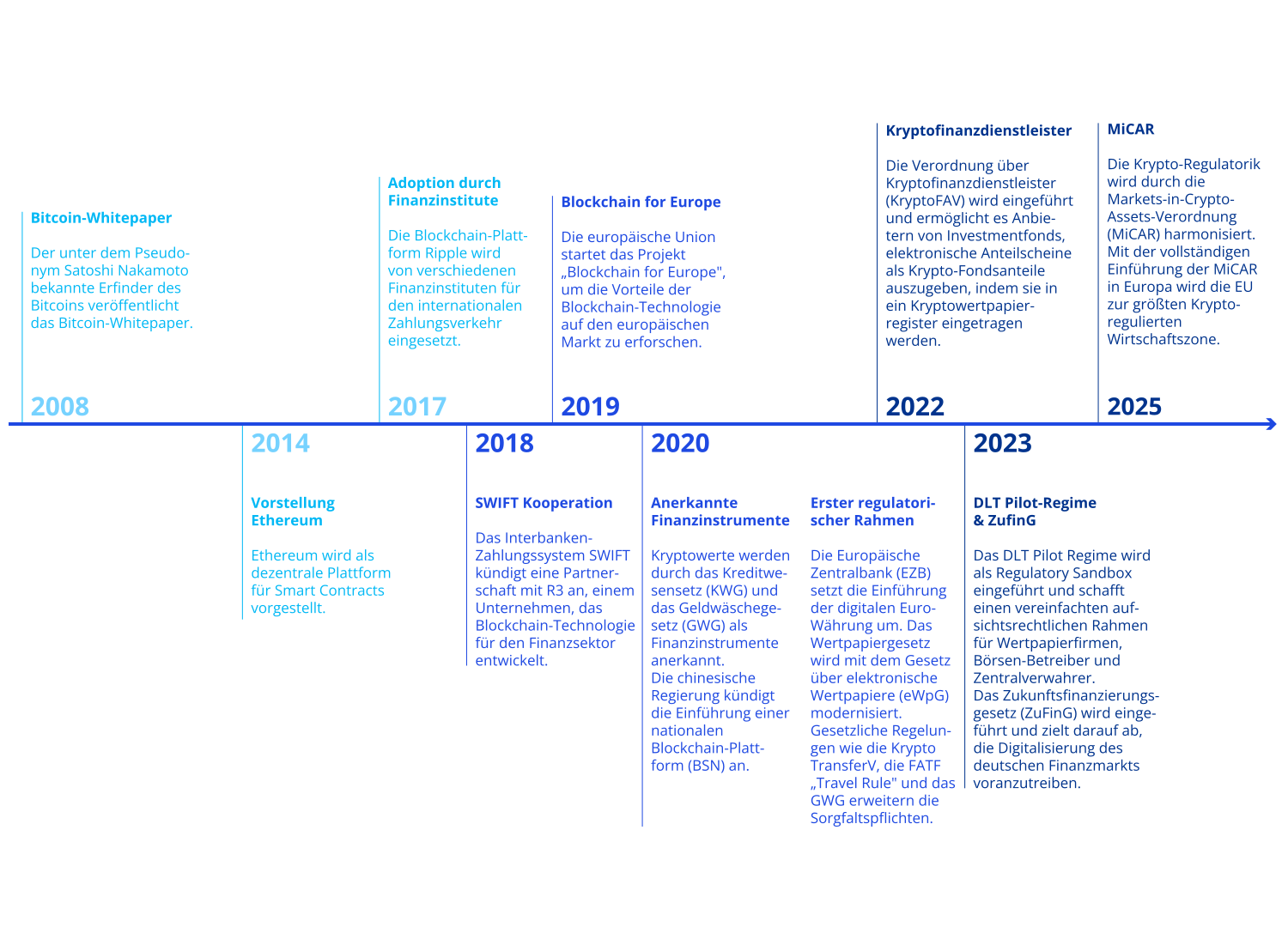
Regulatory authorities and international and intergovernmental organisations are working on DLT in order to create a regulatory framework and standards for digital assets. Regulatory certainty is the basic prerequisite for acceptance in the markets and promotes the development of DLT ecosystems. The legal framework for digital assets in Germany (KWG, eWpG, ZuFinG) and Europe (DLT Pilot Regime, MiCAR, MiFIDII) continues to evolve. This creates important entry requirements for established institutions.
Decentralised financial markets (DeFi)
It is not only the increasing demand for digital assets in the narrower sense that is changing the market, but also the associated services. Distributed ledger technology has the potential to create more efficient markets and optimise the exchange and management of assets and services from the ground up.
One of the most dynamic and innovative segments is Decentralised Finance (DeFi). DeFi is an innovative way of organising the supply of financial products that does not rely on central financial intermediaries, but offers users the opportunity to map bank-like services in a decentralised manner.
DLT has disruptive elements along the entire value chain of banks, asset managers and securities depositories. Processes can be streamlined or eliminated entirely through the automation of activities. Value chains and the associated processes and business models should be fundamentally rethought due to the disruptive nature of DLT.
FAQs
Distributed ledger technology makes it possible to store and manage data in a secure, transparent and decentralised way. In contrast to centralised databases, where all data is stored in a single location, DLT allows data and transactions to be distributed across many different nodes in the network. These can be public blockchains (e.g. Ethereum) or permission-based (private) networks (e.g. Hyperledger platforms). These structures create trust by cryptographically linking the data blocks. Although traditional market players often approach the topic cautiously, further development continues unabated and harbours enormous opportunities for companies to automate complex processes or through new forms of value creation.
The blockchain makes it possible to store data and transactions in blocks without the need for a central authority. Thanks to decentralised consensus mechanisms, blockchain offers a high level of security and protection against counterfeiting. This offers companies a wide range of opportunities to develop new business models and optimise existing processes - for example through smart contracts. These enable self-executing contracts that automatically check and execute conditions, thereby increasing efficiency and trust.
Digital assets are digital assets - i.e. digital representations of real or intangible values - that are managed on a DLT platform. These include, for example, real estate, art, raw materials, but also music and usage rights or shares in companies. Tokenisation converts these assets into tradable units. The advantages of the technology are obvious: assets can be transferred directly between parties without a central intermediary. This reduces transaction costs while increasing liquidity and speed. In addition, tokenisation opens up previously inaccessible asset classes for small investors, for example through fractional ownership of real estate or investments in alternative investments.
Digital asset activities often involve several functions simultaneously. Clear lines of responsibility between business, IT, risk, compliance and legal, as well as defined decision-making and escalation processes, form the basis for a robust operating model. Management should also determine which risks the organisation is willing to take and how new products are approved and monitored.
Distributed ledger technology (DLT) is the umbrella term for technologies in which information is stored and synchronised across multiple network nodes. A blockchain is a specific form of DLT: transactions are grouped into blocks and these are cryptographically linked together. Not every DLT is therefore a blockchain.
A multilateral DLT trading system, or DLT-MTF for short, is a trading venue where financial instruments are traded that are issued, recorded, transferred and stored using distributed ledger technology. This is to be distinguished from pure DLT settlement systems, as well as DLT trading and settlement systems, which combine trading and settlement within a single infrastructure.
Digital assets in practice: an overview of fields of application
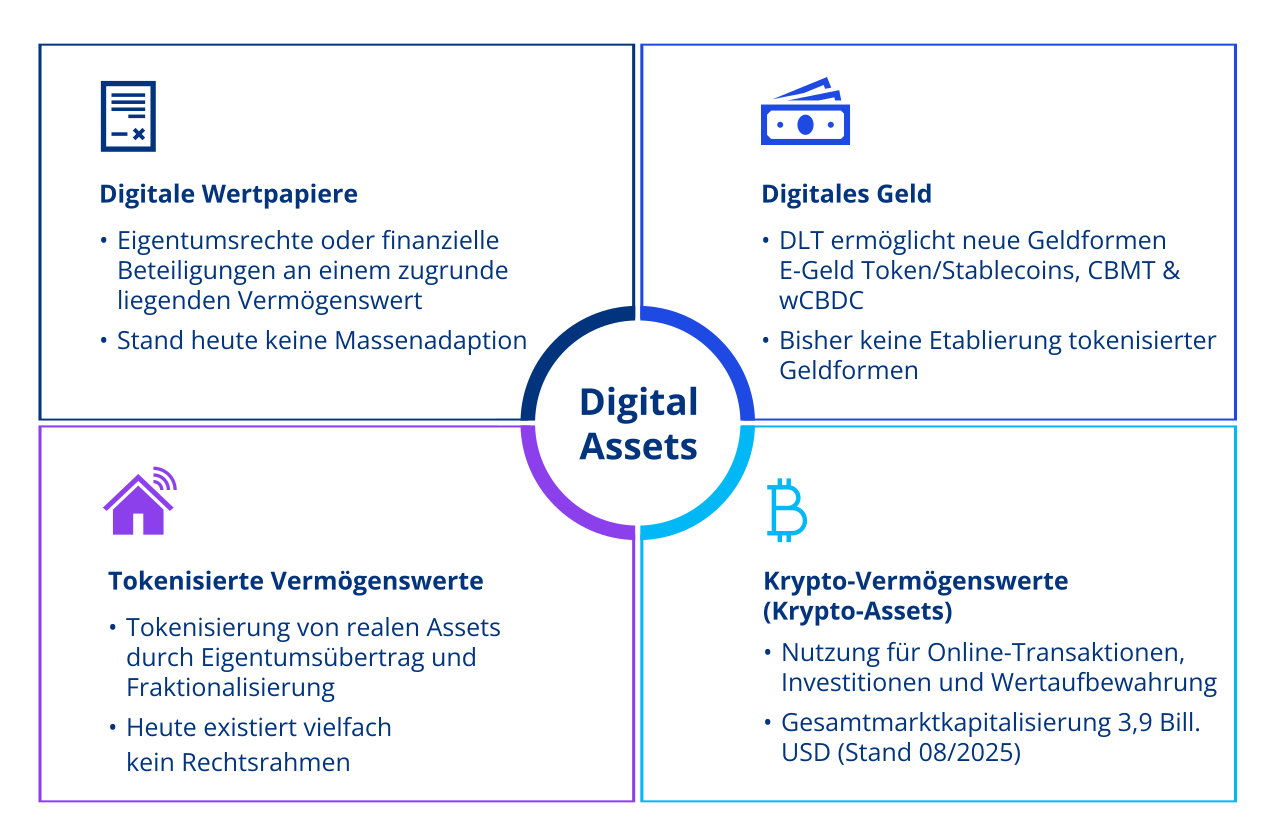
Digital securities can be issued and traded via blockchain networks or other digital platforms. They represent ownership rights or financial interests in an underlying asset, such as shares, bonds or investment funds. Digital securities offer advantages such as increased liquidity, programmable functions and automated compliance. Since 2021, the eWpG has also provided a legal framework for the issuance of digital securities.
Digital money refers to any form of currency or payment system that exists solely in electronic or digital form. It is a digital representation of traditional fiat currencies such as the US dollar or the euro. New forms of money enabled by DLT include e-money tokens and stablecoins, cryptocurrency tokens (CBMT) or digital central bank money. In addition, a digital euro for private customers is being developed by the ECB (non-DLT). Digital money can be used for various transactions, including online purchases, money transfers and digital payments. It generally relies on secure cryptographic techniques to ensure the integrity and security of transactions.
Tokenised assets are digital representations of real assets such as real estate, works of art, goods or even intellectual property rights. Tokenisation converts these assets into tradable units on a blockchain. Among other things, this enables the real-time acquisition of shares in real assets, so-called fractional ownership, greater liquidity and broader access for investors. Ownership and transaction data are generally stored in the blockchain, which ensures transparency and security.
Crypto-assets are digital or virtual currencies that use cryptographic techniques to secure transactions and control the creation of new units. The best-known example of a cryptocurrency is Bitcoin. Other popular cryptocurrencies include Ethereum, Polygon and Ripple. Crypto assets can be used for various purposes, such as online transactions, investments and store of value, and they often offer decentralisation, security and privacy features. A pan-European regulatory framework for crypto-assets has been in place since 2025 with MiCAR.
We support you with innovative ideas and proven expertise
The financial sector is undergoing profound change - driven by the innovative power of digital infrastructures. With increasing regulatory clarity and new market participants, investment in digital assets is on the rise. This dynamic poses key strategic questions for European banks, FinTechs, asset managers and crypto custodians.
Our team of experts helps companies to position themselves in the complex landscape of DLT and blockchain environments. As thought leaders, sparring partners and implementation experts, we offer customised solutions that are tailored to the specific needs of each company.
We support you with
Whether you are a traditional financial institution looking to explore new opportunities for digital assets or a crypto custodian looking to enhance your security arrangements, our team can provide you with the expertise and advice you need to achieve your goals in this rapidly evolving market.
Feel free to get in touch with us - we look forward to the exchange.
Our insights for your success


Your contacts


- Item 1
- Item 2
Hot topics in the financial sector
Blockchain and digital assets, cloud and cyber security, data management and artificial intelligence, ESG and the metaverse: The transformation is affecting the financial industry at all levels.
As one of the leading auditing and advisory firms in the financial sector, KPMG has in-depth industry and market knowledge and a strong partner network.
You can read about the services we provide to support our clients in the financial sector on our focus pages. Browse through our financial sector hot topics on the left.


