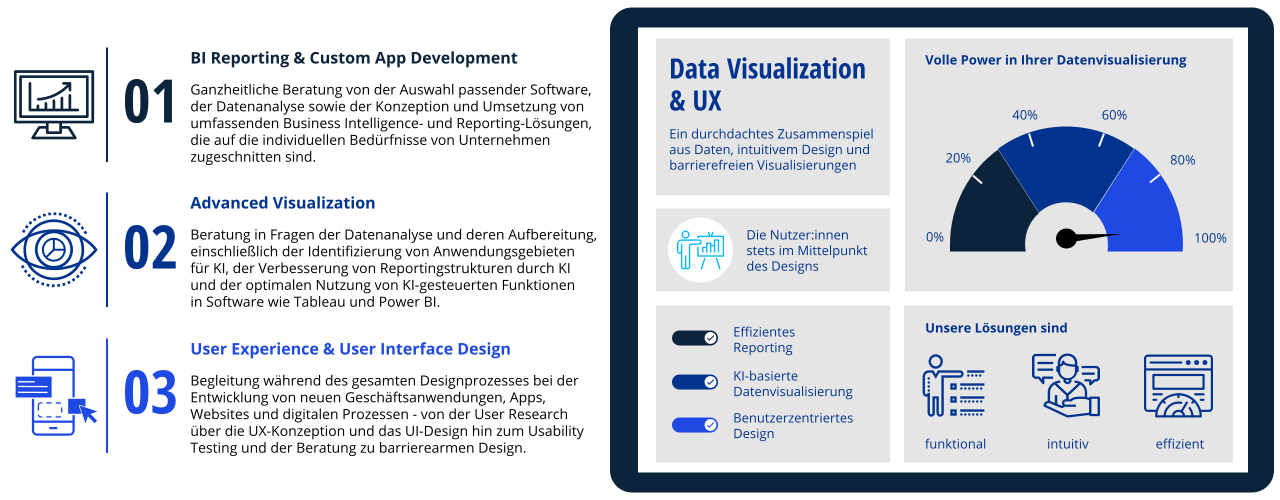
When developing new digital products and services, user needs should be taken into account from the definition of the problem to finding a solution through a suitable user experience strategy, a well thought-out user interface design and regular user tests. A product or service without an intuitive design can lead to user dissatisfaction and limit usage. User interfaces can be outdated in terms of visual design or interaction technology and appear less appealing compared to the competition. Nowadays, users have high expectations of the design, as they are used to sleek user interfaces of applications from the private sphere.
Digital accessibility also presents companies with new challenges. While there has long been a legal requirement in the public sector to make websites, mobile applications and electronically supported administrative processes accessible, the German Accessibility Reinforcement Act (Barrierefreiheitsstärkungsgesetz, BFSG for short) will see a regulation for the private sector come into force for the first time in 2025. Dashboards, websites, apps and documents should therefore be designed in such a way that they are accessible to all people without barriers, regardless of physical or mental impairments.
In addition, new technologies such as AI, AR or voice-controlled interfaces often require special design approaches in order to realise their full potential. When tasks that are normally performed by humans are taken over by AI applications, this often creates mistrust in the unknown technology and a desire for more control among users. Understandable, intuitive user interfaces and navigation structures are needed to strengthen trust in AI systems and improve their acceptance.