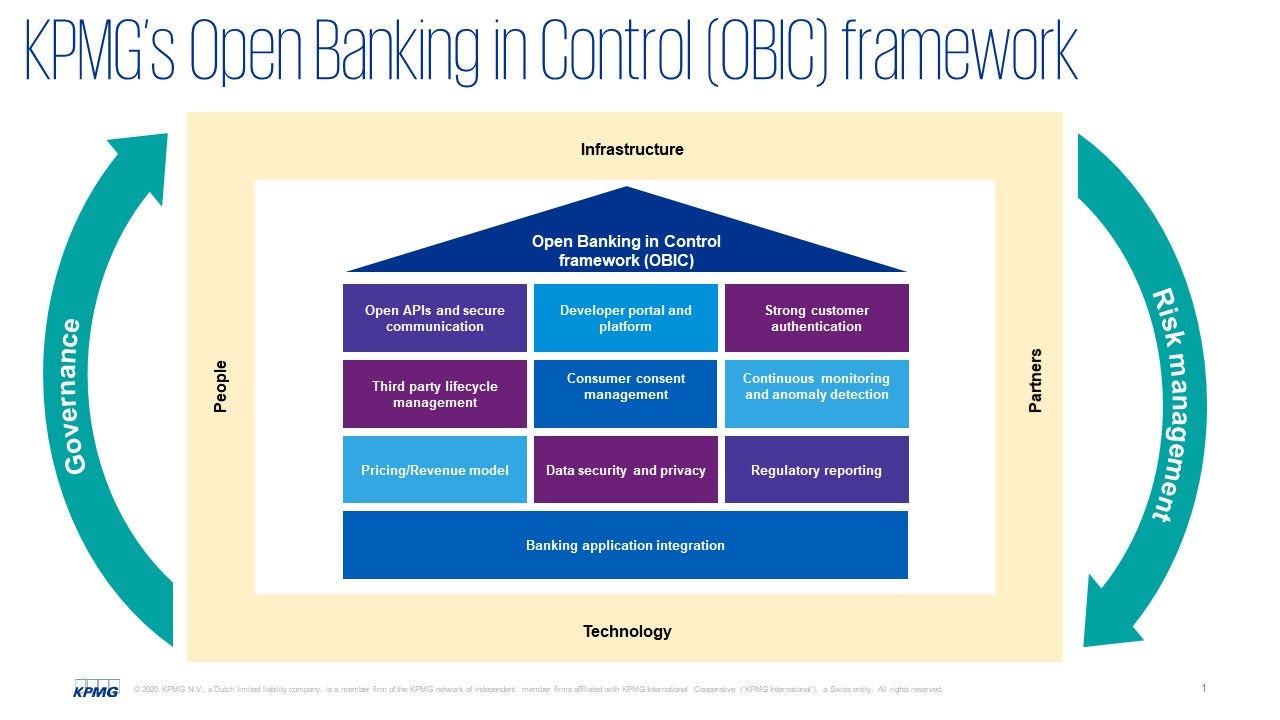
The perfect way to strengthen trust, acquire customers and guarantee the success of Open Banking initiatives is to implement an efficient internal control framework coupled with continuous assessment of the operational effectiveness of the Open Banking model. In order to limit the risks and be able to comply with strict regulations, banks and external financial service providers need to design and build strong internal control frameworks around their Open Banking environments. Open Banking is an evolution towards an environment in which both financial and non-financial services and data are integrated into complete customer pathways that are personalised and geared to the customer’s requirements. Customer service will be addressed by multiple parties concurrently. The transparency of this kind of collective approach is expected to encourage competition and innovation in the European financial sector.
As a result, consumers will have greater choice and at the same time their high expectations, inherent in the digital era, will be met. The PSD2 banking legislation will drive a much bigger Open Banking movement. The description of Open Banking can sound intimidating for banks and customers, because Open Banking can be viewed as opening the door to security and privacy risks, as well as operational and reputational risks. Precisely for that reason, it is essential that Open Banking is preceded by buy-in from the customer. We at KPMG can help banks and other companies whose business models are built around Open Banking to strengthen and retain that trust.