

Highlights
Reporting on Scope 2 emissions could become more complex for companies under Greenhouse Gas Protocol (GHGP) proposals to update measurement methods.
The proposals would require more granular measurement of both location-based and market-based emissions, which may not be feasible for all companies.
As a result, there is a risk that some companies may adjust their decarbonisation targets and investments or adopt alternative methods to measure emissions.
Now the consultation period has ended, the GHGP will consider how to amend its proposals. It will also consult on further proposals to update other areas of its corporate standards and guidance over the next three years.

Why is this update important?
The GHGP Standards are the most commonly used measurement standards worldwide for corporate reporting of GHG emissions. They are referenced in many reporting regulations and standards, including IFRS® Sustainability Disclosure Standards and European Sustainability Reporting Standards (ESRS).
Updates are taking place to modernise and strengthen the GHGP Standards, with several consultations planned to address different standards.1
For companies, the proposed updates to Scope 2 guidance would require more precise reporting of electricity use and emissions to reflect when and where power is actually generated and consumed. This would increase the complexity of reporting and require companies to collate significantly more granular information.
In practical terms, companies might need to adjust their emissions measurement practices, targets and energy procurement. The energy attribute certificates (EACs2) companies purchase to manage their market-based emissions may no longer qualify under the revised requirements, meaning new types of certificates would need to become available.
What changes are proposed?
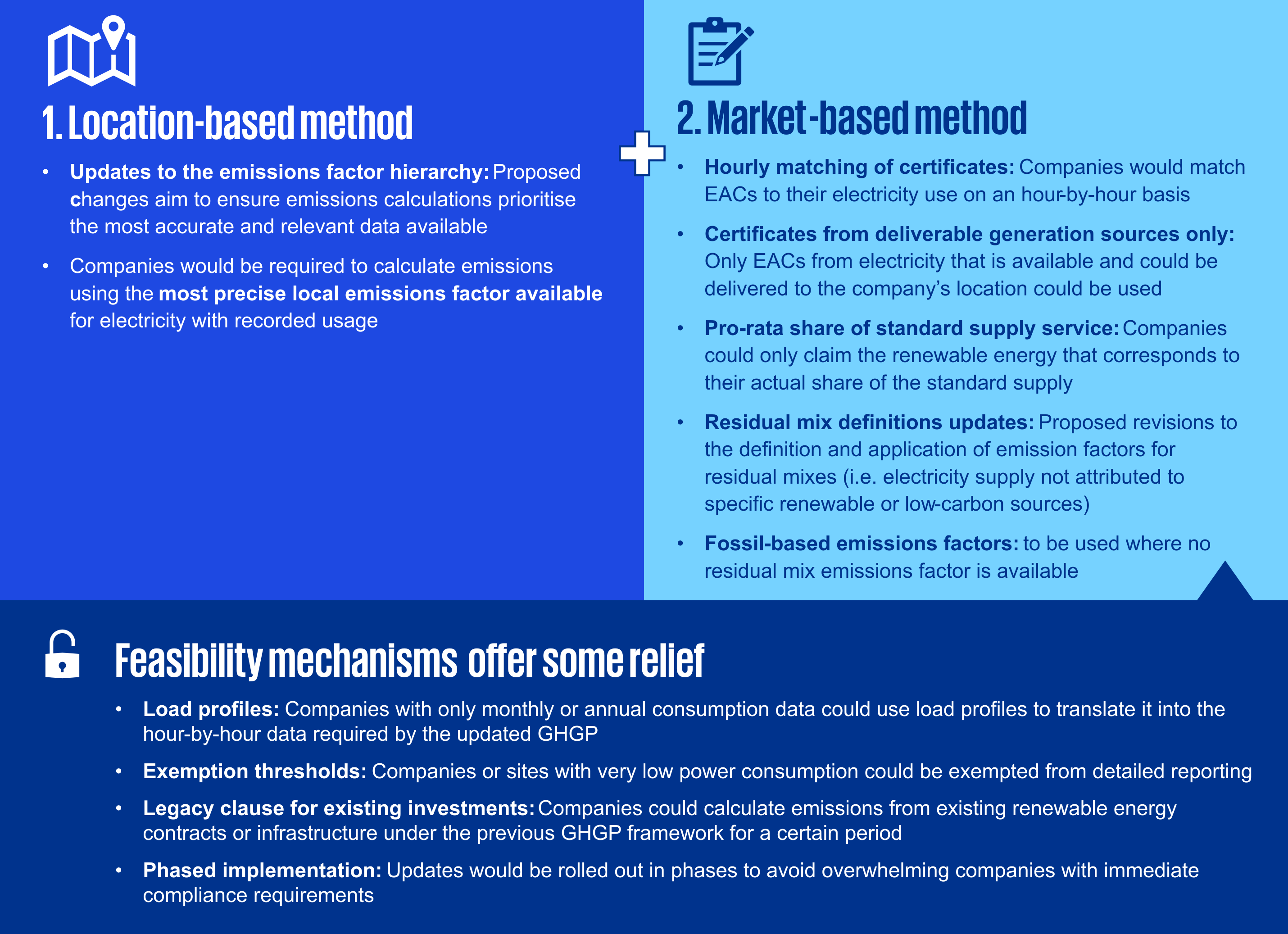
Companies would continue to report their emissions in two ways:
- location-based: emissions calculated based on the carbon intensity of the local power grid; and
- market-based: emissions calculated to take into account the type of electricity procured or EACs purchased.
Our view
We have provided a detailed response to GHGP’s consultation. We support updating the Scope 2 guidance to develop a globally accessible reporting standard that companies can apply consistently and cost-effectively to generate decision-useful information. Failing to achieve this could lead preparers, other frameworks and regulators to consider using other methodologies.
We have asked the GHG Protocol to consider the following.
It is unclear whether the additional reporting cost and effort these proposals require would sufficiently increase the decision-usefulness of information for investors and other users.
We recommend further assessment to understand whether the extent of additional complexity is needed to create decision-useful information.
The proposed changes could be difficult for many companies to implement but the extent of the challenge is unknown. Companies could face challenges from the proposed level of granularity as well as a lack of available information and reporting infrastructure. Some key terms and concepts could also be clearer.
Companies that find the new requirements too challenging may decide not to apply them. This could reduce the positive impact GHGP aims to achieve.
We encourage the GHG Protocol to give equal importance to feasibility in its existing decision-making criteria and to carefully consider responses about the feasibility of the proposals. Additional targeted outreach may be needed for a balanced analysis that considers the needs of all types of companies who may use these standards.
These changes would require companies to recalibrate their emissions-reduction targets which, in turn, risks creating uncertainty around net-zero strategies. As a result, the changes could slow investment in renewables infrastructure at a critical time of geopolitical change when some are already stepping back from decarbonisation targets.
A clear roadmap is needed to show how these proposals for Scope 2 reporting interact with other aspects of GHGP’s work and the broader target-setting ecosystem. Without this clarity, reporting confusion could jeopardise the reduction of climate impact, a key pillar of the GHGP.
What's next?
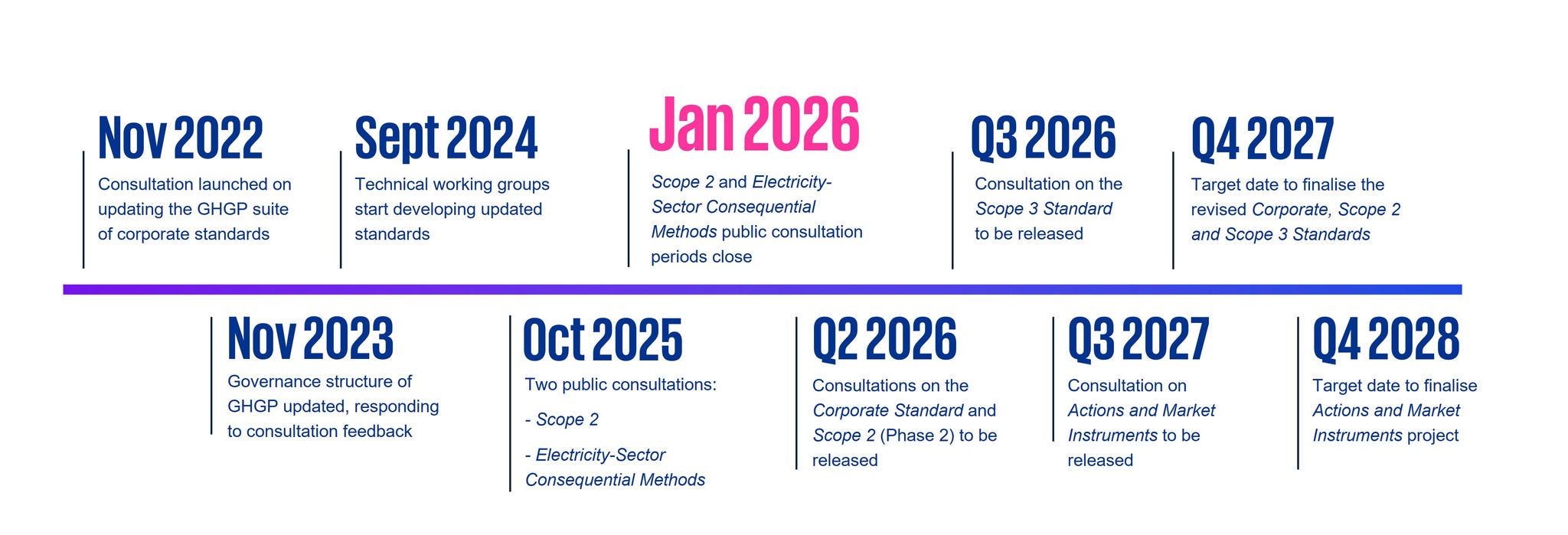
GHGP is considering the responses received from its consultation. Subsequent consultations will follow – including further proposals for Scope 2 emissions reporting. GHGP aims to finalise new standards in 2027 and 2028.
Updates to the GHGP Standards will not be automatically incorporated into IFRS Sustainability Disclosure Standards or ESRS. Each of these standards refers to specific existing versions of the GHGP Standards. These references would need to be revised for the updated GHGP Standards to apply.
IFRS S2 Climate-related Disclosures does not require disclosure of market-based emissions, but some adopters may choose to present this information.
Actions for management
- Consider how the proposed changes would affect your company. They could require you to change the types of instruments you are able to use, the targets you set, and your emissions measurement processes.
Read our GHGP handbook for an introduction to reporting of Scope 2 emissions under existing GHGP Standards.
For further information on the proposals, speak to your KPMG contact and visit kpmg.com/ifrs to keep up to date with the latest news and discussion.
1 The Electricity-Sector Consequential Methods Public Consultation was launched concurrently with the Scope 2 Public Consultation to provide input to the GHGP’s Actions and Market Instruments Working Group.
2 EACs are also known as Renewable Energy Certificates (RECs).
© 2026 KPMG IFRG Limited, a UK company, limited by guarantee. All rights reserved.