

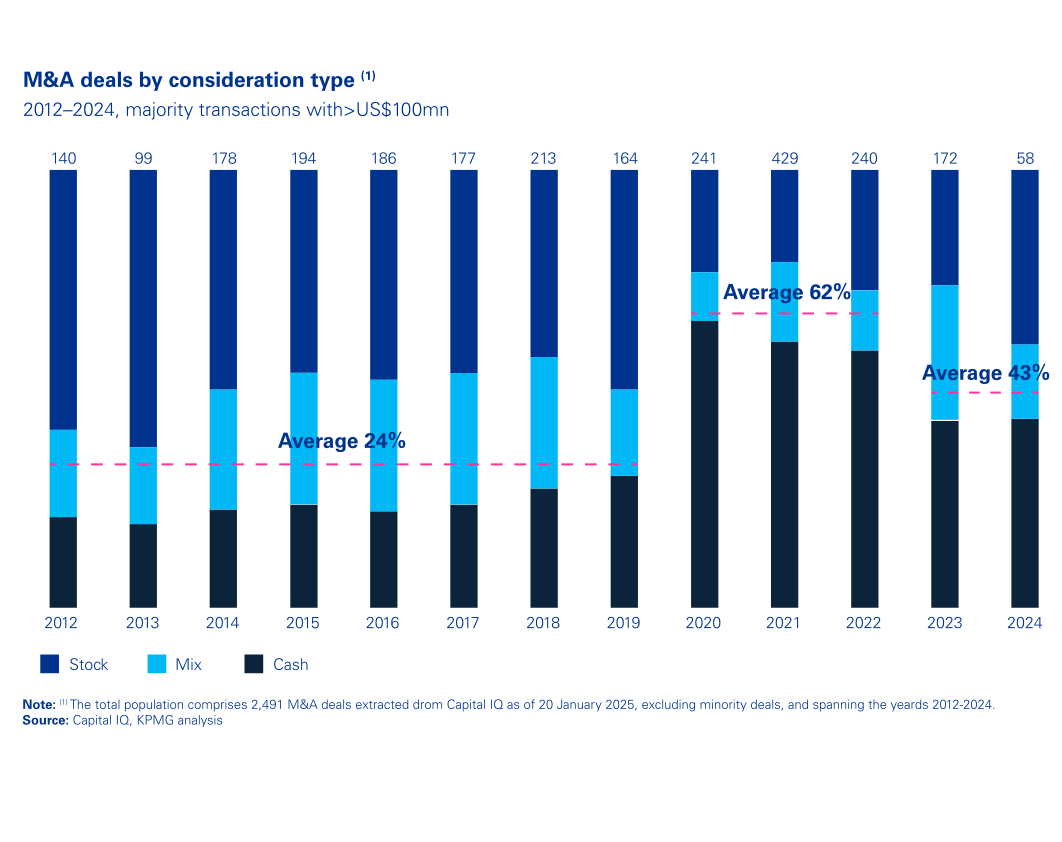
Our study The M&A Dance tracks 3,006 large public-to-public deals over a decade and finds that the choice of consideration — cash, stock or a mix — has one of the clearest links to long-term value. A public quote gives both buyer and seller a liquid currency that private companies can only approximate. But that privilege comes with obligations: deeper disclosure, faster reporting, and tighter execution discipline.
Benefits unique to listed acquirers
Public company deal disclosure in the US
A public company has 75 days after the consummation of a significant acquisition to file with a Form 8-K the required audited financial statements.
Depending on the size of the acquisition and its significance to the company (which is measured based on earnings, assets and purchase price), audited acquired company annual financial statements for the most recent one, two or three fiscal years, plus appropriate unaudited interim financial statements, under SX Rule 3-05, may be required.
Where the acquired company financial statements required to be provided in a Form 8-K, pro forma financial information under SX Article 11 will also be required. Under the current standards it is only mandatory to show transaction accounting effects; synergy adjustments are only allowed if factually and supportable within 12 months.
Non-GAAP synergy targets are permitted for investor desks or press releases, if labelled forward-looking and accompanied by a reconciliation or a statement.
As a US public company enters into M&A transactions, they should also be cognizant of SX 3-05 requirements and negotiate the availability all necessary accounting records that would be required for an audit if the significance thresholds are met.
Looking ahead while the SEC has not mandated post-deal synergy tracking and reporting, staff comment letters increasingly demand evidence for any figures cited. The IASB’s proposed amendments to IFRS 3 would go further — requiring quantified benefit follow-up in annual reports — signalling where global expectations are heading.
Balanced view for public sellers
All-stock bids give public sellers immediate liquidity, yet that very liquidity can erode value once the shares settle. Our research shows all stock-financed mergers result in significant pressure: merger-arbitrage funds short the acquirer while some of the seller’s shareholders may also seek to cash out, pushing the buyer’s shares down in the weeks around closing – and decreasing the value of the shares sellers shareholders received.
In our M&A Dance sample, acquirers that paid 100% stock underperformed cash bidders by 15.4 percentage points on a weighted average basis two years later, so the paper premium received in all share deals often proves fleeting. For sellers, the trade-off is clear: a higher headline multiple from all-stock versus the risk of post-deal flow-back. A mixed structure often provides the fairest handshake.
Bottom line
Listing status expands strategic choice for public buyers but amplifies accountability. With clear narrative, robust data and early audit planning, boards can capture the upside and avoid post-deal whiplash.
Read the full analysis in The M&A Dance.


