AI is prompting dealmakers to rethink one of the most fundamental assumptions in M&A: what makes a business competitively defensible and how that defensibility influences enterprise value.

      AI is reshaping how PE investors and corporate M&A teams identify acquisition opportunities, assess the competitiveness of targets and prepare businesses for sale. Yet legacy diligence frameworks and valuation assumptions were not designed to capture AI's growing influence on a target's future performance.

      KPMG's latest M&A Pulse (June 2026) reveals that while dealmakers increasingly recognize AI as a factor in investment decisions, there is no established approach for incorporating its impact on target defensibility into diligence, valuation and investment thesis development. As AI reshapes the drivers of business value, dealmakers should consider a more structured way to assess whether a target's competitive advantage can endure.
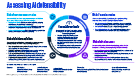
      AI defensibility is the durability of a business’s competitive advantage and economic returns in the face of AI-driven disruption to its industry. Rather than focusing on AI adoption — does the company use AI? — it considers AI's impact on the company's long-term market position and enterprise value.


      AI is changing how organizations evaluate businesses

      78% of dealmakers say AI is changing their M&A assessment criteria


      Organizations are increasingly assessing how AI is likely to influence the long-term competitiveness and enterprise value of acquisition targets. However, for many organizations, those assessments remain an incremental input rather than a catalyst for fundamentally rethinking how enterprise value is evaluated.


      The findings from KPMG’s M&A Pulse reveal a market in transition. AI's impact on target defensibility is now an established consideration in M&A, but its influence varies across target selection, resilience screening and valuation.

      Because AI has the potential to reshape the durability of competitive advantage, simply adding AI-related questions to traditional diligence checklists may not be sufficient. Organizations should develop a more systematic framework for evaluating how AI may reshape the investment thesis underpinning a target's enterprise value.

      AI is changing the investment thesis — not just the diligence process.


      There is no single blueprint for AI defensibility

      As AI continues to disrupt and disintermediate established business models, organizations face a new challenge: there is no widely accepted view of what makes a business truly AI-defensible.

      KPMG's latest M&A Pulse confirms that lack of consensus. While dealmakers broadly agree AI defensibility matters, there is far less agreement on what actually creates durable differentiation.


      Only two characteristics command majority support among dealmakers: regulatory, compliance or security barriers (55%) and workflow integration (52%). Beyond those two factors, opinions fragment considerably. Domain-specific expertise, proprietary data, AI architectures, switching costs and network effects all receive support, but none emerges as a universally accepted indicator of AI defensibility.

      The findings suggest AI defensibility is an emerging discipline rather than an established evaluation framework.

      Strategic implication

      Reducing risk with a consistent approach to assessing AI defensibility

      The absence of a common framework can create risk throughout the M&A lifecycle. Buyers may evaluate similar targets using very different assumptions about the durability of their competitive position, while sellers may struggle to articulate the AI-enabled capabilities that will increasingly influence enterprise value. As AI becomes a more significant driver of business value, a more consistent approach to assessing AI defensibility is expected to become increasingly important to transaction quality and investment confidence.


      AI has reached an inflection point in analysis — but not yet in decision frameworks.


      A more disciplined approach to AI defensibility

      KPMG's AI defensibility framework provides a structured approach to assessing AI defensibility across acquisition targets and sell-side candidates. Rather than focusing solely on AI adoption, it helps dealmakers evaluate how AI may reshape the investment thesis, the durability of competitive advantage and, ultimately, enterprise value.

      The framework organizes AI defensibility around five strategic dimensions, each supported by diagnostic considerations that help deal teams evaluate how AI may strengthen or undermine a business's competitive position:

      • Risk of revenue compression: Assesses whether AI could weaken pricing power, commoditize expertise or enable customers to bring capabilities in-house. Pricing and discounting trends, churn and renewal rates and revenue concentration can help reveal the extent of exposure. Set against these risks are the firm's defenses: deep workflow integration, switching friction and differentiated value that is difficult to replicate. Together, these factors indicate the durability of future revenue and management's ability to protect it.

      • Risk of margin erosion: Assesses whether AI could create structural margin pressure through rising compute and infrastructure costs, third-party AI dependencies, vendor concentration or the cost of scaling AI-enabled operations. Understanding how these costs scale with growth, and the pricing power or efficiency levers available to offset them, can reveal whether AI is likely to compress unit economics or whether the business has sufficient headroom to protect margins over time.

      • Risk of disintermediation: Assesses how easily AI could enable customers, competitors or new entrants to replicate, bypass or replace the company's core offering. Set against that exposure are the business's competitive moats: proprietary data, regulatory barriers, workflow integration, domain expertise and network effects. Evaluating which of these would remain durable against a capable AI-enabled rival can reveal both where the business is most exposed and what continues to protect its competitive position.

      • Risk of obsolescence: Assesses whether advances in AI could fundamentally change how customers derive value, making today's products, interfaces or delivery models less relevant. Distinguishing incremental competitive threats from structural shifts, and assessing their likely timeframe and early signals, can reveal both the degree of exposure and the opportunity for the business to adapt as customer expectations and sources of value evolve.

      • Competitive velocity: Assesses whether the organization can adopt, deploy and improve AI capabilities fast enough to sustain differentiation as competitors accelerate. Engineering talent, data access, capital and the organization's track record of deploying change — particularly when benchmarked against competitors — can indicate whether the business is positioned to lead in AI adoption, keep pace with competitors or fall behind.

      Download

      Assessing AI defensibility


      Strategic implication

      From AI adoption to AI advantage

      Whether a target uses AI can matter far less than how AI changes the economic drivers, underpinning its competitive position — its pricing power, cost structure, customer retention and the durability of its future cash flows.

      The diligence question therefore shifts from "Has the target adopted AI?" to "Does AI strengthen or erode the drivers of this business?" A disciplined framework helps dealmakers answer that question consistently across targets, distinguishing where AI creates defensible advantage from where it exposes the business to disruption, margin compression or substitution. Applied effectively, this approach can help improve diligence quality, strengthen valuation confidence and support better investment decisions.


      Turning principles into practice

      Developing a framework is only the first step. The real challenge is embedding it consistently into diligence and investment decision-making.

      KPMG's latest M&A Pulse suggests there is still significant variation in how organizations assess AI defensibility. While some criteria, such as regulatory barriers, are evaluated at roughly the same rate they are considered strategically important, others are assessed at rates that do not always reflect their perceived importance.


      The findings suggest that organizations are tailoring AI defensibility assessments to individual transactions, sectors and deal teams rather than applying a consistent evaluation framework.


      Strategic implication

      Consistency in evaluation can drive consistency in decision-making.

      As AI becomes a more significant driver of enterprise value, organizations that apply a disciplined, repeatable framework to evaluating AI defensibility will likely be better positioned to improve diligence quality, valuation confidence and, ultimately, investment outcomes.


      As AI reshapes industries, competitive advantage is anticipated to become more difficult to evaluate and more important to evaluate well. In our view, the organizations that create the greatest value through M&A will be those that systematically identify opportunity, assess risk and test the durability of competitive advantage.

      The next competitive advantage in M&A may not be AI itself. It may be the ability to evaluate its impact more effectively than anyone else.


      Methodology

      Published earlier this year, the 2026 Global M&A Outlook explores the key issues and trends shaping the M&A landscape, including the growing influence of AI on dealmaking. This M&A Pulse takes a deeper look at that evolving conversation, examining how senior dealmakers are evaluating AI's impact on enterprise value, competitive advantage and investment decision-making.

      The survey was fielded in June 2026 with 149 senior dealmakers in M&A across publicly traded organizations with $100M+ annual revenue USD, spanning 20 countries and jurisdictions.

      Countries: Australia (6), Brazil (5), Canada (2), China (8), France (9), Germany (19), India (14), Ireland (1), Italy (14), Japan (5), Mexico (1), Netherlands (3), Saudi Arabia (5), Singapore (2), South Africa (4), Spain (7), Switzerland (2), the United Kingdom (12), and the United States (30).


      Our insights

      The year of the carve-out

      Designing, executing and winning Consumer and Industrials carve-outs

      From PPAs to power ownership: How data centers are driving a power generation land grab

      Fresh perspectives and actionable insights on global trends and key issues impacting your business.

      Related services

      KPMG's Deal Advisory professionals can provide actionable, practical advice designed to help you minimize risks, and unlock, drive and preserve value for your business.

      KPMG Global Strategy Group combines the right blend of strategy, sector expertise and data-driven insights to deliver a bespoke approach that drives performance transformation with tangible financial impact.

      Helping you realize desired results with a deliberate, forward-thinking approach to deal planning, execution and integration.

      M&A requires decisive, swift action to seize opportunities. Whether raising capital, acquiring businesses, or selling your company, you need a trusted advisor with experience in delivering successful M&A deals.

      Our people

      Liz Claydon

      Global Head of Deal Advisory & Global Head of Life Sciences

      KPMG International

      Joshua Martin

      Global Head of Transaction Services

      KPMG International

      Tilman Ost

      Partner, Deal Advisory, Global Private Equity Advisory Leader

      KPMG in Germany

      Javier Rodriguez

      Head of KPMG Strategy

      KPMG International