What is BEPS 2.0?

      The OECD's Base Erosion and Profit Shifting (BEPS) 2.0 initiative represents a significant change in global tax standards. Its goal is to combat tax avoidance by multinational corporations. 

      BEPS 2.0 consists of two pillars that focus on different aspects of taxation whereas the focus lies on Pillar 2 (Global Minimum Tax).

      BEPS 2.0 – Assessing the impact on your organization

      BEPS 2.0 – Assessing the impact on your organization

      Scenario planning: Responding to new BEPS proposals– built on KPMG Digital Gateway

      Pillar 1

      Pillar 1 focuses on the redistribution of taxing rights - apart from the standardization of profit margins. Countries with large consumer markets should have the right to tax the profits of large multinationals, even if they are not physically present in those countries. This will ensure that digital and global companies are taxed fairly. However, countries have not yet been able to reach a final agreement on its introduction. 

      Pillar 2

      Pillar 2 introduces a global minimum tax rate of 15%. This global minimum tax is intended to prevent multinational corporations from shifting profits to low-tax jurisdictions. This regulation mainly affects groups with an annual consolidated turnover of more than EUR 750 million and has also been implemented in Switzerland from 2024 (Domestic Minimum Top-up Tax followed by the Income Inclusion Rule as from 2025).

      Companies below this threshold should nevertheless review their ownership structure as they may be part of a larger consolidated group (e.g. family office, foundation). The global minimum taxation will have a lasting impact on the tax strategy of multinational groups.

      Impact on Switzerland and the Swiss tax system

      The introduction of Pillar 2 has a significant impact on the Swiss tax system.

      Traditionally characterized by attractive corporate tax rates, Switzerland now faces the challenge of applying the new global minimum tax standard. Hence, the tax burden of traditionally low tax cantons is basically lifted up to 15% as in other countries. 

      However, a fair and internationally harmonized tax system will not only strengthen Switzerland's reputation as a responsible country but will also promote a sustainable tax landscape in the long term.

      The Swiss authorities are still actively working to assess the impact of the Pillar 2 rules and to ensure that Switzerland remains competitive while meeting international require­ments. In this connection, existing tax incentives can still be used in a tax efficient manner under the Pillar 2 rules as a Qualified Tax Incentive. Furthermore, some cantons have introduced new incentive systems (grants or Qualified Refundable Tax Credits) or are in the course of doing so.

      Companies need to be prepared for a possible adjustment of profit tax burden and incentive possibilities, which will affect both local and international companies.

      Challenges for companies

      The adaptation to Pillar 2 poses a number of challenges for the companies:

      • Compliance: Companies will need to register and file new tax returns to comply with the new requirements.
      • Reporting: Increased transparency requirements mean more work for the internal tax department.
      • Cost: Complying with the new rules can be costly.
      • Increase in tax disputes: New tax disputes may arise as a result of the new and additional tax procedures. 

      Affected companies and sectors

      Pillar 2 applies to multinational companies in all sectors, including technology, pharmaceuticals and consumer goods, that meet the size criteria. 

      Companies with extensive international operations need to ensure that they meet the new compliance and reporting requirements. This may require adjustments to accounting and IT systems. In addition, increased tax burdens may affect companies that previously benefited from lower tax rates. 

      Companies also need to ensure that their governance framework meets the new legal requirements.


      Timeline and process

      Switzerland has already taken significant steps to meet the OECD timetable for the introduction of a global minimum tax.

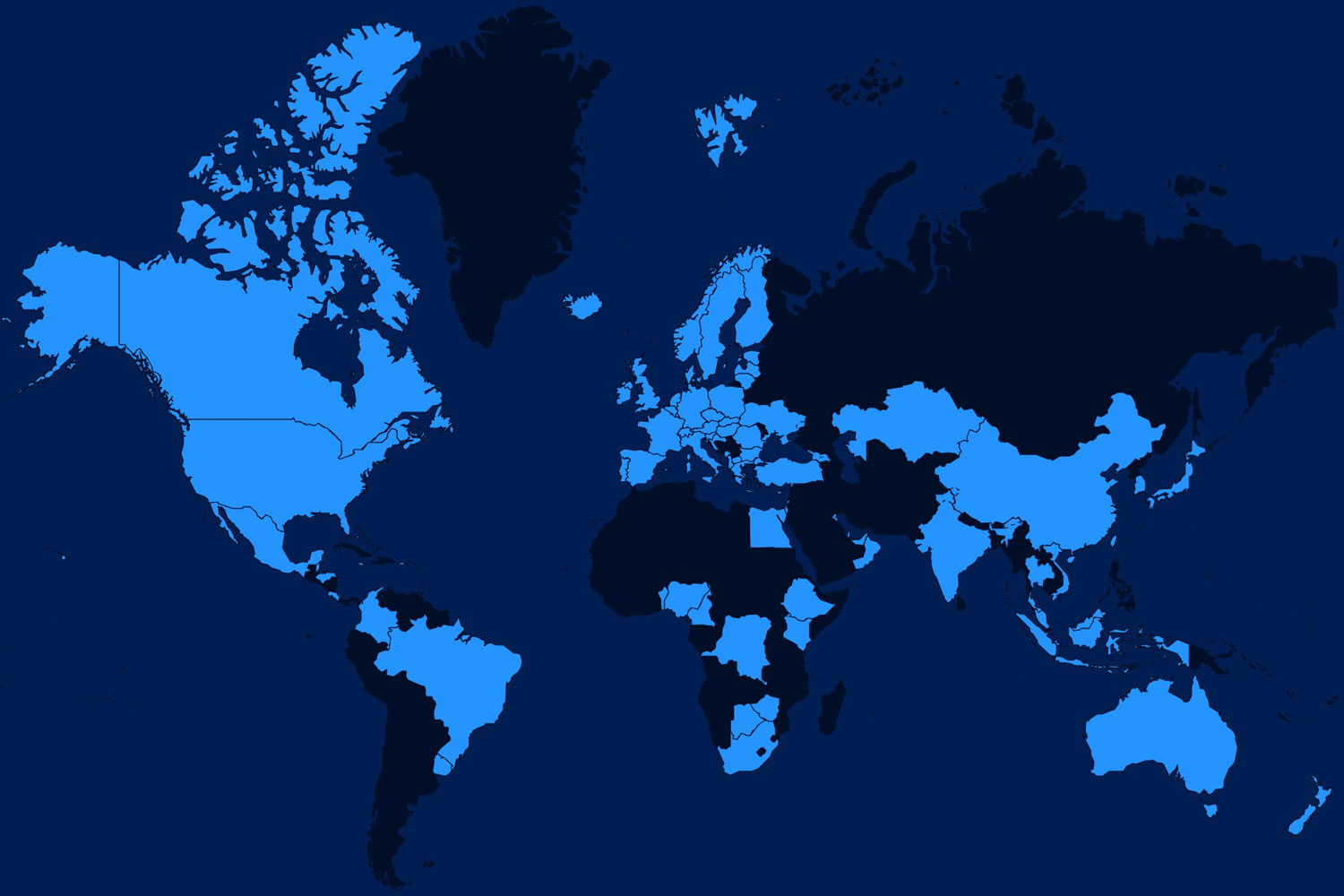
      The Pillar 2 concept is supported by more than 130 countries worldwide. 

      Besides Switzerland, a large number of countries (in particular most of the EU countries) have introduced at least one of the corresponding minimum taxation rules. An overview of the current implementation status can be found on the KPMG BEPS 2.0 Tracker.

      While some large countries, such as China and India have not yet decided on implementation steps, the US have been granted a Side-by-Side System as from 2026 whereas companies of a US parented group are exempted from two of the corresponding minimum taxation rules whereas they are still subject to Domestic Minimum Top-up Taxes where introduced.

      Nevertheless, most companies are affected by the rules in at least one country from 2024 or 2025 at the latest and will need to file the first Pillar 2 tax return by end of June 2026. 

      BEPS 2.0 - World Overview > Click on the image to enlarge it

      What information is required?

      Under Pillar 2, Swiss companies will need to manage many data points to comply with the rules.

      Approximately 150 different data points need to be collected, including information on taxes, income and internal structures.  

      Companies are faced with the decision to either develop their own calculation system, license external software solutions, or outsource the calculation and/or compliance. 

      KPMG has a proven mapping approach that can be used to map the GloBE rules to the data available in your organization. 

      auto_fix_high

      With KBAT - KPMG BEPS Automation Technology - KPMG has developed a Pillar 2 calculation tool that supports companies end-to-end, from the flexible import of data from existing systems to the generation of the corresponding tax returns.

      Stay one step ahead of developments

      Our team of experts is experienced in guiding groups through the implementation process from data gathering until filing. 

      We’re ready to support your Pillar Two project through an approach that:

      • Is tailored to your needs, timeline and in-house skills and capacities
      • Reflects the KPMG Pillar Two project methodology
      • Includes access to KPMG’s Global Pillar Two working group – and all our lessons leaned on Model Rules interpretation, best practices and technology

      KPMG Switzerland’s Pillar Two News provides updates on key developments in the OECD/G20 global minimum taxation (Pillar Two), covering Swiss regulations as well as international changes relevant to Swiss-headquartered groups. 

      Meet our experts

      Stefan Kuhn

      Partner, Head of Tax & Legal, Member of the Executive Board of Directors

      KPMG Switzerland

      Marco Alig

      Partner, International Corporate Tax, Tax Accounting

      KPMG Switzerland

      Anne Marie Anselmi

      Partner, International Corporate Tax, Head of Tax Accounting

      KPMG Switzerland

      Vincent Thalmann

      Partner, Location Leader Geneva, Head of Corporate Tax Western Switzerland

      KPMG Switzerland

      Peter Uebelhart

      Partner, Tax

      KPMG Switzerland

      Olivier Eichenberger

      Director, Corporate Tax

      KPMG Switzerland

      Current BEPS 2.0 developments

      No adjustments are required in the GloBE calculations for leases but SBIE calculations are impacted.

      Determining the “right” or “best” accounting standard for Swiss companies from a GloBE MR and CbCR Safe Harbor perspective is no easy task.

      Guidance on the QDMTT has been issued and a QDMTT safe harbor rule has been introduced. What does this mean for Switzerland?

      Date of substantive enactment of Pillar Two legislation is key for Swiss MNEs – watch out for the latest info on financial disclosure requirements.