

A climate risk assessment is a strategic process that helps companies identify, evaluate, and manage the potential impacts of climate change and the climate transition on their operations, assets, and value chains. It involves analyzing both physical risks, such as extreme weather events, sea level rise, or temperature shifts, and transition risks, including regulatory changes, market shifts, and reputational pressures tied to the low-carbon transition.
By providing valuable insights into how climate change and the climate transition may impact your locations and overall business model, a climate risk assessment can help you anticipate both risks and opportunities under different decarbonization scenarios. Beyond regulatory requirements, such an analysis becomes a critical component of strategic business planning, enabling companies to build resilience, capture emerging opportunities, and ensure long-term sustainability.
To help clients stay ahead of evolving regulatory requirements, including the Corporate Sustainability Reporting Directive (CSRD) and EU Taxonomy, KPMG provides climate scenario analyses and resilience assessments. These services not only ensure compliance but also prepare businesses for the impacts associated with climate change. Our experts support you in defining the right scope, selecting and interpreting relevant climate scenarios, assessing value chain impacts, and quantifying the potential financial risks and opportunities. We also evaluate the resilience of your strategy and business model, and help integrate key findings into public disclosures and communications with strategic stakeholders inside and outside your organization.
As the climate continues to change, organizations are facing not only more frequent and severe weather events, but also a rapidly evolving landscape of policies, legislation, and taxes aimed at addressing climate-related challenges. These shifts are fundamentally altering the way companies operate, requiring them to adapt to both environmental changes, new regulatory demands, and evolved stakeholder expectations.
In this new environment, companies must assess and manage two main categories of climate risk:
- Physical risks: These include the direct impacts of climate change, such as more frequent floods, intensifying heatwaves, and severe droughts that threaten agriculture and supply chains. Such events place increasing pressure on companies to strengthen their resilience and adapt their operations
- Transition risks: Businesses must also navigate the risks associated with the transition to a low-carbon economy. This includes adapting to new regulations, carbon taxes, and shifting market expectations as governments and stakeholders push for more sustainable practices.
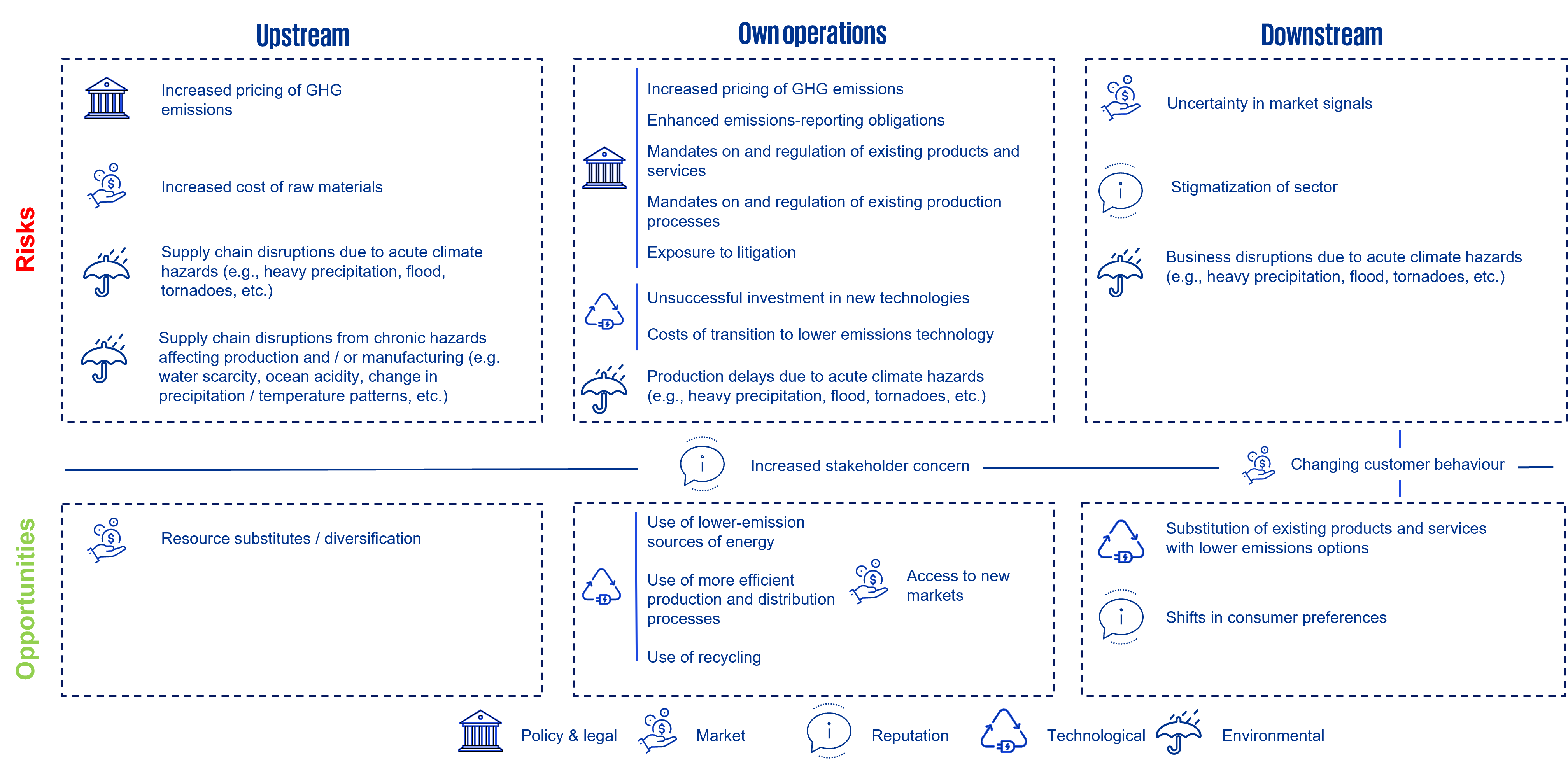 Assessing climate-related risks and opportunities entails exploring an organization’s exposure and vulnerability to a wide range of physical hazards and transition events. Source: KPMG.
While these risks pose challenges, the transition also opens up new avenues for strategic advantage. The shift to a low-carbon economy offers companies the chance to innovate, grow, and build competitive advantage. Investing in sustainable technologies, circular models, and efficient supply chains can open new markets, attract climate-conscious investors, and enhance long-term resilience.
Climate risk assessment is rapidly becoming a necessity
As regulatory expectations continue to evolve, companies are increasingly required to demonstrate a structured approach to managing climate risks. Leading frameworks such as the Task Force on Climate-related Financial Disclosures (TCFD) have established the benchmark for best-practice reporting on climate-related risks. As pressure increases on the European Union to accelerate its climate ambitions, the European Commission is responding with concrete regulatory measures. These are now embedded in the CSRD and the EU Taxonomy, which set clear expectations for how companies should identify, assess, and disclose climate-related risks.
A key step in managing these risks is conducting a comprehensive climate risk assessment. This process analyzes a company’s exposure to both physical and transition risks and opportunities, using global climate scenarios that reflect different levels of warming and regulatory responses. Such assessments provide a foundation for informed decision-making and long-term strategic planning in the face of climate uncertainty. In addition, for many businesses that are in scope of the CSRD and the EU Taxonomy, they represent an increasing regulatory necessity.
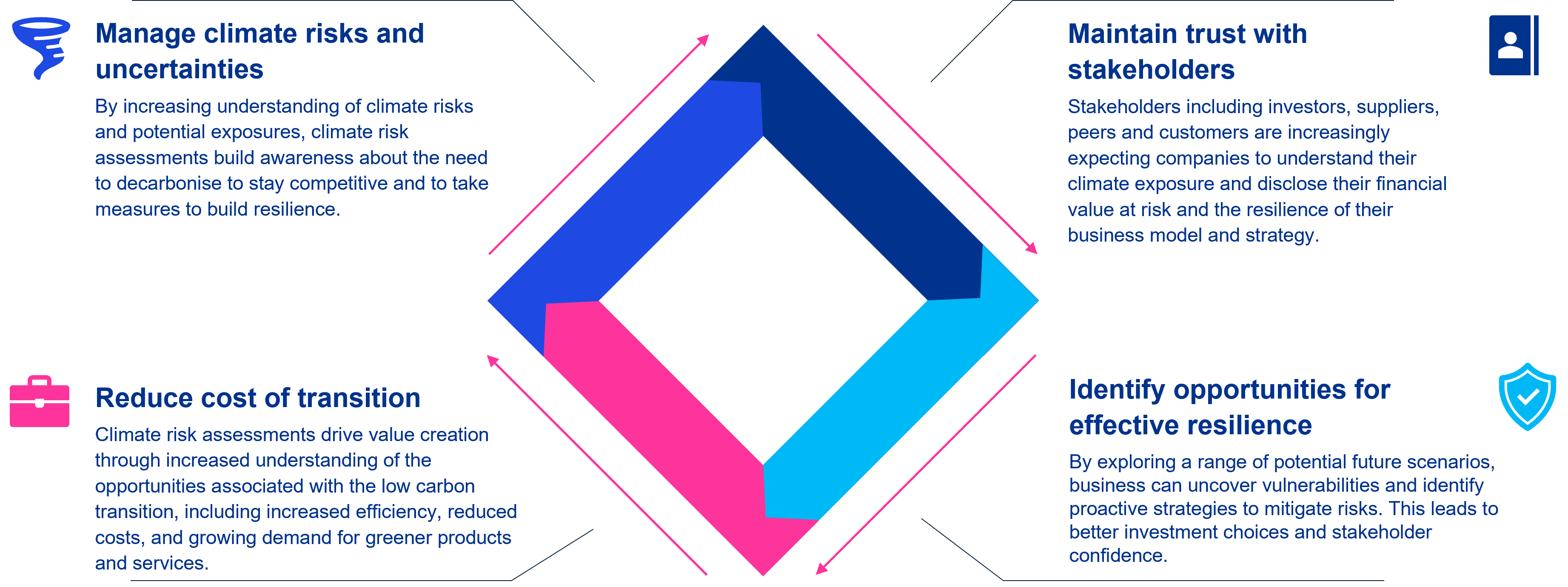 In addition to being a requirement under the CSRD, assessing climate-related risks and opportunities can add value and strengthen business resilience in multiple ways. Source: KPMG.
KPMG has in-depth expertise in the area of climate risk
KPMG can help you align with evolving regulations and conduct climate risk and resilience assessments that strengthen your business and future-proof your strategy.
For physical climate risks, we partner with leading data providers to map exposure and vulnerability across your locations and identify risks in critical areas. Where relevant, we can also quantify the potential impact of specific climate events on your business.
For transition risks and opportunities, we deliver tailored solutions to identify the most material areas of exposure and quantify the potential financial implications. This gives you a clearer picture of how regulatory, market, or technological shifts could affect your operations and bottom line.
Our resilience assessments build on these insights to translate identified risks into clear strategies and practical actions. We help you strengthen resilience, embed findings into your transition plan, build stakeholder confidence, and ensure your business is positioned for long-term success.


