

KPMG received top rankings across multiple categories in the Source client perceptions study: Perceptions of Consulting in Energy & Resources in 2025.
Energy transition driving growth, resilience and innovation
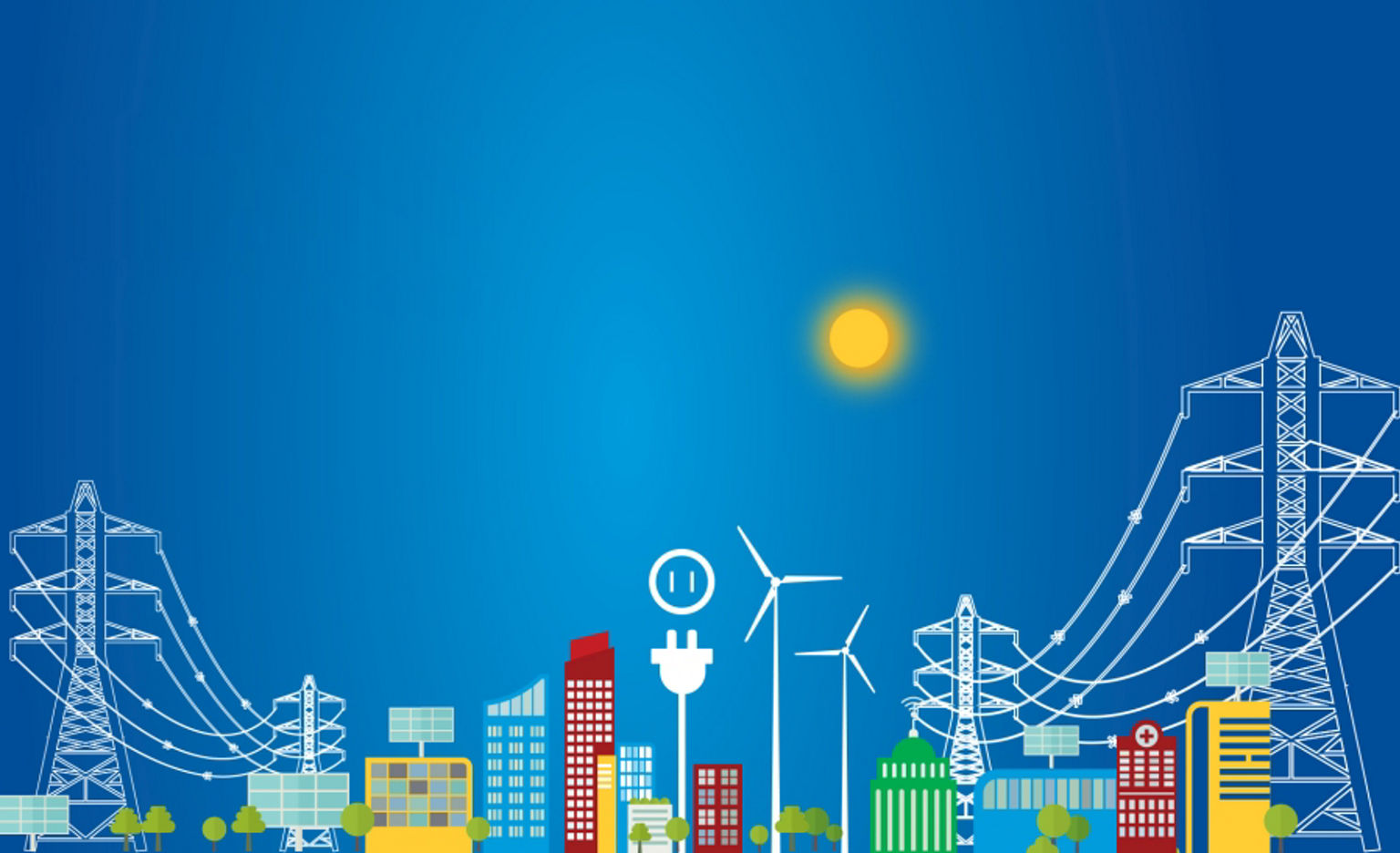
India’s Energy, Natural Resources and Chemicals (ENRC) sector is undergoing a profound transformation, driven by the need to balance energy security, industrial growth and sustainability goals. As demand for power, fuels, chemicals and critical infrastructure continues to rise, organisations are navigating a rapidly evolving landscape shaped by energy transition, supply chain resilience, digital innovation and large-scale capital investments. The focus is shifting from traditional resource management to building resilient, technology-enabled and future-ready energy ecosystems.

KPMG ranks #1 for "most well-known firms" in Energy & Resources by clients
At the same time, the sector is being reshaped by the rise of alternative fuels, electrification, nuclear expansion, digital infrastructure and next-generation industrial capabilities. Investments in ethanol, sustainable aviation fuel (SAF), nuclear energy, data centres and low-carbon technologies are creating new growth opportunities while supporting decarbonisation ambitions. As organisations accelerate transformation initiatives, execution excellence, operational resilience and technology adoption are becoming critical differentiators for long-term success.

How can KPMG in India help?

KPMG in India’s practices are organized around the understanding that no two industries are alike. In the case of energy, we maintain a strong industry focus that takes an advanced approach to service delivery using consistent and tested worldwide methodologies to deliver objectivity, valuable insights, and robust opinions of Tax and Advisory services to clients.
From our position as the professional service providers of choice to the some of the world’s largest energy and natural resources companies and domestic stalwarts, we are acutely attuned to leading practices throughout the industry and around the world. KPMG in India’s ENR practice strives to address the wide range of issues of companies across the energy value chain, in the defined sub sectors of Power and Utilities, Oil and Gas, Mining and Renewables.
Our professionals have the technical skills and industry-focused experience that can enable them to understand the issues energy companies face, along with vast experience with key government bodies.
In addition to this, with focus on our core approaches across strategic planning, operations improvement, transactions advisory and project planning , we seek to ensure that we are ever ready to address our clients’ primary concerns.
Success stories and experiences of our valued clients


Driving growth with Energy, Natural Resources and Chemicals
- Intelligence across the power value chain
- Intelligent distributed energy management
- India's shift from energy dependence to energy resilience
- Mineral extraction to metals production
- 6th National CPA seminar 2026
- India's shift from energy dependence to energy resilience
- Scanning wind energy for India's 2030 ambitions
- Powering India's energy transition through battery circularity
- From oil to electricity
- Powering India's energy transition through battery circularity
- From LNG dependence to domestic resilience
- 14th Annual Conference on Wind Power in India
- Electrifying India's bus industry
- Sugar Ethanol Bioenergy Industry Conference 2026
- Nuclear enables stronger energy security and climate action

AI can fundamentally change how India’s power sector plans, operates and responds. The opportunity is not simply to automate existing processes, but to use intelligence to make better decisions across the power value chain, from forecasting and grid management to distribution and regulatory oversight. The real measure of progress will be our ability to take AI from pilots to trusted, sector-wide adoption.
Abhishek Shah
Partner, C&O-Energy & Infra-P&U
KPMG in India
AI can fundamentally change how India’s power sector plans, operates and responds. The opportunity is not simply to automate existing processes, but to use intelligence to make better decisions across the power value chain, from forecasting and grid management to distribution and regulatory oversight. The real measure of progress will be our ability to take AI from pilots to trusted, sector-wide adoption.

India's ability to navigate one of the largest oil market disruptions in recent history highlighted the value of diversified energy sourcing. The next step is even more significant: reducing the need for imported energy altogether. Through initiatives such as Samudra Manthan and GOBARdhan, India is addressing key investment risks across domestic exploration and bioenergy, helping create the conditions for greater private sector participation and long-term energy security.
- Amit Bhargava
- Bidyut Chakraborty


India has undertaken significant reforms to unlock growth in the coal sector. The next phase of transformation lies in accelerating the journey from allocation to production through faster mine operationalisation, integrated infrastructure planning, technology-enabled execution, and stronger stakeholder coordination.
Achieving this will require a shift from sequential approvals to parallel execution, supported by digital technologies, robust project governance, and integrated planning across the mining value chain. Modernisation is no longer just about streamlining approvals; it is about delivering outcomes that enhance energy security, strengthen industrial competitiveness, and create sustainable economic value.
India's ability to navigate one of the largest oil market disruptions in recent history highlighted the value of diversified energy sourcing. The next step is even more significant: reducing the need for imported energy altogether. Through initiatives such as Samudra Manthan and GOBARdhan, India is addressing key investment risks across domestic exploration and bioenergy, helping create the conditions for greater private sector participation and long-term energy security.
Abhishek Shah
Partner, C&O-Energy & Infra-P&U
KPMG in India
India's wind sector is gaining momentum. The Green Energy Open Access framework is expanding access to renewable power, while policy measures such as wind-specific renewable consumption obligations are creating new demand.
As EV adoption and energy storage deployment accelerate, building a resilient battery ecosystem will require greater focus on critical mineral security, recycling infrastructure, and circular supply chains.
India's next phase of energy transition will be defined not only by how many batteries it produces, but also by how effectively it recovers, reuses, and recirculates critical materials.

Anish De
National Leader - Energy Natural Resources & Chemicals (ENRC) and Infrastructure
KPMG in India
Due to geopolitics as well as very differing resource endowments we are witnessing very different approaches to the energy future. While the US is indexing heavily on hydrocarbons as the world’s largest oil & gas producer, China, India and indeed much of Asia are focused on electrification of everything possible using alternatives to conventional energy.
As EV adoption and energy storage deployment accelerate, building a resilient battery ecosystem will require greater focus on critical mineral security, recycling infrastructure, and circular supply chains.
India's next phase of energy transition will be defined not only by how many batteries it produces, but also by how effectively it recovers, reuses, and recirculates critical materials.

Himanshu Rattan
Partner and Lead – Food, Agri & Allied Services, Government & Public Services
KPMG in India
India's fertiliser challenge is often viewed through the lens of supply and pricing. But the larger question is one of strategic resilience. As long as fertiliser production remains closely tied to imported energy, global disruptions will continue to find their way into Indian agriculture. The next phase of self-reliance will come not from managing these shocks better, but from reducing our exposure to them through interventions such as stronger domestic feedstock ecosystems and deeper integration across the energy, fertiliser, and farm value chain.
Abhishek Shah
Partner, C&O-Energy & Infra-P&U
KPMG in India
FY26 was a record year with 6 GW of new wind capacity added. Reaching 100 GW by 2030 will require scaling up to around 11 GW annually. The opportunity is clearly within reach - India has the resources, capital, and strong project pipeline. The key now is faster execution, including unlocking the 40+ GW of awarded renewable energy capacity awaiting signed PSAs.
India's wind potential will ultimately be determined not by the availability of turbines, but by how effectively we coordinate and execute.

India’s electric bus transition is moving beyond a policy-led initiative to becoming a structural transformation opportunity for the broader mobility ecosystem. Public transport electrification has already created strong momentum, supported by government procurement programmes, improving cost economics, and increasing infrastructure investments.
Going forward, the focus will increasingly shift towards building a scalable ecosystem that combines domestic manufacturing, financing innovation, charging infrastructure expansion, and operational efficiency to support sustainable long-term growth across both public and private transport segments.
- Anish De
- Vivek Rahi
- Nikhil Moghe
- Jodhbir Sachdeva
Anish De
National Leader - Energy Natural Resources & Chemicals (ENRC) and Infrastructure
KPMG in India
As energy systems undergo structural transformation globally, India's ethanol programme stands as a compelling demonstration of how aligned policy frameworks, industry coordination and scale can decisively shift the needle on import dependence while sustaining economic momentum. Having achieved the E20 milestone ahead of schedule, the imperative now is to move from scale creation to system intelligence - where ethanol transitions from a blending mandate to a foundational pillar of a resilient, flexible and future-ready transport fuel ecosystem.
India's ethanol journey has evolved from a targeted blending directive to a structurally significant component of the nation's transport energy architecture.
As the sector advances beyond E20, the strategic priority must shift toward feedstock diversification, demand-side flexibility and infrastructure alignment at scale. This inflection point presents a defining opportunity - to reposition ethanol not merely as a compliance instrument, but as a sovereign energy lever capable of reinforcing long-term energy security and accelerating India's low-carbon transition.


The future of sustainable aviation will depend not only on Sustainable Aviation Fuel (SAF) production, but on creating the policy, financial, and market ecosystem needed to make SAF affordable and scalable.
Scaling SAF in India will require three things to come together:
- feedstock availability,
- diverse technology pathways, and
- supportive policy frameworks.
Anish De
National Leader - Energy Natural Resources & Chemicals (ENRC) and Infrastructure
KPMG in India
Hormuz disruptions highlight India’s exposure. Over 88% crude is imported, with about half via the strait. LPG risk is higher.
Nuclear offers reliable, low carbon scale. Reaching 100 GW by 2047 needs 4 to 5 GW annual additions, stronger fuel cycles, supply diversification and talent expansion.
AI Frontiers
Watch KPMG’s leaders share their views on harnessing the power of AI to unlock unprecedented value and solve seemingly impenetrable problems in the latest episodes of AI Frontiers produced by Reuters Plus
Hear from the experts


India Union Budget 2026-27: Our Sector Insights

KPMG in India point of view 2026 - Energy and Natural Resources
Ease of doing business, targeted rationalisation, incentives, certainty in digital governance, exploration and refining of critical minerals and IFSC
India Insights
Our insights is your gateway to thought leadership and in-depth reports. Explore our curated collection of valuable content, where we delve into complex business challenges, share industry trends, and provide actionable insights.

Something went wrong
Oops!! Something went wrong, please try again
Our events through the years


ENRich 2022
Dealing with energy and resources trilemma: Security, affordability and sustainability (29-20 November, 2022)

ENRich 2021
The Global Corporation: Preparing for the low-carbon World 7-8 December 2021

ENRich 2020: The Net Zero Future
International Conference on pathways for decarbonising energy and resources.

ENRich 2019: Navigating energy transition
KPMG in India's flagship Energy and Natural Resources Conclave
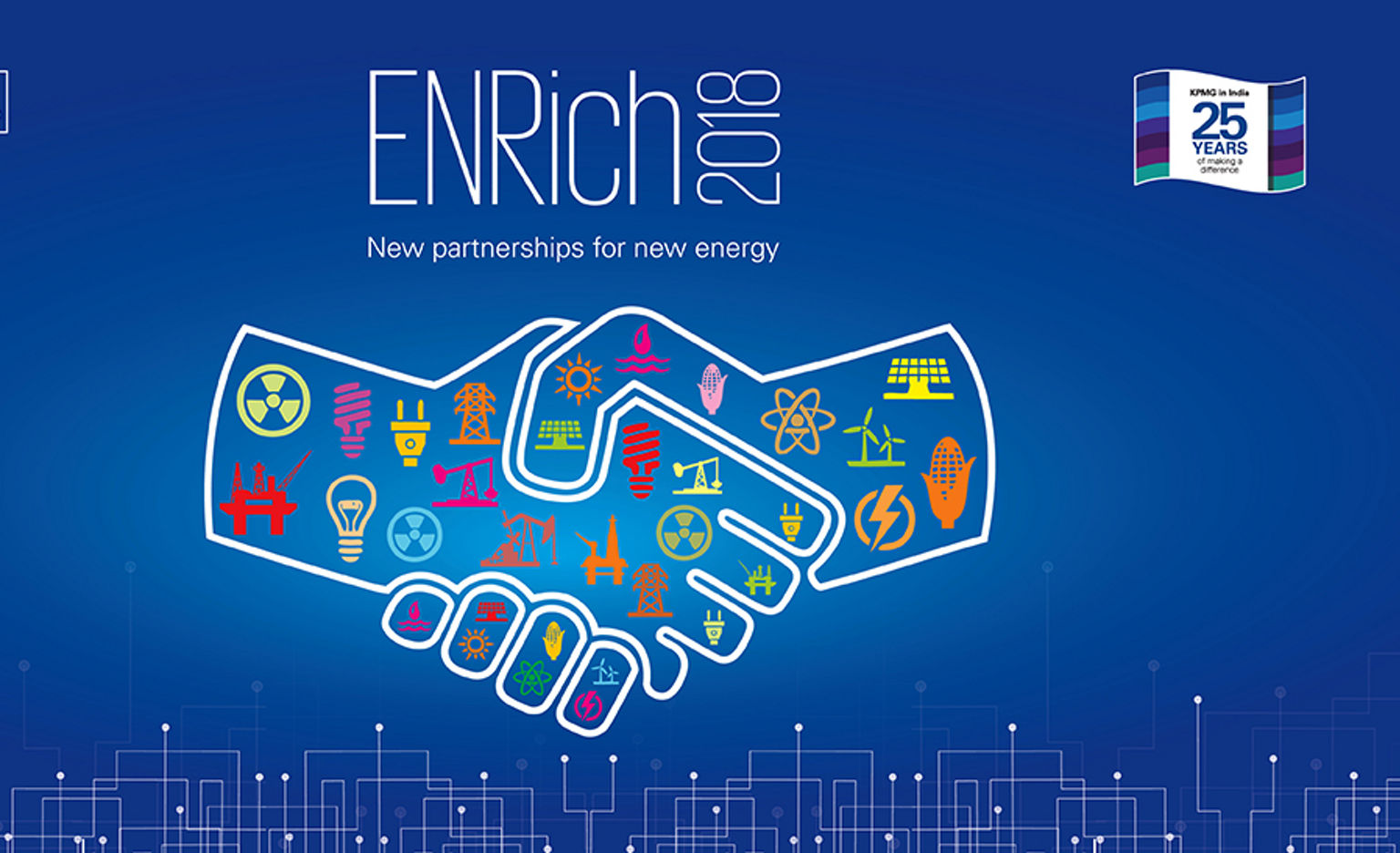
ENRich 2018: New partnerships for new energy
Hyatt Regency, Bhikaji cama place, Ring Road, New Delhi, India
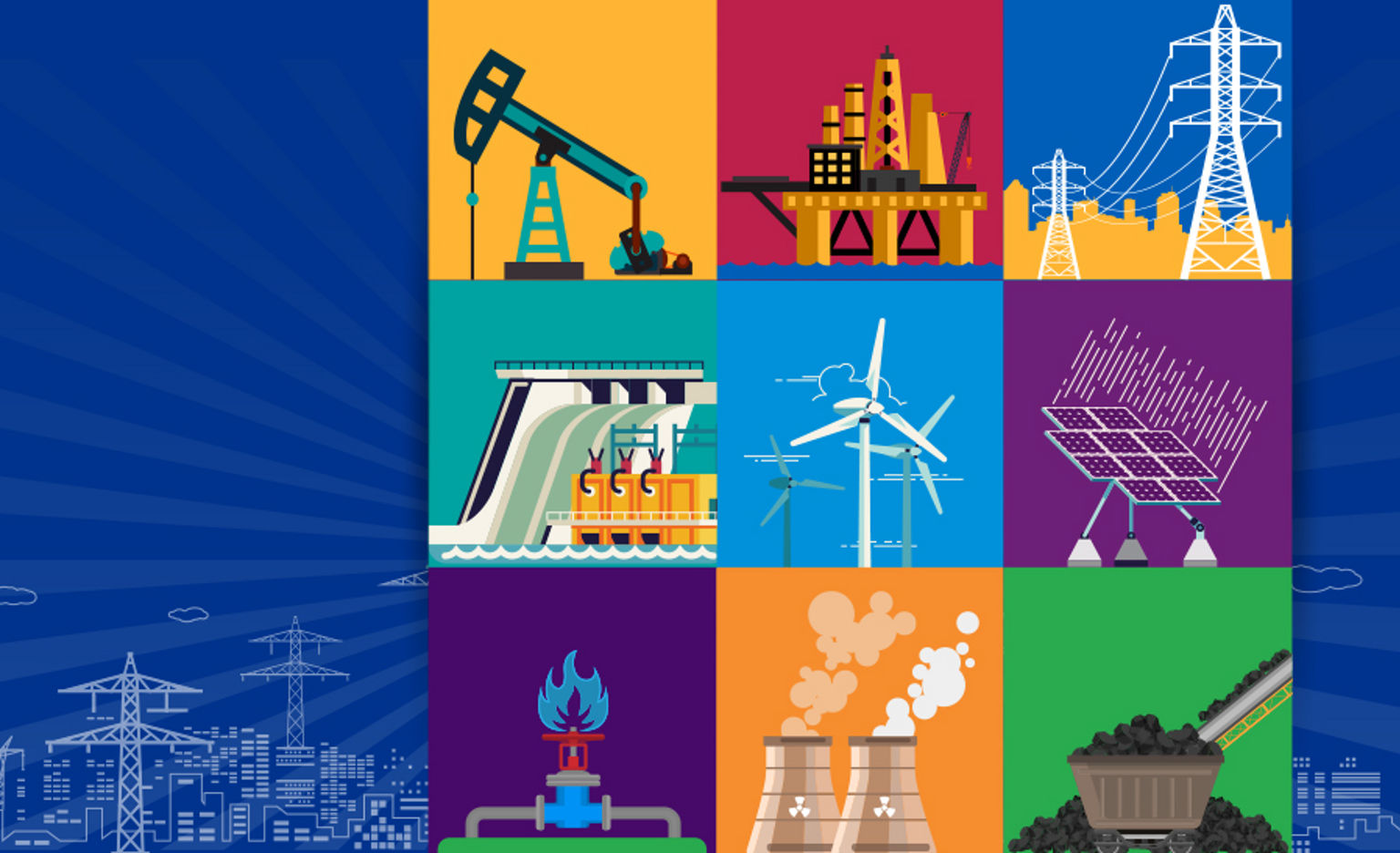
ENRich 2017 : KPMG in India's annual energy conclave
Taj Diplomatic Enclave, Diplomatic Enclave, 2 Sardar Patel Marg, New Delhi, India
ENRich 2016
Taj Palace Hotel, Diplomatic Enclave, 2 Sardar Patel Marg, New Delhi, India
Media
Global insights


Key Contact
Anish De
National Leader - Energy Natural Resources & Chemicals (ENRC) and Infrastructure
KPMG in India

Jeffry Jacob
Partner and National Sector Leader - Automotive, Industry Group Leader - Chemicals
KPMG in India


Siddhartha Malaviya
Partner - GBS Advisory, Sector Lead - Energy and Natural Resources Global Capability Centers
KPMG in India
- Item 1
- Item 2
- Item 3
- Item 5
- Item 6
- Item 7
