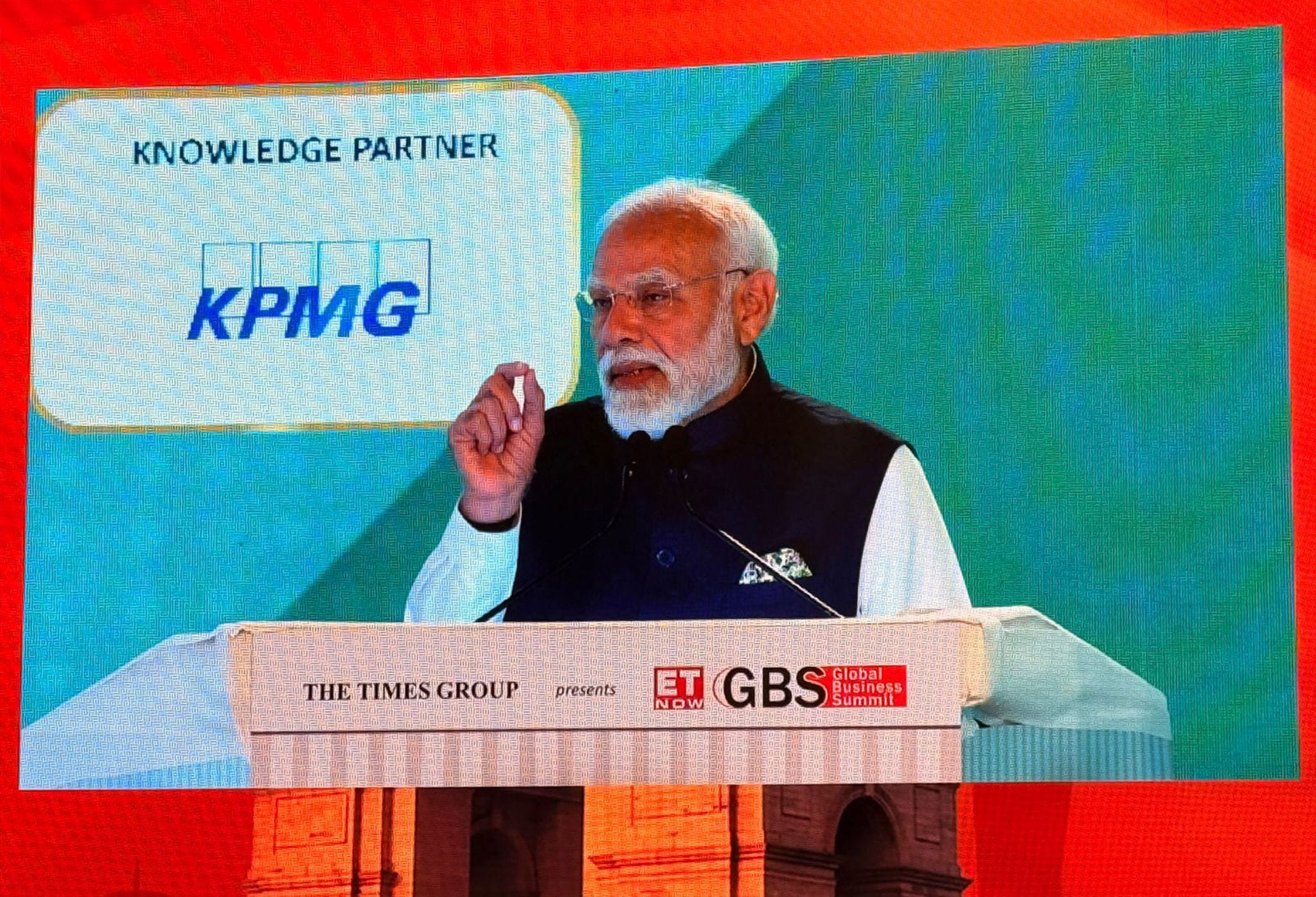
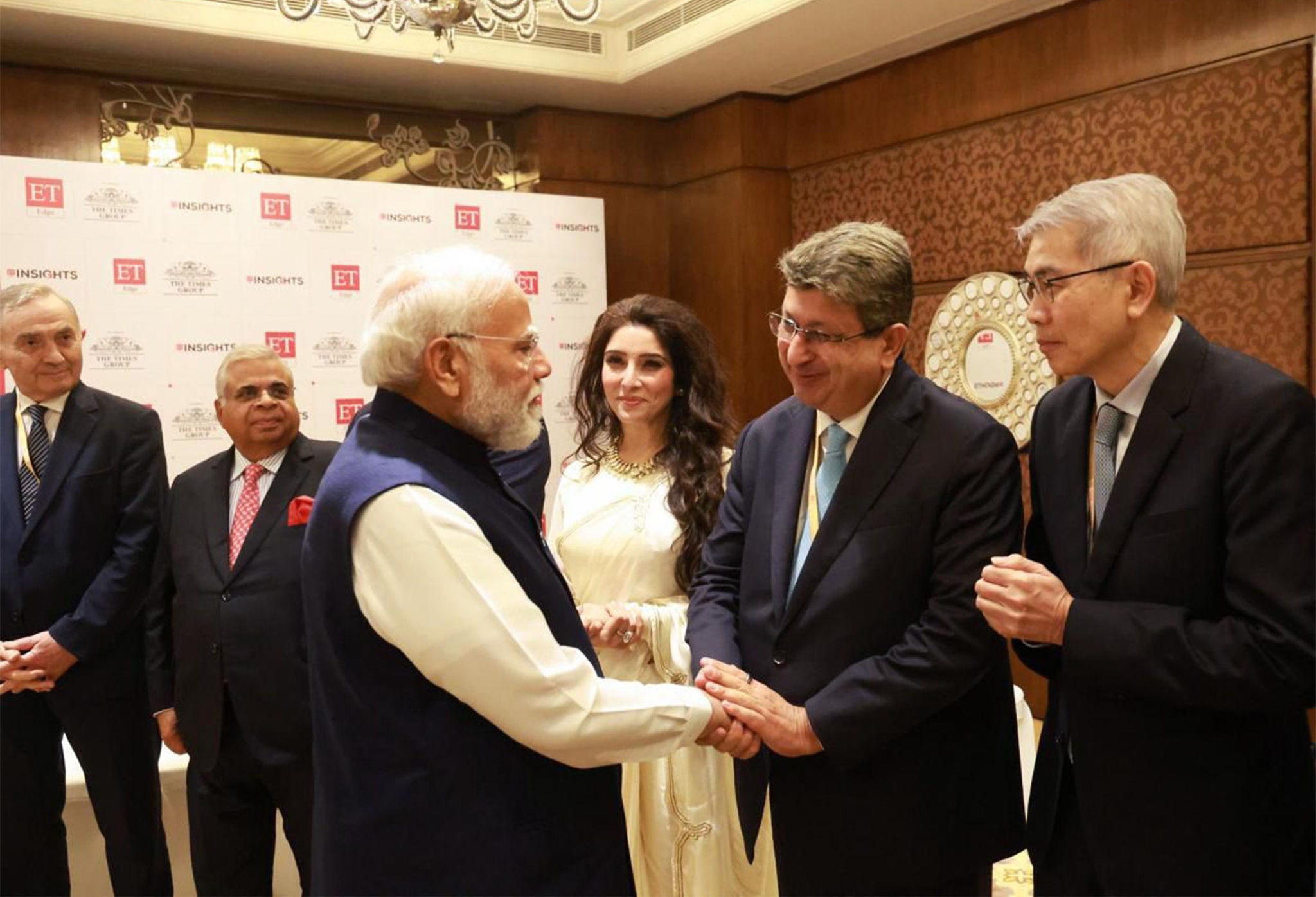
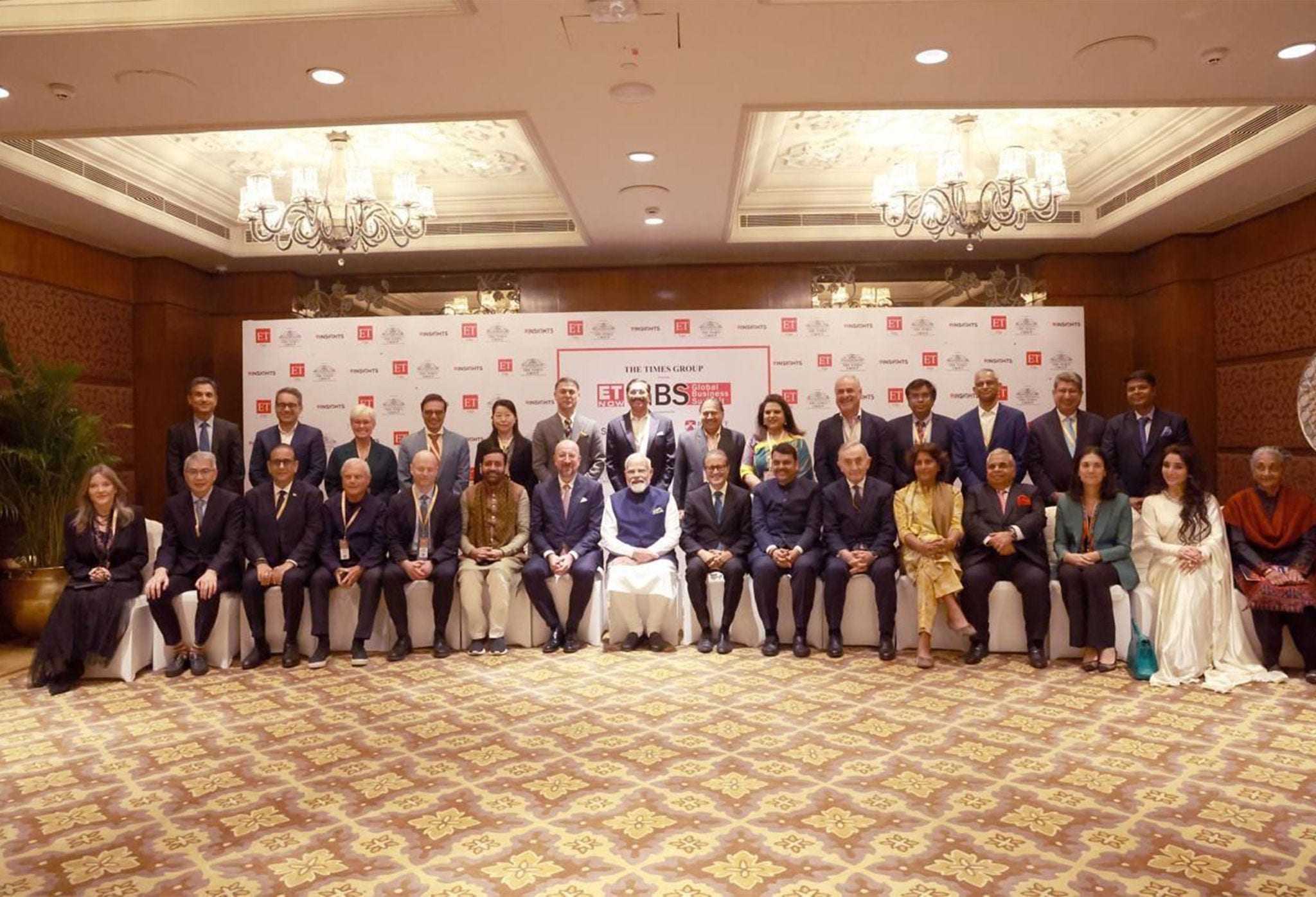
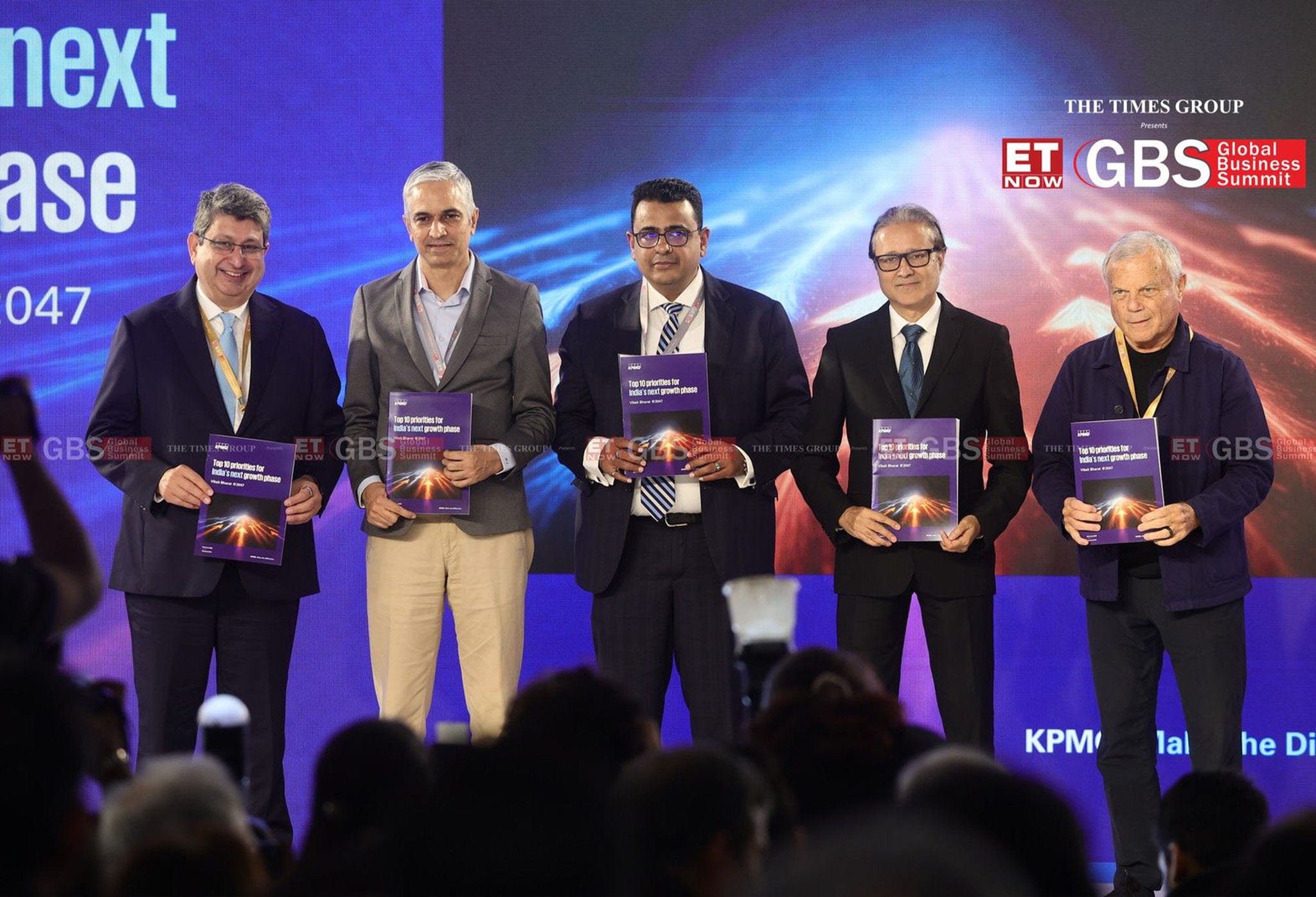
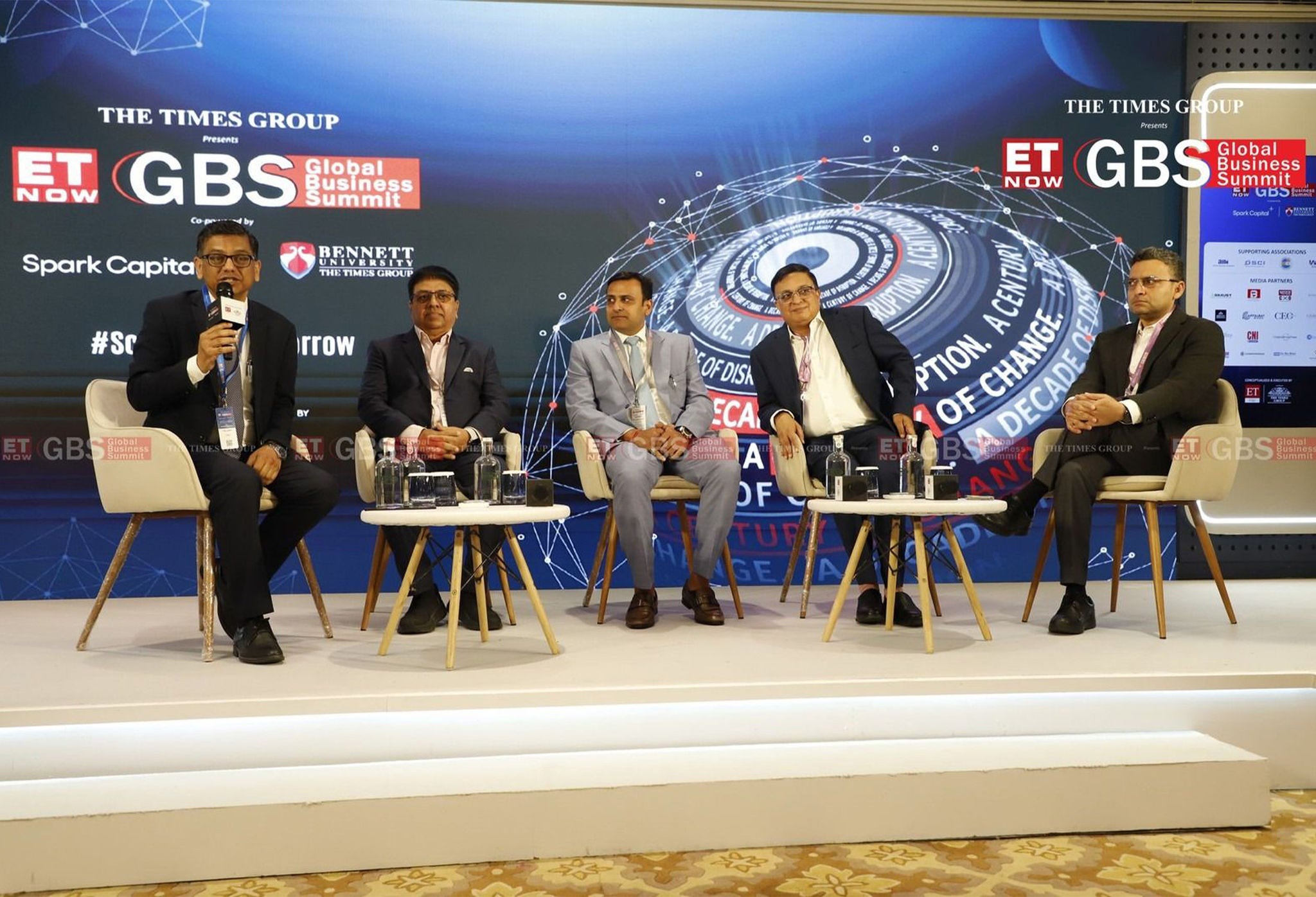
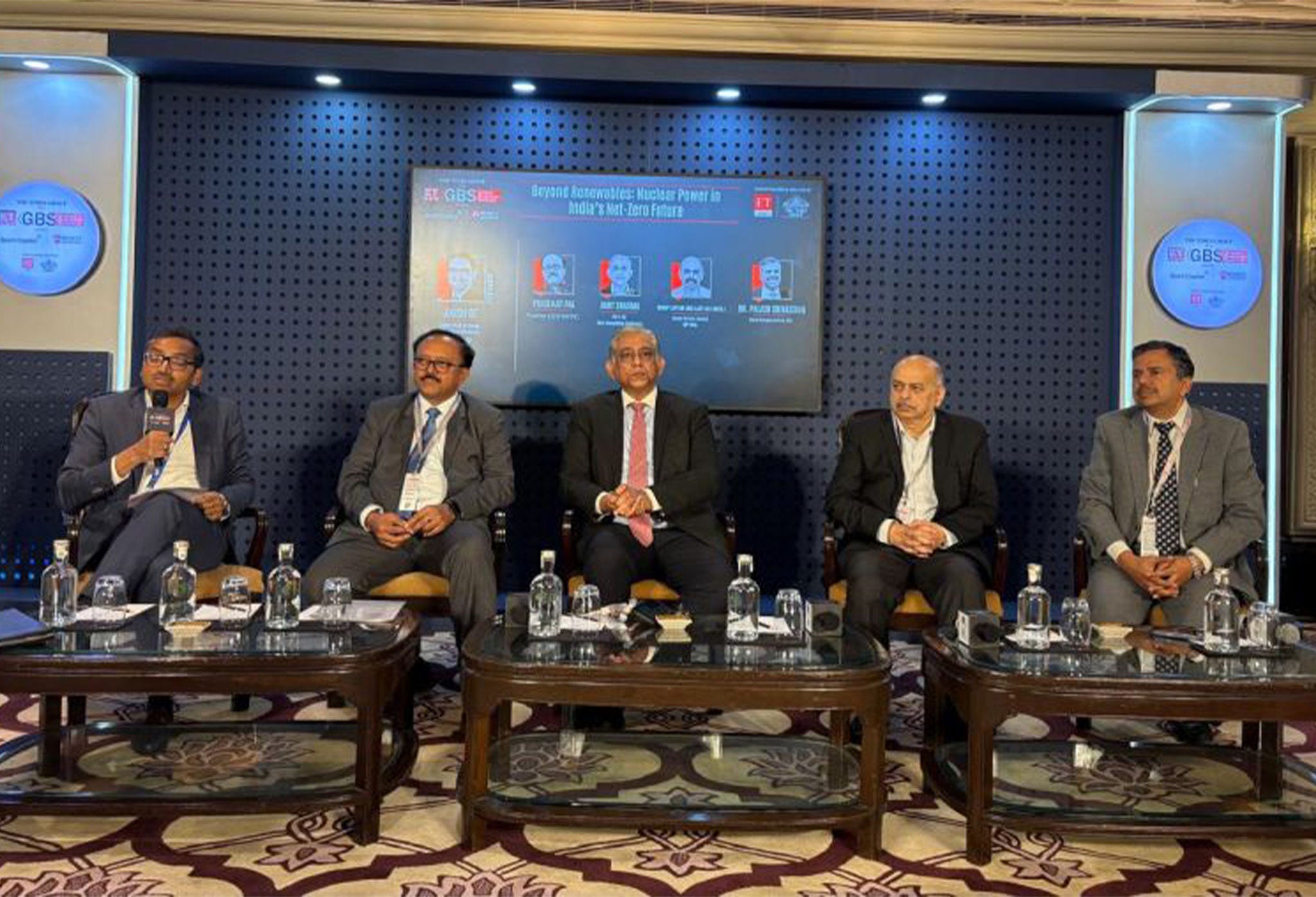
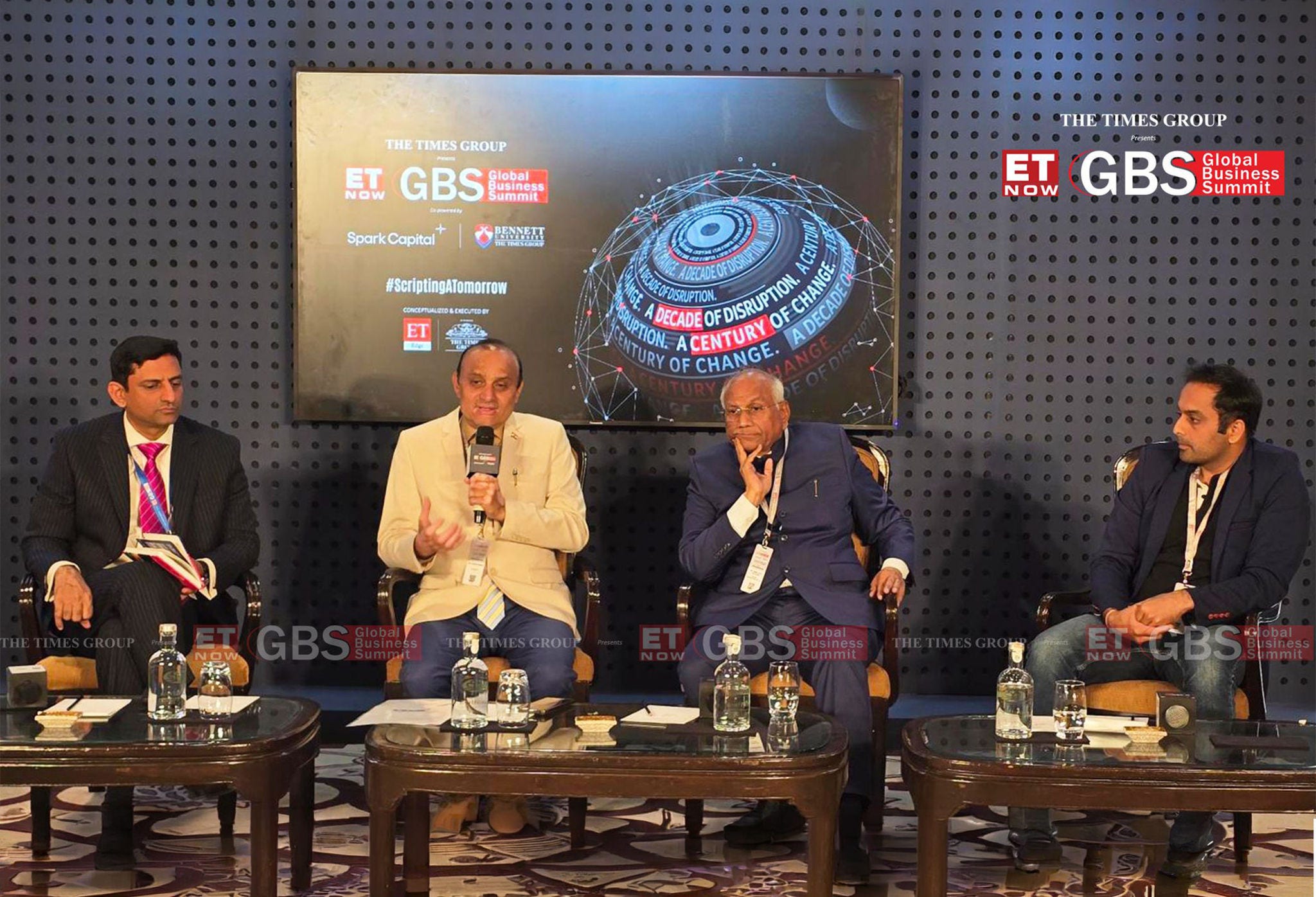
The Times Group’s ET NOW Global Business Summit (GBS) is not a reflection on the past, it is a platform built to shape what comes next. Conceived as a space where leaders confront uncertainty before it becomes inevitability, GBS convenes the world’s most influential voices to interpret disruption, design direction, and script long-term impact. As economies, technologies, and governance systems undergo accelerated transformation, GBS serves as a centre of global conversations, where emerging realities are debated, strategic responses are forged, and the foundations of future growth are laid.

      KPMG joined as the Knowledge Partner for the event, bringing deep insights and expertise to enrich these conversations and help shape the agenda for sustainable progress.


      Top 10 priorities for India's next growth phase


      Key execution priorities to help India convert scale into competitiveness and accelerate its journey toward becoming a developed economy by 2047

      Glimpses of the event


      KPMG in India leaders on ET Now Global Business Summit 2026

      Yezdi Nagporewalla

      Chief Executive Officer

      KPMG in India

      • Across global markets, a significant shift is underway. Countries are reassessing supply chain dependencies with greater urgency, businesses are strengthening risk strategies, and communities are refining how they build and sustain resilience. What we see today is an economy that is deeply connected, yet increasingly complex.

      • India has established a solid foundation, and now the focus shifts to execution by converting investment into greater productivity and consequently competitiveness. Our country's growth will be shaped by deep manufacturing capabilities, skilled talent, robust MSMEs, efficient infrastructure, and cities prepared for the future. This report highlights the essentials: disciplined implementation, institutional resilience, and consistent effort to achieve Viksit Bharat by 2047.

      • India is stepping up as a stabilising force in a fragmented global environment, supported by strong macro fundamentals and projected 7% growth. Its strategic reforms, purposeful global engagement, and sectoral bets like semiconductors are widening economic and geopolitical room to manoeuvre. India isn't just responding to volatility - It's shaping the next phase of global growth.

      • India’s journey to 2047 rests on one foundation above all: the ability to deliver outcomes predictably and at scale. We can already see this shift taking shape in stronger infrastructure, better logistics, steady macroeconomic management and digital systems that now operate nationwide with confidence and trust.

        Recent amendments reinforce this direction with a deeper emphasis on manufacturing, MSMEs, skills, employment, housing and financial inclusion. The message is clear. Productivity must translate into better jobs and rising incomes, and institutions must convert intent into delivery on the ground.

        India’s next chapter is defined by how effectively we move up the value chain, how we prepare talent for a more technology-driven economy and how seamlessly we connect cities, clusters and supply chains into one productive system. Technology and sustainability stand at the center of this effort, not as aspirations, but as the engines of competitiveness and long-term resilience.

        The ambition is bold, and the foundations are strong. What matters now is discipline in execution, continuity in reform and close collaboration between government, industry and institutions. The choices we make each year shape the India we build by 2047.

      Anish De

      Global Head for Energy Natural Resources & Chemicals (ENRC)

      KPMG International

      This is a very critical moment for India’s energy journey. As we move firmly on track to becoming the world’s third-largest economy, that growth is energy-hungry. Today, we are at around 500 gigawatts of installed capacity. By 2047, estimates suggest we could be looking at a grid of nearly 2,000 gigawatts. That is an extraordinary expansion, driven significantly by renewables, especially solar.

      But renewables come with intermittency challenges. If we are to power an industrial-scale economy of the size we envision, we need reliable baseload generation. At the same time, the planet is warming, and the global call for decarbonisation grows stronger. Irrespective of geopolitical shifts, low-carbon or zero-carbon energy sources are not optional. They are essential.

      Nuclear energy, once sidelined in global conversations, has returned to centre stage. In India, given the scale of our ambitions, it has become a key focus. We are currently at about 9 gigawatts of nuclear capacity, and over the next two decades we aim to scale this more than tenfold to 100 gigawatts. That requires not just ambition, but evolution in technology, supply chains, talent, land acquisition, and commercial frameworks.

      A landmark legislation has opened the door to greater private sector participation, which the government recognises as necessary to achieve this scale. At the same time, India consumes nearly 20 percent of the world’s data but has only about 2.5 percent of global data centre capacity. The recent Union Budget’s thrust on data centres underscores the importance of data sovereignty, security, and building a resilient domestic ecosystem. All of this adds further pressure on our energy systems.

      There are real questions we must address—on pricing and tariffs, on supply chains, on commercial mechanisms, and on trust. Even as nuclear returns to serious consideration, public confidence must be earned, especially when building at this magnitude. If we are to move beyond 2.5 gigawatts per annum and eventually exceed 5 gigawatts per annum post-2032, it demands coordinated action across government, industry, and society. The scale of the challenge is immense, but so is the opportunity.

      Atul Gupta

      Partner and Head - Digital Trust and Cyber

      KPMG in India

      • Ambiguity is the new operating environment for CEOs. Navigating fluid global dynamics has become a core leadership capability.
      • Resilience is now a strategic differentiator. Organisations that can anticipate, absorb and adapt to shocks will define the next decade.
      • Trust is emerging as an economic currency. In a world of rapid digitalisation, trust-driven ecosystems will outperform those built purely on scale or efficiency.
      • Innovation must move from the periphery to the core. It can no longer be experimental—it has to be embedded, continuous and enterprise-wide.
      • Talent strategies need a reset. Leaders must enable teams to thrive amid constant change, not just manage it.
      • Business disruption cycles are compressing. With new and unfamiliar risks emerging, risk intelligence and forward visibility are critical.
      • AI represents a generational shift. Its true potential will be realised only when it becomes more human-centric, ethical and responsible.
      • Digital and data sovereignty are gaining prominence. Yet, India is uniquely positioned to leverage this moment and accelerate its journey toward Viksit Bharat.
      Nilachal Mishra

      Partner and Head, Government & Public Services (G&PS), National Leader - Government and Infrastructure

      KPMG in India

      • India has built a powerful foundation as the world's largest economy, with growth above 7% and a sharp rise in public investment. Falling logistics costs, stronger banks, and world‑class digital infrastructure are reshaping our economic landscape. But the next phase is about quality of execution.

        Our challenge now is to convert this momentum into Viksit Bharat,, powered by the right talent, deeper manufacturing capabilities, rising Tier 2 and Tier 3 cities, a vibrant MSME ecosystem, and a focused push on sunrise sectors such as semiconductors, AI, and critical minerals.

      • The government’s strong push towards manufacturing will play a pivotal role in strengthening and expanding the supply chain ecosystem. To emerge as a global leader in semiconductor manufacturing, two factors are absolutely critical: talent and manufacturing capability. Without a skilled workforce and robust production infrastructure, it will be difficult to compete at scale in this strategically vital industry.

      Abhishek Verma

      Partner and Lead, Digital Government Advisory

      KPMG in India

      • We are witnessing the rise of a new space economy, one that is rapidly becoming a frontier for economic growth. Today’s discussion is not only about India’s technological achievements in space but also about our journey toward becoming a global space economy and the challenges ahead. A practical shift has taken place in recent years in how NewSpace India Limited engages with private industry. The approach has moved from limited collaboration to active encouragement and handholding of private participation. Startups today benefit from this liberalized framework, driving innovation in advanced sensors and high value applications. The next phase must focus on scaling capabilities, strengthening competitiveness, and building global leadership in the space sector.

      • Innovation that solves real‑world problems is what will define the next generation of Indian space startups. We are already seeing how advanced technologies like AI are accelerating downstream satellite services and unlocking new opportunities for the industry. At the same time, IN-SPACe is rolling out several important initiatives that will likely further strengthen India’s space ecosystem and support its rapid growth.


      Agenda and Sessions


      13 February 2026
      3.25 p.m - 4.00 p.m

      Global Leaders Panel Discussion: Strategic Sovereignty - The New World Economy

      Yezdi Nagporewalla

      Chief Executive Officer

      KPMG in India


      13 February 2026
      2.00 p.m - 3.00 p.m

      Global Bharat: Positioning India as a Global Production, Trade and Investment Hub

      Hemant Jhajhria

      Partner, Head of Consulting

      KPMG in India


      14 February 2026
      10.00 a.m - 11.00 a.m

      CEO’s Vision 2026: Redefining Leadership, Innovation, and Growth a Transforming World

      Atul Gupta

      Partner and Head - Digital Trust and Cyber

      KPMG in India


      14 February 2026
      10.00 a.m - 11.00 a.m

      Nuclear Energy session

      Anish De

      Global Head for Energy Natural Resources & Chemicals (ENRC)

      KPMG International


      14 February 2026
      3.00 p.m - 4.00 p.m

      Using next-gen AI for real-time public service delivery

      Nilachal Mishra

      Partner and Head, Government & Public Services (G&PS), National Leader - Government and Infrastructure

      KPMG in India


      14 February 2026
      3.15 p.m - 5.00 p.m

      Escape Velocity: Powering India’s Next Phase in Space

      Abhishek Verma picture
      Abhishek Verma

      Partner and Lead, Digital Government Advisory

      KPMG in India


      14 February 2026
      5.15 p.m - 6.15 p.m

      Risk, Resilience, and the New Global Order

      Pier Stefano Sailer

      Partner, Consulting, EMA Head of Government & Public Sector, Global Lead Partner EU Institutions

      KPMG AG Wirtschaftsprüfungsgesellschaft


      Our Insights

      Reinforcing India’s role by advancing reforms, strengthening reliability and deepening resilient capabilities

      By 2047, AI will transform India’s roads into intelligent, adaptive, and sustainable networks that drive growth, safety, and net zero goals

      Building India’s aviation ecosystem that is larger in scale, deeper in domestic capability, globally competitive, and structurally ready for the future

      Exploring the opportunities, challenges, and enablers that can help transition India from an emerging market to a global leader in sustainable aviation

      In an AI-dominated business environment, the foundational principles of cybersecurity are even more critical

      A blueprint for enabling fintech scale through compliance, trust infrastructure, differentiation, and leadership

      Explore how artificial intelligence is unlocking positive climate outcomes and accelerating the energy transition

      Adapting for the future: building resilience, embracing AI responsibly and transforming workforce strategies

      How can KPMG in India help

      For a more productive and sustainable business future

      KPMG’s Business Consulting professionals we may help you identify and solve the challenges that stand in the way of your growth and progress

      Transformation driven by data, enabled by digital technology, and led by business initiatives

      Key Contacts

      Yezdi Nagporewalla

      Chief Executive Officer

      KPMG in India

      Hemant Jhajhria

      Partner, Head of Consulting

      KPMG in India

      Anish De

      Global Head for Energy Natural Resources & Chemicals (ENRC)

      KPMG International

      Atul Gupta

      Partner and Head - Digital Trust and Cyber

      KPMG in India

      Nilachal Mishra

      Partner and Head, Government & Public Services (G&PS), National Leader - Government and Infrastructure

      KPMG in India

      Abhishek Verma

      Partner and Lead, Digital Government Advisory

      KPMG in India

      Connect with us

      Contact our specialists for more information

      connect with us